Read on nature.com
Understanding VEXAS Syndrome: Breakthrough Research Reveals Independent Mechanisms of Inflammation and Myeloid Bias
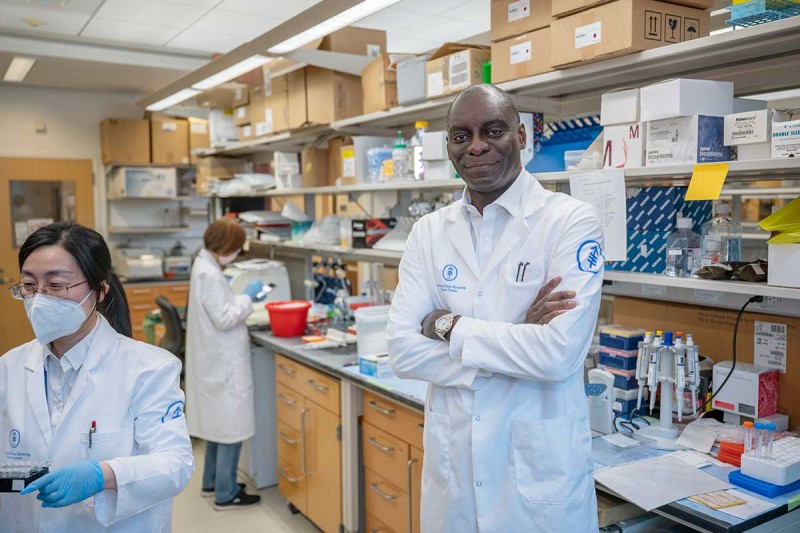
A groundbreaking study published in Nature reveals new insights into VEXAS syndrome, a severe adult-onset autoinflammatory condition. Researchers from Memorial Sloan Kettering Cancer Center have identified that inflammation and myeloid bias in VEXAS operate through independent mechanisms. The study demonstrates how UBA1 mutations lead to aberrant cell death in macrophages while simultaneously causing myeloid bias in hematopoietic stem cells through different pathways. These findings provide crucial understanding of VEXAS pathogenesis and suggest potential therapeutic targets for this debilitating condition.
VEXAS syndrome represents a significant breakthrough in understanding adult-onset autoinflammatory diseases, with recent research published in Nature providing crucial insights into its complex mechanisms. This rare but severe condition, characterized by vacuoles in blood cells, E1 enzyme mutations, X-linked inheritance, autoinflammation, and somatic origin, has puzzled researchers since its identification. The latest findings reveal that inflammation and myeloid bias in VEXAS operate through independent pathways, offering new perspectives on treatment approaches.
The Dual Nature of VEXAS Pathogenesis
VEXAS syndrome results from somatically acquired mutations in the UBA1 gene within hematopoietic stem and progenitor cells. These mutations lead to clonal expansion specifically within the myeloid compartment, explaining why patients experience both autoinflammatory symptoms and hematologic abnormalities. The research team employed sophisticated somatic gene editing approaches to model VEXAS-associated UBA1 mutations in primary macrophages and hematopoietic stem cells, revealing distinct mechanisms at play.
Inflammatory Cell Death Mechanisms
The study demonstrates that Uba1-mutant macrophages exposed to inflammatory stimuli undergo aberrant cell death mediated by both apoptotic and necroptotic pathways. Specifically, researchers identified that Caspase-8 and RIPK3-MLKL pathways drive this abnormal cell death response. When mice were challenged with TNF or LPS, the UBA1 inhibitor TAK-243 exacerbated inflammation in a manner dependent on RIPK3-Caspase-8 activation. This finding connects VEXAS pathogenesis with other monogenic autoinflammatory syndromes and suggests potential therapeutic targets within the inflammatory cell death axis.

Myeloid Bias Through Unfolded Protein Response
In contrast to the inflammatory mechanisms, Uba1 mutation in hematopoietic stem cells induces an unfolded protein response and myeloid bias independently of RIPK3-Caspase-8 pathways. This represents a separate pathogenic mechanism that explains the hematologic manifestations of VEXAS syndrome. The research highlights how an apical mutation in the ubiquitylation cascade can lead to specific ubiquitin-associated defects, with kinetic impairments in Lys63/Met1 polyubiquitylation of inflammatory signaling complexes.
Clinical Implications and Future Directions
These findings have significant implications for understanding and treating VEXAS syndrome. The identification of independent mechanisms suggests that combination therapies targeting both inflammatory pathways and hematopoietic abnormalities may be necessary for effective treatment. The research provides a foundation for developing targeted interventions that address the specific molecular defects identified in this study. As researchers continue to unravel the complexities of VEXAS syndrome, these insights pave the way for more effective management strategies for patients suffering from this challenging condition.

The groundbreaking research from Memorial Sloan Kettering Cancer Center, published in Nature, represents a major step forward in understanding VEXAS syndrome. By revealing the independent mechanisms driving inflammation and myeloid bias, this work opens new avenues for therapeutic development and provides hope for improved patient outcomes. As our understanding of this complex syndrome continues to evolve, these findings will undoubtedly influence both clinical practice and future research directions in autoinflammatory diseases.