Read on nature.com
World's First Personalized Gene-Editing Therapy Paves Way for Clinical Trial
In a groundbreaking medical achievement, researchers have successfully treated a baby boy with a personalized gene-editing therapy for a rare genetic disorder. The therapy, developed in just six months using base editing technology, corrected a single-letter DNA mutation that prevented the child from producing a crucial liver enzyme. Following this success, doctors are now preparing to launch a clinical trial that will expand this innovative approach to more patients, potentially revolutionizing treatment for rare genetic diseases and demonstrating the feasibility of rapid, customized genetic medicine.
In a remarkable medical breakthrough that represents a world first, researchers have successfully treated a baby boy with a bespoke gene-editing therapy designed specifically for his rare genetic condition. This pioneering achievement, detailed in recent publications, has now set the stage for an expanded clinical trial that could transform how we approach personalized medicine for genetic disorders.
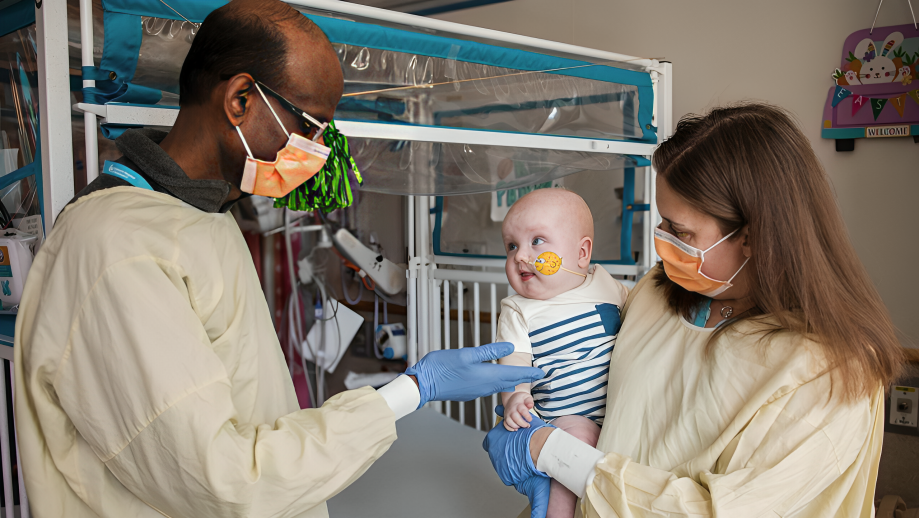
The Groundbreaking Case
The treatment focused on baby KJ Muldoon, who was born with a rare genetic mutation affecting approximately one in a million births. This mutation prevented him from producing the normal form of carbamoyl phosphate synthetase 1 (CPS1), a crucial liver enzyme responsible for detoxifying ammonia in the bloodstream. Without this enzyme, ammonia accumulates to dangerous levels that can cause severe brain damage, and many children with this condition don't survive long enough to receive the only previously available cure: a liver transplant.
Base Editing Technology
The therapy employed an advanced form of CRISPR-Cas9 gene editing called base editing, which allows scientists to make precise, single-letter changes to DNA sequences. Unlike traditional CRISPR approaches that cut both strands of DNA, base editing works by chemically converting one DNA base to another without breaking the DNA backbone, making it potentially safer and more precise for therapeutic applications.

Rapid Development and Results
What makes this achievement particularly notable is the speed of development. Researchers created the personalized therapy in just six months—a remarkably short timeframe for developing a novel genetic treatment. In late February, KJ received the base-editing therapy specifically designed to correct the single incorrect letter in his CPS1 gene DNA sequence.
The results have been promising. Following treatment, KJ's ammonia levels dropped significantly, allowing him to reduce his medications. His developmental progress has been encouraging, with the child learning to stand independently, eating solid foods, and working toward taking his first steps. His mother, Nicole Aaron, notes that "he has a radiance about him that really brightens up every room he enters."
Expanding Access Through Clinical Trials
Building on this success, researchers are now preparing to launch a clinical trial that will apply this approach to at least five additional patients. The trial, described in the American Journal of Human Genetics, represents the next phase in making personalized gene therapies more accessible. Researchers have been working closely with US regulators to streamline the typically convoluted path that gene-editing therapies must navigate before entering clinical trials.

Broader Implications for Rare Diseases
This development represents a significant step forward for families of children with rare genetic diseases. As Ryan Maple, executive director of the Global Foundation for Peroxisomal Disorders, emphasizes, "There is no 'one size fits all' in this space." The success with KJ's case demonstrates that rapid development of personalized genetic therapies is feasible, offering hope for many other rare conditions that lack effective treatments.
The momentum in this field continues to build. In addition to the planned clinical trial in Philadelphia, the recently launched Center for Pediatric CRISPR Cures at the University of California, Berkeley and the University of California, San Francisco also aims to develop personalized gene-editing therapies. Furthermore, the US government's Advanced Research Projects Agency for Health has announced programs to fund research into precision genetic medicine development and manufacturing.
Future Outlook
Medical geneticist Joseph Hacia from the Keck School of Medicine at the University of Southern California expresses growing optimism about the field, stating, "I'm more optimistic now than I have been in the past." The researchers involved in KJ's treatment believe they can further shorten the development timeline for future therapies, potentially making personalized genetic treatments more accessible to those in urgent need.
This breakthrough represents not just a single medical success story but a paradigm shift in how we approach genetic diseases. By demonstrating that personalized gene therapies can be developed rapidly and effectively, it opens new possibilities for treating thousands of rare genetic conditions that currently have limited or no treatment options. As the field advances, we may be witnessing the dawn of a new era in medicine where treatments are tailored not just to diseases, but to individual patients' specific genetic makeup.