New Model Suggests Infant Universe Remained Warm and Dense During Primordial Expansion
Recent cosmological modeling challenges traditional inflationary theories by proposing that the infant Universe may have maintained warmth and density during its primordial expansion phase. This new research, published in Nature, offers fresh insights into the early moments following the Big Bang, potentially resolving long-standing contradictions between theoretical models and observational data. The study explores alternative mechanisms that could explain the Universe's large-scale structure without requiring the contrived parameters typical of conventional inflation models.
Cosmologists have long grappled with understanding the precise conditions of the early Universe following the Big Bang. A groundbreaking study published in Nature proposes a revolutionary perspective: the infant Universe might have remained warm and dense during its primordial expansion, challenging conventional inflationary cosmology models that have dominated theoretical physics for decades.

Rethinking Cosmic Inflation
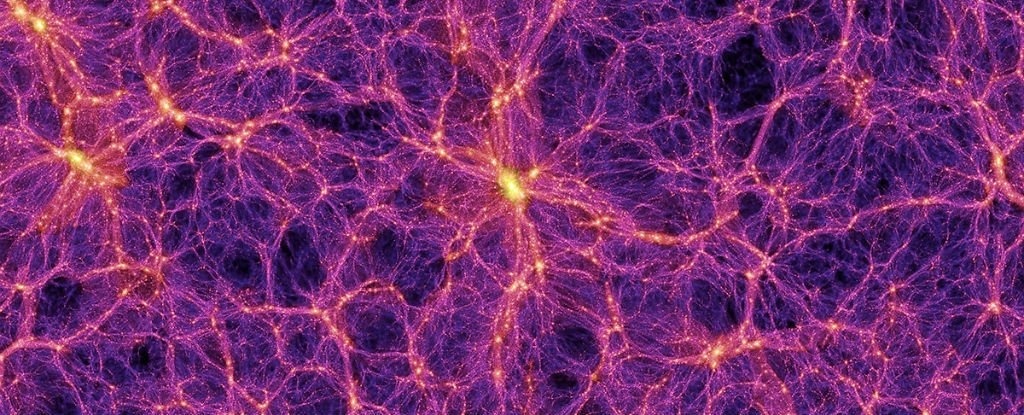
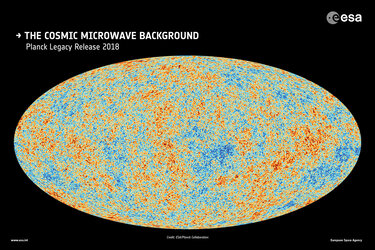
The traditional inflationary model of cosmology describes a period of exponential, almost instantaneous expansion immediately following the Big Bang. This framework has successfully explained many large-scale features of our Universe, from the cosmic microwave background radiation to the distribution of galaxies across the cosmos. However, as noted in the Nature research, theoretical models of inflation often face significant challenges—they tend to be either mathematically contrived or conflict with observational evidence.
The Warm Universe Hypothesis
The new research introduces an alternative scenario where the early Universe maintained warmth and density throughout its expansion phase. This concept builds upon previous work by Berera and colleagues, who initially explored warm inflation theories in the 1990s. The current study, led by Berghaus, Drewes, and Zell, provides sophisticated modeling that demonstrates how such conditions could have persisted during the Universe's formative moments.
Implications for Cosmology
This alternative framework offers several advantages over traditional inflation models. By maintaining warmth and density during expansion, the model potentially resolves contradictions between theoretical predictions and observational data. It provides a more natural explanation for the Universe's current structure without requiring the fine-tuned parameters that often characterize conventional inflation theories. The research represents a significant step forward in our understanding of cosmic origins and may prompt a reevaluation of fundamental cosmological principles.
Future Research Directions
The findings open new avenues for cosmological investigation, suggesting that our understanding of the Universe's earliest moments may require substantial revision. Future research will likely focus on developing more detailed models that incorporate these warm expansion scenarios and testing their predictions against increasingly precise observational data from next-generation telescopes and cosmic background measurements.
As cosmological research continues to evolve, this study demonstrates the importance of questioning established paradigms and exploring alternative explanations for the fundamental processes that shaped our Universe. The possibility that the infant Universe remained warm and dense during expansion challenges long-held assumptions while offering fresh perspectives on one of cosmology's most fundamental questions.