Quantum Sensor Networks: A Breakthrough in Dark Matter Detection and Precision Technology
Researchers at Tohoku University have developed a groundbreaking approach to quantum sensing by connecting superconducting qubits in optimized network patterns. This innovative method significantly enhances sensor sensitivity, potentially enabling the detection of elusive dark matter signals that have remained hidden from conventional detection methods. The quantum networks demonstrate superior performance even under realistic noise conditions, suggesting immediate practical applications. Beyond fundamental physics research, this breakthrough could transform multiple technologies including radar systems, medical imaging, and navigation tools by providing unprecedented measurement precision.
In a significant advancement for quantum technology, researchers at Tohoku University have developed a novel approach that could revolutionize how we detect dark matter and improve precision measurement technologies. By connecting superconducting qubits in carefully designed network patterns, scientists have created quantum sensors with dramatically enhanced sensitivity capable of detecting faint signals that traditional methods would miss.

Quantum Networks for Enhanced Detection
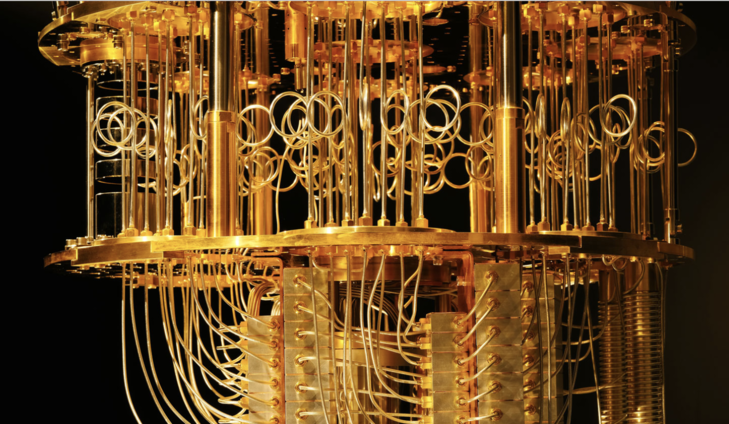
The research centers on superconducting qubits, tiny electronic circuits typically used in quantum computing that function as ultrasensitive detectors when maintained at extremely low temperatures. The fundamental concept resembles teamwork in detection – while individual sensors might struggle to identify weak signals, coordinated networks of qubits can amplify and recognize these signals with far greater effectiveness. According to the research published in Physical Review D, this approach represents a paradigm shift in quantum metrology.
Network Optimization and Performance
The Tohoku University team experimented with various network configurations including ring, line, star, and fully connected structures using systems of four and nine qubits. They employed variational quantum metrology, a technique similar to training machine-learning algorithms, to optimize how quantum states were prepared and measured. To further enhance accuracy, the researchers utilized Bayesian estimation methods to reduce noise interference, effectively sharpening the detection capabilities similar to clarifying a blurred photograph.
Real-World Applications and Implications
The optimized quantum networks consistently outperformed conventional approaches even when realistic noise conditions were introduced, suggesting the method could be implemented on existing quantum devices. Dr. Le Bin Ho, the study's lead author, explained that their goal was to determine how to organize and fine-tune quantum sensors for more reliable dark matter detection. The network structure plays a crucial role in enhancing sensitivity, and the research demonstrates this can be achieved using relatively simple circuits.
Beyond the fundamental physics applications in dark matter detection, these quantum sensor networks could drive major technological advances. Potential applications include quantum radar systems, gravitational wave detection, and highly accurate timekeeping technologies. The same approach could improve GPS precision, enhance MRI brain scans, and reveal hidden underground structures, opening the door to using quantum sensors not just in laboratory settings but in real-world tools requiring extreme sensitivity.