Human Skull Evolution: The Accelerated Path to Modern Brains and Faces
Recent research from University College London reveals that human skulls evolved at an exceptionally rapid pace compared to other apes, changing approximately twice as much as expected. This accelerated evolution reflects the powerful forces driving both brain expansion and facial flattening in humans. The study, published in Proceedings of the Royal Society B, suggests that cognitive advantages and social factors combined to create unprecedented evolutionary pressure, distinguishing human development from other great apes and providing new insights into what makes our species unique.
Human evolution followed an extraordinary trajectory that set our species apart from other primates, particularly in the development of our distinctive skull characteristics. According to groundbreaking research from University College London, human skulls evolved at a pace roughly twice as fast as expected when compared to other ape species. This accelerated evolutionary journey reflects the complex interplay of cognitive development and social dynamics that shaped modern humans.

The Research Methodology
UCL scientists conducted one of the most comprehensive comparative studies of ape skull evolution by creating detailed three-dimensional digital models from CT-scans of actual skulls. The research team examined seven hominid species (great apes including humans, gorillas, and chimpanzees) and nine hylobatid species (lesser apes such as gibbons). This extensive analysis provided unprecedented insights into how skull diversity evolved over millions of years since hominids and hylobatids diverged from their common ancestor approximately 20 million years ago.
Key Evolutionary Differences
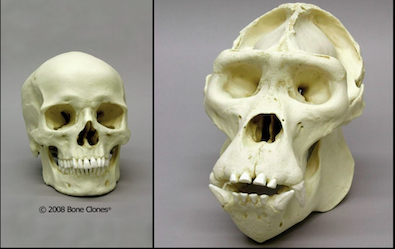
The study revealed striking contrasts in evolutionary patterns between human skulls and those of other apes. While gibbons maintained remarkable uniformity across species, showing minimal evolutionary change, great apes developed significantly greater anatomical variety. Humans stood out even within the hominid group, demonstrating the fastest evolutionary rate of all ape species. Researchers divided each skull into four main regions—upper face, lower face, front of the head, and back of the head—to precisely measure these evolutionary differences.
Beyond Intelligence: The Social Factor
Lead author Dr. Aida Gomez-Robles from UCL Anthropology emphasized that the rapid evolution of human skulls cannot be attributed solely to intelligence. While the cognitive advantages of larger brains certainly played a role, social factors likely contributed significantly to this accelerated pace. The research team noted that gorillas, which have the second-fastest evolutionary rate among great apes, possess relatively small brains compared to other apes. In their case, social selection—where larger cranial crests correlate with higher social status—appears to drive evolutionary changes.
Implications for Understanding Human Evolution
This research provides crucial insights into the unique evolutionary pressures that shaped modern humans. The findings suggest that both cognitive development and social dynamics worked in concert to accelerate human evolution beyond what would be expected under normal evolutionary rates. The study, published in Proceedings of the Royal Society B, represents a significant advancement in our understanding of how humans developed their distinctive combination of large brains and flat faces, setting us on an evolutionary path distinct from all other primates.