Read on Global News
U.S. Naval Presence in Caribbean Signals Escalating Pressure on Venezuela
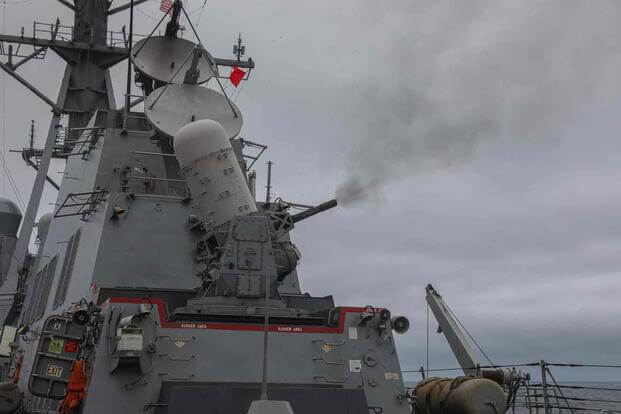
The USS Gravely guided missile destroyer has docked in Trinidad and Tobago's capital as part of escalating U.S. military pressure on neighboring Venezuela. This deployment coincides with the movement of the aircraft carrier USS Gerald R. Ford closer to Venezuelan waters, representing a significant show of force by the Trump administration. The warship will remain until Thursday for joint training exercises between the U.S. and Trinidad and Tobago, though the move has drawn both support from the island nation's leadership and criticism from local protestors concerned about regional tensions.
The strategic deployment of U.S. naval assets in the Caribbean region represents a significant escalation in military pressure on Venezuela's government under President Nicolás Maduro. The arrival of the USS Gravely, a guided missile destroyer, in Trinidad and Tobago's capital on Sunday marks a coordinated military presence that includes the movement of the aircraft carrier USS Gerald R. Ford closer to Venezuelan territory.
Military Deployment Details
The USS Gravely will remain stationed in Trinidad until Thursday, during which time both countries will conduct joint training exercises. According to military officials, these exercises were only recently scheduled, indicating the rapidly evolving nature of U.S. military strategy in the region. A senior military official in Trinidad and Tobago confirmed the timing but spoke under condition of anonymity due to lack of authorization to discuss the matter publicly.
Political Context and Regional Reactions
Venezuelan President Nicolás Maduro has strongly criticized the movement of U.S. naval assets, characterizing it as an attempt by the U.S. government to fabricate what he calls "a new eternal war" against his country. This comes amid accusations from U.S. President Donald Trump that Maduro leads the organized crime gang Tren de Aragua, though evidence supporting this claim has not been publicly provided.

Regional Support and Opposition
Trinidad and Tobago Prime Minister Kamla Persad-Bissessar has emerged as a vocal supporter of the U.S. military presence and the deadly strikes on suspected drug boats in waters off Venezuela. However, the deployment has faced significant local opposition. David Abdulah, leader of the Movement for Social Justice political party, organized protests outside the U.S. Embassy, stating that "This is a warship in Trinidad, which will be anchored here for several days just miles off Venezuela when there's a threat of war. That's an abomination."
Strategic Objectives and Regional Dynamics
According to U.S. Embassy Chargé d'Affaires Jenifer Neidhart de Ortiz, the exercises aim to "address shared threats like transnational crime and build resilience through training, humanitarian missions, and security efforts." The deployment occurs amid broader regional concerns, with the Caribbean Community (CARICOM) trade bloc calling for dialogue while Prime Minister Persad-Bissessar has countered that the region cannot be considered a zone of peace given current levels of violent crime.
The U.S. naval presence in the Caribbean represents a calculated escalation in pressure on Venezuela's government, combining military capability with diplomatic messaging. While supported by Trinidad and Tobago's leadership, the deployment has exposed divisions within the Caribbean community about the appropriate response to regional security challenges and the proper role of external military forces in addressing them.