Einstein's Overlooked Idea: Gravitational Waves as the Universe's True Origin
A groundbreaking study challenges traditional Big Bang cosmology by proposing that gravitational waves, not cosmic inflation, drove the universe's formation. Researchers from Spain and Italy have developed a model using De Sitter space mathematics that suggests gravity and quantum mechanics alone could explain cosmic structure. This elegant approach revives a century-old concept from Einstein's work and offers a simpler, more verifiable alternative to current theories about the universe's earliest moments.
For decades, cosmologists have relied on the theory of cosmic inflation to explain the universe's rapid expansion immediately after the Big Bang. However, a revolutionary new study published in Physical Review Research proposes a fundamentally different approach—one that returns to Einstein's original insights about gravitational waves as the primary force behind cosmic creation.
Rethinking Cosmic Beginnings
The traditional inflation theory suggests the universe expanded at an extraordinary rate within a tiny fraction of a second after its birth. This model depends on multiple interconnected variables that must align perfectly to work. The new research, conducted by scientists from Spain and Italy, challenges this complexity with a more elegant solution rooted in Einstein's general relativity.
According to Dr. Raúl Jiménez of ICREA in Spain, co-author of the study, "For decades, we have tried to understand the early moments of the Universe using models based on elements we have never observed. What makes this proposal exciting is its simplicity and verifiability. We are not adding speculative elements but rather demonstrating that gravity and quantum mechanics may be sufficient to explain how the structure of the cosmos came into being."

The De Sitter Space Connection
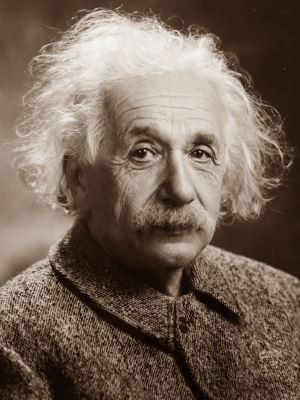
The researchers' model connects general relativity with quantum mechanics using De Sitter space, a mathematical construct named for Dutch mathematician Willem De Sitter, who collaborated with Einstein in the 1920s. This framework suggests that gravitational waves—ripples in the fabric of space-time first predicted by Einstein in 1916—could have been the driving force that shaped the universe's structure.
Using advanced computer simulations, the team demonstrated how these fundamental waves could generate the cosmic patterns we observe today, from galaxies and stars to planets and life itself. The approach eliminates the need for the speculative elements required by inflation theory, offering instead a model based on established physical principles.
Historical Context and Modern Verification
The concept of gravitational waves dates back to 1893 and 1905, when Oliver Heaviside and Henri Poincaré first proposed related ideas. Einstein expanded on this foundation in his general theory of relativity, describing how massive cosmic events like supernovae, merging black holes, and colliding neutron stars could generate these space-time ripples.
It wasn't until September 2015 that scientists at the Laser Interferometer Gravitational-Wave Observatory (LIGO) achieved the first confirmed detection of gravitational waves, opening new possibilities for testing cosmological theories. This new research builds on that detection capability, proposing that similar waves from the universe's earliest moments could be responsible for its fundamental structure.
Implications for Cosmology
This gravitational wave model represents a significant shift in how scientists approach the universe's origins. By focusing on observable phenomena rather than theoretical constructs, it offers a more testable framework for understanding cosmic beginnings. The research, published in Physical Review Research, suggests that the answers to cosmology's biggest questions may lie in principles we've understood for over a century.
As the scientific community continues to explore these ideas, this approach could reshape our understanding of not only how the universe began, but how fundamental forces like gravity and quantum mechanics interact on the largest scales. The simplicity and elegance of returning to Einstein's original insights may provide the key to unlocking mysteries that have puzzled cosmologists for generations.