Unveiling the Hidden Heart of Galaxy OJ 287: A Virtual Telescope's Breakthrough Discovery
An international team of astronomers has captured an unprecedented image of galaxy OJ 287's core using a virtual telescope five times wider than Earth. The groundbreaking image reveals a sharply curved plasma jet and provides compelling evidence for binary supermassive black holes at the galaxy's center. This discovery offers new insights into how black holes shape galactic jets and generate gravitational waves, marking a significant advancement in our understanding of extreme cosmic environments.
In a remarkable achievement that pushes the boundaries of astronomical observation, scientists have captured the most detailed image ever of galaxy OJ 287's core, revealing features never before seen in this distant cosmic object. The breakthrough comes from an international research team led by Dr. Efthalia Traianou of Heidelberg University, who utilized a revolutionary virtual telescope system to peer deep into the galaxy's mysterious heart.
The Revolutionary Telescope Technology
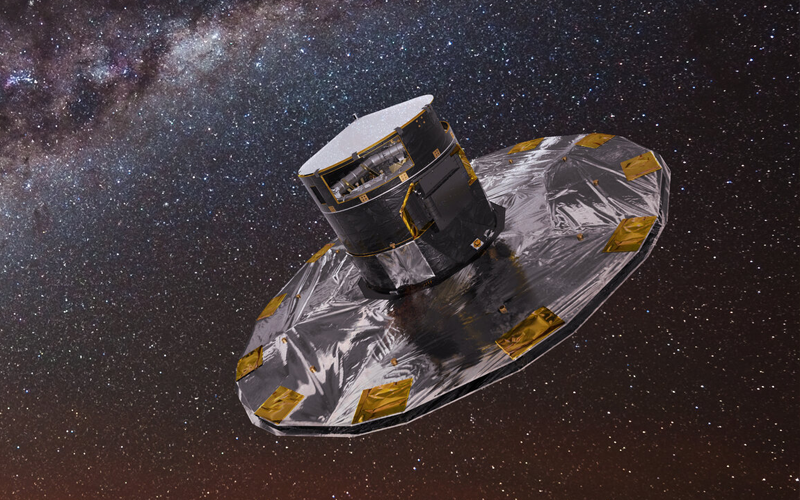
The key to this unprecedented observation lies in the innovative use of radio interferometry combining space-based and ground-based observatories. Researchers created what effectively became a virtual telescope five times wider than Earth's diameter by linking signals from the ten-meter antenna of the RadioAstron mission aboard the Spektr-R satellite with 27 ground-based observatories worldwide. This extraordinary resolution was achieved by measuring how light waves overlap, taking full advantage of the wave properties of light itself.
Unprecedented Details Revealed
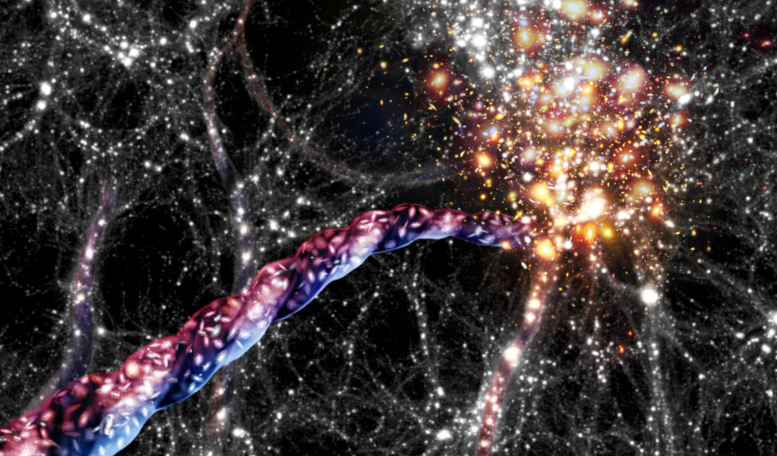
The new image penetrates deeply into OJ 287's center, revealing a sharply bent, ribbon-like jet structure that provides crucial clues about the plasma's composition and motion. Some areas within this jet reach temperatures of around ten trillion degrees Kelvin, demonstrating the immense energy being released near the black hole. The scientists also detected a new shock wave forming and colliding along the jet, which they linked to trillion-electron-volt energy levels observed in an unusual gamma-ray signal detected back in 2017.

Binary Black Hole Confirmation
For more than 150 years, astronomers have been captivated by OJ 287's puzzling variations in brightness, which long hinted that two enormous black holes might be orbiting and merging at its center. The new interferometric image provides the strongest evidence yet supporting this assumption. OJ 287 is classified as a blazar, a type of active galaxy known for its intense energy and brightness, with a supermassive black hole that draws in matter from nearby space and propels some of it outward in colossal plasma jets.
Scientific Implications and Future Research
This discovery provides important information on how the movements of binary black holes influence the form and orientation of plasma jets emitted from galactic centers. As Dr. Traianou explains, "Its special properties make the galaxy an ideal candidate for further research into merging black holes and the associated gravitational waves." The research, published in the journal Astronomy & Astrophysics, represents a collaborative effort involving institutions from Germany, Italy, Russia, Spain, South Korea, and the United States.

The successful imaging of OJ 287's core marks a significant milestone in astrophysical research, demonstrating how advanced telescope technology can unlock secrets of the universe that were previously beyond our observational capabilities. This achievement not only confirms long-standing theories about binary black holes but also opens new avenues for understanding the extreme environments surrounding supermassive black holes and their role in shaping galactic structures across the cosmos.