Asteroid 2025 TF's Record Close Flyby: A Milestone in Planetary Defense
On October 1, 2025, asteroid 2025 TF made an exceptionally close pass over Antarctica, flying just 428 km above Earth's surface—approximately the same altitude as the International Space Station. Measuring only 1-3 meters in diameter, this car-sized space rock was detected hours after its closest approach by the Catalina Sky Survey. European Space Agency astronomers later confirmed its trajectory with extraordinary precision, demonstrating significant advances in planetary defense capabilities. While posing no threat due to its small size, this event highlights the dynamic nature of near-Earth space and the growing sophistication of global asteroid detection systems.
In a remarkable demonstration of modern astronomical capabilities, asteroid 2025 TF made an exceptionally close approach to Earth on October 1, 2025, passing just 428 kilometers above Antarctica's surface. This extraordinary event, occurring at 00:47:26 UTC with a precision of ±18 seconds, represents one of the closest recorded asteroid flybys in recent history, flying at approximately the same altitude as the International Space Station.

The Close Encounter Details
Asteroid 2025 TF, measuring between 1-3 meters in diameter—roughly the size of a small car—passed within 428 ± 7 km of Earth's surface during its closest approach. The Catalina Sky Survey detected the object several hours after it had already made its closest pass, highlighting both the challenges and capabilities of current detection systems. Despite the late detection, the asteroid posed no danger to Earth due to its small size, as objects of this scale typically burn up in the atmosphere or create spectacular fireballs without causing damage.
ESA's Rapid Response and Precision Tracking
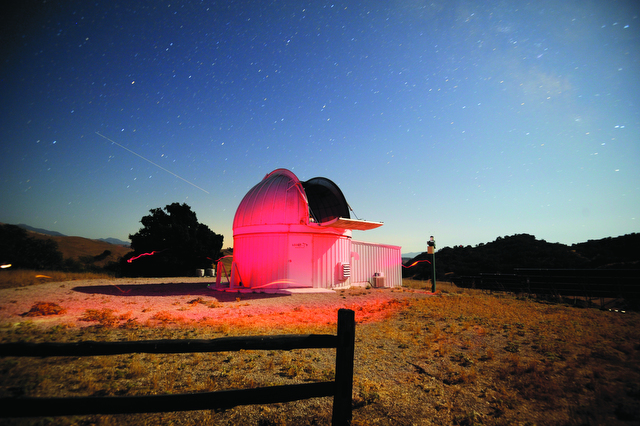
Following the initial detection, astronomers from ESA's Planetary Defence Office quickly mobilized to observe the object using the Las Cumbres Observatory telescope at Siding Spring in Australia. These follow-up observations proved crucial in determining the asteroid's distance and timing of closest approach with what ESA described as "outstanding precision." The ability to locate and track such a small object in the vastness of space, especially when its position remained uncertain, represents a significant achievement in planetary defense technology.
Understanding Asteroid Size and Risk Assessment
Asteroids of 2025 TF's size belong to a class of near-Earth objects considered harmless on a planetary scale. According to ESA research, space rocks this small enter Earth's atmosphere several times each year, typically breaking apart high above the surface. When fragments do reach lower altitudes, they usually result in bright fireballs and occasionally leave behind small meteorites. These events provide valuable scientific data about asteroid composition while posing minimal risk to people or infrastructure.
Global Planetary Defense Networks
The successful tracking of 2025 TF demonstrates the effectiveness of coordinated international efforts in planetary defense. Worldwide networks of observatories, including surveys like Catalina Sky Survey and Pan-STARRS, continually scan the skies for moving objects. When astronomers detect close-passing objects, even small ones like 2025 TF, they can test detection systems and improve prediction models. Each such observation strengthens our ability to identify potential hazards early, providing valuable data for future encounters with more substantial objects.
Significance for Future Planetary Defense
While Asteroid 2025 TF never threatened Earth, its close flyby serves as both a reminder of our dynamic solar neighborhood and a demonstration of advancing astronomical precision. The successful tracking of such a tiny object shortly after discovery shows how far planetary defense efforts have progressed. As ESA scientists note, these encounters test response capabilities and improve our preparedness for whatever space may send our way in the future.