Read on PBS News
Progressive Victories in New York Primaries Signal Shift in Democratic Party Dynamics
In a striking display of progressive strength, three candidates backed by New York City Mayor Zohran Mamdani won their midterm primary elections, including two who unseated incumbent congressmen. The results underscore growing tensions within the Democratic Party over key issues such as Israel policy and economic priorities. Brigid Bergin of New York Public Radio provides analysis on what these outcomes mean for the party's future, particularly with an eye toward the 2028 presidential election.
New York's midterm primary elections delivered a resounding victory for progressive Democrats, marking a significant moment for the city's political landscape and signaling potential shifts within the national Democratic Party. All three candidates endorsed by New York City Mayor Zohran Mamdani, a Democratic Socialist, won their respective races, with two of them successfully ousting sitting congressmen. This outcome, reported by PBS NewsHour and analyzed by Brigid Bergin of New York Public Radio, highlights the growing influence of the progressive wing and the deep divisions within the party over policy and direction.

The most notable upsets occurred in New York's 13th Congressional District, where Darializa Avila Chevalier, a Democratic socialist, defeated five-term incumbent Adriano Espaillat. In the 10th Congressional District, Brad Lander beat incumbent Congressman Dan Goldman by a substantial margin of roughly 30 points. Lander's campaign heavily focused on the candidates' divergent views on U.S. policy toward Israel and Palestine, a theme that resonated across multiple races.
Brigid Bergin explained the significance of these results, noting that Democratic politics in the country have deep roots in New York City, the home of both House Democratic Leader Hakeem Jeffries and Senate Minority Leader Chuck Schumer. The challenge to the establishment, she said, lands directly at the doorstep of these national party leaders. "It is likely, as we are seeing in elections in other parts of the country... an increased number of Democratic socialist candidates running for office and potentially challenging incumbents," Bergin said. "And, as in the case of New York City, they may be successful."
The Rise of Democratic Socialism in New York
Mayor Mamdani, who spoke at a victory party, framed the results as a continuation of a movement, not an anomaly. "We are showing that last June a year ago tomorrow was not an anomaly," he said to a cheering crowd. "It was not the end. It was the beginning." This sentiment underscores a belief among progressive activists that their brand of politics is gaining permanent traction.

Defining Democratic Socialist Policy Goals
According to Bergin, these candidates center their platforms on the needs of working-class New Yorkers. Their key policy goals include a strong stance on Medicare for All, universal childcare, and making basic benefits more accessible. A defining characteristic that distinguishes them from mainstream Democrats is their position on Israel. They are "definitely more pro-Palestinian and take a lot of objection to the current position of the Democratic Party or its traditional position when it comes to being an ally of Israel without question," Bergin said. This policy difference also extends to a broader critique of foreign policy, with candidates like Lander arguing that "Joe Biden's hug Bibi strategy was a catastrophic failure." Incumbent Dan Goldman framed the conflict differently, telling supporters that "the enemy to all that we want and all that we hope for is in the White House, not in our own party."
The Role of the Gaza Issue in the Primaries
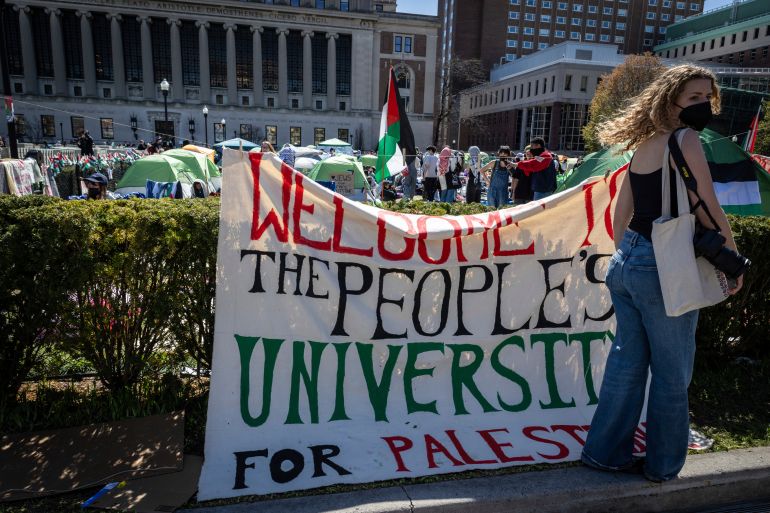
The war in Gaza was a defining issue in several races, serving as a stark dividing line between incumbents and challengers. In the 7th Congressional District, Assembly Member Claire Valdez defeated Brooklyn Borough President Antonio Reynoso. While both had characterized events in Gaza as a genocide, Valdez was seen as having been outspoken on the issue much sooner, giving her credibility with pro-Palestinian voters. In the 13th District, Darializa Avila Chevalier ran on a platform that prioritized local spending over foreign interventions, using the slogan "babies, not bombs."
Specifically, Chevalier targeted Espaillat for his lack of assistance regarding Mahmoud Khalil, a Palestinian activist who was arrested by ICE. Khalil and his wife subsequently made an ad for a super PAC supporting Chevalier, directly tying the race to the politics of the Gaza conflict. Bergin noted that this issue was "certainly animating voters in that district."
Looking Ahead: Mamdani's Influence and 2028
The primary results significantly elevate Mayor Mamdani's political influence. A get-out-the-vote rally featuring Senator Bernie Sanders just before primary day signaled the coalition-building efforts underway. Bergin reported that at the rally, Mamdani framed the coming years as a crucial period. When asked when the 2028 campaign begins, he replied: "It begins now. It begins on primary day." This suggests that Mamdani and the Democratic Socialists of America are aiming to exert major influence on the party's future direction and the next presidential election.
President Trump responded to the results on social media, saying, "America the beautiful will never be a communist country." While the immediate impact is on New York's political makeup, the broader message for the Democratic Party is one of internal conflict and ideological struggle. The success of progressive candidates in primary challenges suggests a voting base that is energized by a more assertive, left-wing policy agenda, particularly on foreign policy and economic justice, a dynamic that national party leaders will have to contend with seriously. Read more from PBS NewsHour's coverage.