Read on France 24
Colombia’s Leftist Candidate Concedes Presidential Vote to Trump-Backed Abelardo de la Espriella
Colombia's left-wing presidential candidate Ivan Cepeda conceded defeat to conservative outsider Abelardo de la Espriella, who was endorsed by US President Donald Trump. De la Espriella, a businessman and lawyer with no prior political experience, won by a margin of one percentage point, or roughly 251,000 votes. The result marks a significant political shift in Colombia, as voters turned to an anti-establishment figure promising a tough-on-crime approach, including mega-prisons inspired by El Salvador's Nayib Bukele. Cepeda, a lawmaker who pledged to continue outgoing President Gustavo Petro's policies, will now lead the opposition. The election reflects a broader global trend of countries electing political outsiders to address complex social and security challenges.
Colombia's political landscape shifted decisively on Wednesday as left-wing candidate Ivan Cepeda formally conceded the presidential election to conservative outsider Abelardo de la Espriella. The concession, which came days after the second-round vote on Sunday, June 21, 2026, ended a tense period of uncertainty as Cepeda had initially refrained from accepting the results pending a full recount. De la Espriella, a 47-year-old businessman and lawyer endorsed by US President Donald Trump, secured victory by a razor-thin margin of one percentage point, equating to nearly 251,000 votes.
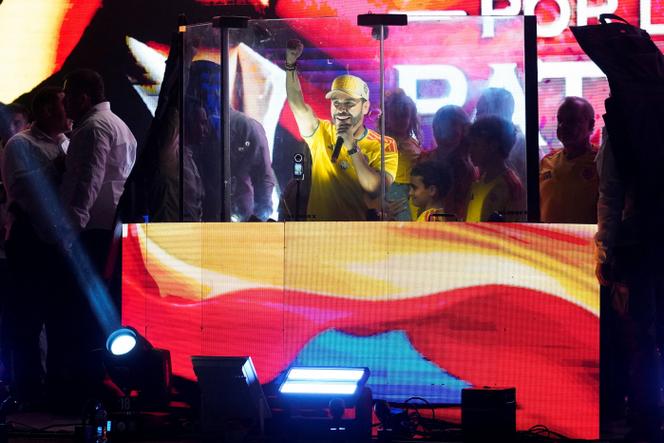
In a nationally televised address, Cepeda struck a conciliatory but firm tone.
“We assume with serenity, responsibility, and absolute resolve – and let there be no doubt about it – the role that circumstances demand of us. We will exercise a democratic, vigilant and constructive opposition,”he stated. His concession effectively serves as an indictment of the outgoing administration of President Gustavo Petro, whose policies Cepeda had championed, particularly the largely unsuccessful “total peace” initiative aimed at negotiating with multiple armed groups.
De la Espriella, nicknamed “The Tiger,” is a self-proclaimed representative of “the never-before-seen” – a political outsider who has never held elected office. His campaign drew on deep public frustration with persistent insecurity and economic stagnation. He has promised a heavy-handed approach to combatting violent crime, borrowing heavily from the strategies of Salvadoran President Nayib Bukele, including the construction of mega-prisons. While these tactics have lowered homicide rates in El Salvador, they have also sparked accusations of human rights abuses. De la Espriella, who holds dual Colombian and US citizenship and is a member of the Republican Party, will assume office on August 7, beginning a four-year term.

The outcome adds Colombia to a growing list of nations – from the United States to El Salvador – that have turned to anti-establishment figures in search of solutions to complex social, security, and economic challenges. De la Espriella’s victory signals a decisive break from the Petro era, with voters opting for a law-and-order platform over the progressive continuity offered by Cepeda. As Colombia prepares for this leadership transition, the coming months will test whether the outsider's bold promises can translate into tangible change for a nation weary of conflict and yearning for stability.