Read on the Guardian
CIA Chief's Caracas Visit Signals New US-Venezuela Dynamic After Maduro's Ouster
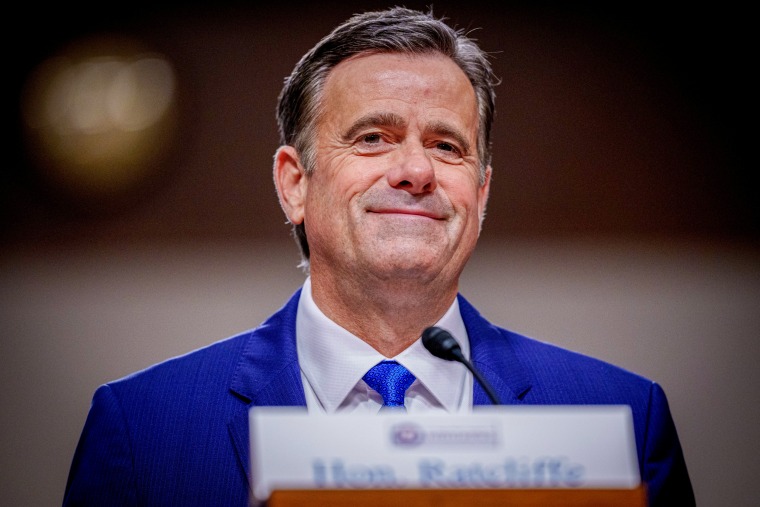
CIA Director John Ratcliffe's visit to Caracas to meet acting President Delcy Rodríguez marks a pivotal shift in US-Venezuela relations, occurring less than two weeks after US agents reportedly helped abduct former leader Nicolás Maduro. This high-level engagement underscores the Trump administration's strategic pivot towards working with remnants of Maduro's regime, sidelining opposition leader María Corina Machado despite her symbolic gift of a Nobel Peace Prize medal to Donald Trump. The move reveals a pragmatic US focus on stability and resource access over ideological alignment, reshaping Venezuela's political landscape and raising questions about the future of democratic transition in the nation.
The geopolitical landscape of Venezuela underwent a dramatic transformation in early January 2026, setting the stage for a high-stakes diplomatic encounter that would redefine US engagement in the region. Less than two weeks after US special forces reportedly abducted Venezuelan President Nicolás Maduro in a pre-dawn raid on Caracas, CIA Director John Ratcliffe arrived in the Venezuelan capital for a meeting that signaled a profound strategic shift. His audience: Delcy Rodríguez, Maduro's vice-president and successor, now leading an interim administration composed largely of the former leader's closest allies. This visit, occurring against the backdrop of sidelined opposition and symbolic political gestures, reveals the complex realities of power, pragmatism, and post-intervention politics in a nation long plagued by crisis.
The Strategic Pivot: From Regime Change to Regime Engagement
The Trump administration's decision to engage directly with Rodríguez's government represents a significant departure from initial expectations following Maduro's capture. Rather than installing opposition leader María Corina Machado—whose movement is widely believed to have defeated Maduro in the 2024 presidential election—the US has opted to work with existing power structures. This pragmatic approach, as articulated by US Energy Secretary Chris Wright, prioritizes preventing "a collapse of the nation" over immediate democratic transition. The administration has openly acknowledged working "with the people that have the guns today to ultimately move the country to a representative government," indicating a long-term, stability-first strategy that accepts continued involvement of figures implicated in human rights violations during Maduro's rule.
The Sidelined Opposition: Machado's Symbolic Gambit
While Ratcliffe met with Rodríguez in Caracas, opposition leader María Corina Machado found herself increasingly marginalized despite her bold public pronouncements. In a Fox News interview broadcast just days before the CIA director's visit, Machado vowed to become "the first woman president of Venezuela" and predicted freedom was coming to her homeland after years of economic mayhem and authoritarianism. Her confidence, however, contrasted sharply with her political reality. In what many analysts viewed as a desperate attempt to regain relevance, Machado presented her Nobel Peace Prize medal to Donald Trump in a golden picture frame, praising what she called his "principled and decisive move" against Maduro. This symbolic gesture, as reported by The Guardian, failed to alter the administration's calculus, with experts noting Trump's personal animosity toward Machado and CIA assessments questioning her ability to control Venezuela's military and armed pro-regime groups.

The Rodríguez Administration: Pragmatism Over Ideology
Delcy Rodríguez's interim government has moved swiftly to establish cooperative relations with the United States, despite the awkward circumstances of its formation. During a state of the union address that Maduro had expected to deliver himself, Rodríguez declared that Venezuela "had the right" to good relations with the US and expressed willingness to travel to Washington for talks. This represents a remarkable ideological departure for a political movement built on anti-imperialist rhetoric. As noted by US lawyer Eva Golinger, a former advisor to Hugo Chávez, "You can't claim in the morning ... that you're an anti-imperialist sovereign movement and then receive the director of the CIA ... after 10 days earlier they bombed Caracas and executed an extraordinary rendition of the sitting head of state." Rodríguez's pragmatic approach has yielded tangible results, including the reopening of Venezuela's vast oil reserves to US companies and the resumption of deportation flights carrying Venezuelans from the United States.
Regional Implications and Future Trajectory
The evolving US-Venezuela relationship carries significant implications for regional stability and global energy markets. The Trump administration's willingness to work with Rodríguez's government despite its connections to Maduro's authoritarian regime establishes a precedent for pragmatic engagement that prioritizes strategic interests over democratic ideals. This approach has drawn criticism from those who view it as a betrayal of opposition forces that long supported US policy toward Venezuela. Meanwhile, the arrival of Ratcliffe in Caracas—where his agents had recently infiltrated Maduro's inner circle to facilitate his capture—created what one observer called "a mortifying moment" for Rodríguez's administration. Yet both sides appear committed to this uneasy partnership, with Rodríguez complying with key US demands and the US providing legitimacy to her interim government. As Venezuela navigates this unprecedented transition, the balance between stability and democracy remains precarious, with the opposition sidelined and the future of free elections uncertain.