Read on the Guardian
Trump Administration Targets Immigrants from Countries Most Vulnerable to Climate Shocks
A Guardian analysis reveals that the majority of countries facing US entry restrictions under the Trump administration are among the most vulnerable to climate-driven disasters. This article explores the intersection of immigration policy and climate displacement, highlighting how millions of people from vulnerable nations like Chad, Niger, Sudan, and Honduras are being barred from the US even as they face worsening storms, droughts, floods, and other environmental catastrophes exacerbated by the climate crisis. The analysis draws on data from the Notre Dame Global Adaptation Initiative and underscores the challenges faced by climate refugees in a legal system that does not recognize environmental factors as grounds for asylum.
Donald Trump’s immigration crackdown is largely targeting people from the countries most vulnerable to displacement from climate-driven disasters, a Guardian analysis of the 39 countries facing US entry restrictions reveals. As the Trump administration pushes policies to boost planet-heating fossil fuels, millions of people are being forced to flee their homelands due to storms, floods and droughts worsened by the climate crisis. According to the analysis, 22 of the 39 restricted countries are ranked within the most vulnerable quarter of nations to climate impacts, based on data from the Notre Dame Global Adaptation Initiative.
The Climate Vulnerability of Banned Countries
Nearly all of the most climate-vulnerable countries are now subject to full or partial travel bans or visa pauses. Immigrants from Chad and Niger, the two most climate-vulnerable countries in the world according to the Notre Dame index, are now fully barred from entering the US, as are people from Sudan, Somalia and Sierra Leone, also among the 10 countries most exposed to climate impacts. These nations already face severe environmental stressors such as desertification, extreme heat, and flooding, which are compounded by political instability and conflict. The Trump administration’s sweeping bans have effectively closed the door to one of the few potential havens for people in these regions, despite the US being the world’s largest historical emitter of planet-heating pollution.
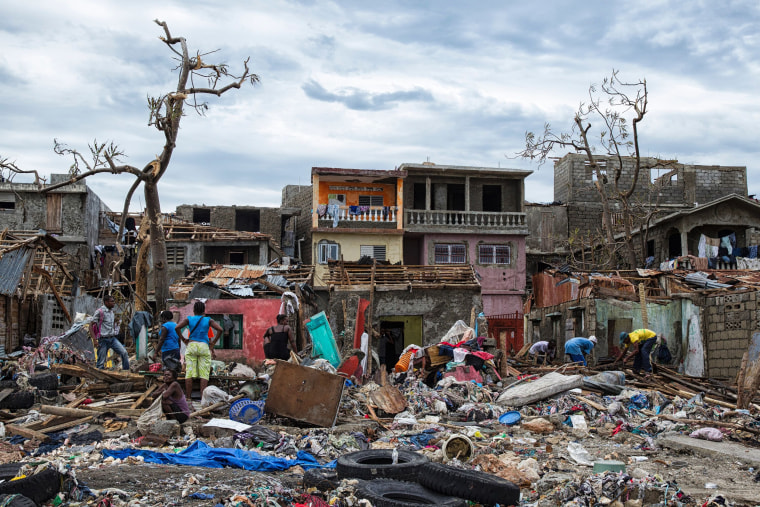
Among the most vulnerable half of countries is Honduras, which has experienced stronger rainstorms, droughts, floods and coastal erosion in recent years. When Hurricane Mitch crashed into the country in 1998, killing approximately 7,000 people, many families were left with unsalvageable homes and only one lifeline: to move to the US. Evelyn, a Honduran immigrant who did not want to share her full name, was a teenager when the hurricane hit. She recalled how her relatives in New York City pleaded with her mother to bring her and her sister to safety.
“There were bodies and dead animals floating in the water, the house was messed up, the furniture was all gone – doors, windows gone. It was so, so sad,” said Evelyn. “I got sick because of the mosquitoes too. My uncle and aunt were just like: ‘OK, just bring the kids over here, don’t stay. It’s dangerous.’”
Storms of the deadly ferocity of Mitch are even more likely today because our atmosphere and oceans have rapidly heated due to the burning of fossil fuels. Yet Trump’s curbing of immigration and asylum has made it far harder for people like Evelyn to flee to the US. Evelyn, who still lives in New York and has two daughters studying at university, noted the increasing difficulty. “Every day it’s more barriers,” she said. “It’s sad to know that people will not be able to apply for a status or something to help their situation and also help the people back home.”
Climate Displacement and the Legal Void
The climate displacement crisis is escalating worldwide. The United Nations estimates that severe heatwaves, droughts, storms and floods have uprooted 250 million people globally over the past decade, equivalent to 70,000 displacements every day. In 2025 alone, nearly 30 million people were forced to move within their countries due to disasters, with wildfires being the largest cause of such displacement. However, the majority of migration remains internal, and only a fraction crosses international borders because there is no legal framework for so-called climate refugees. Neither US law nor the UN’s 1951 refugee convention recognizes environmental disasters as a reason to gain protection in another country.
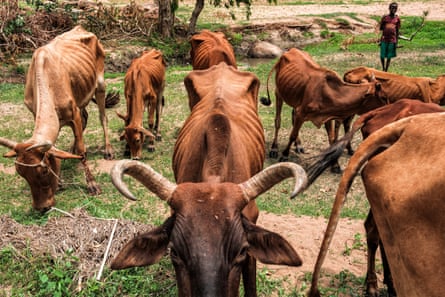
Jocelyn Perry, program manager of the climate displacement program at Refugees International, explained that people are increasingly being displaced permanently by climate change. “A house in Florida may be able to withstand a category four hurricane, but there are people around the world unable to deal with that in any way and they are bearing the brunt of this,” she said. Advocates note that climate displacement often compounds other misfortunes, such as violence, which then serves as the basis for asylum claims even though the root cause is environmental. For example, crop failures from drought can force families to move to urban areas where they face conflict, leading them to seek refuge abroad. “Climate change is not necessarily the first issue that displaced people raise,” said Perry, “but if a family’s crops fail for three years and they have to move to an urban area and they can’t find work or it’s dangerous there, climate change has played a key role in their movement.”
The Trump Administration’s Broader Impact
In addition to travel bans, the Trump administration has sought to terminate the temporary protected status (TPS) of people from Honduras and 12 other countries who already reside in the US, with nearly half of these nations among the most climate-vulnerable in the world. The US supreme court is now considering an appeal to the TPS revocation for people from Syria and Haiti, two countries that have suffered recent droughts and hurricanes, respectively, as well as violent unrest. Environmental perils in these countries have been cited by the federal government when granting TPS status to allow people to remain in the US. The Trump administration has also effectively shut down the US refugee program—except for white South Africans—and dismantled overseas aid that ameliorates the symptoms of a warming world, such as the spread of disease. Cuts to USAID engineered by Elon Musk are forecast to result in the deaths of about 4.5 million young children in places like sub-Saharan Africa over the next five years.
All these actions are increasing displacement and making it harder for people to find refuge. “I don’t know if that will deter people if the other option is risking death or injury at home, though, so people will still make that journey,” Perry said. “We are seeing political decisions in the US and in Europe, too, that will leave more people stuck in vulnerable places and unable to respond. With worsening climate change, this is going to be horrific for the rest of the world.” The US, as the largest historical emitter of planet-heating pollution, bears a disproportionate responsibility for the climate crisis, yet its current policies are closing doors on those who suffer the most from it.
The Path Forward and Legislative Efforts
Efforts to update the US immigration system to include consideration of the climate crisis have so far floundered. The 1952 Immigration and Nationality Act (INA) defines a “refugee” as anyone who is unable to return to their home nation due to a well-founded fear of persecution based on race, religion, nationality, membership in a particular social group, or political viewpoint. It does not include protections for those displaced by environmental degradation—something researchers and advocates have long said is necessary. In 2021 and 2023, Democratic lawmakers introduced the Climate Displaced Persons Act, which would amend the INA to provide durable legal status and resettlement support to people forced to relocate to the US due to climate disasters. The bill would also ensure that agencies collect data on climate-related displacement, addressing a major roadblock to establishing and maintaining protections for those affected.
Senator Ed Markey of Massachusetts, who introduced both proposals, stressed the need for such legislation. “As disasters supercharged by climate change cause disruption and devastation around the world, the Trump administration wants to both destroy programs meant to build more resilient countries and make it impossible for those without recourse to seek refuge in the United States,” he said. Given the current political environment, however, the prospect of a new climate migration framework appears dim. “I wouldn’t say there’s a lot of optimism right now that any change could occur anytime in the near future,” Perry said. A future administration might focus more on adaptation funding to help people stay where they are rather than creating new visa categories, according to Yael Schacher, director for the Americas and Europe at Refugees International. “We have our own displacement in the US, too—we aren’t immune from this. Right now the sympathy for immigrants, even people displaced by the worst persecution, is nil. It’s hard to see any sort of expansive opening—up, even if that’s what people need.”
In conclusion, the Trump administration’s immigration policies are disproportionately affecting the world’s most climate-vulnerable countries, locking out millions of people who are fleeing disasters worsened by the climate crisis. Without a legal framework to protect climate refugees, and with the administration simultaneously dismantling aid and environmental protections, the humanitarian toll is likely to escalate. A more just and sustainable approach would align immigration policy with climate reality, offering pathways for those displaced by the very emissions that the US has historically led in producing.