Read on the Guardian
Global Attacks on Education Surge by 40%, Affecting Thousands of Students and Staff
A new report from the Global Coalition to Protect Education from Attack (GCPEA) reveals a dramatic 40% increase in attacks on education worldwide, with over 8,556 incidents recorded in 83 countries during 2024 and 2025. At least 10,600 students and staff were killed, injured, abducted, or arrested. The highest impacts were seen in Colombia, the Democratic Republic of the Congo, Ethiopia, Haiti, Palestine, and Ukraine. The report warns of collapsing global norms protecting children and calls for urgent state action to end military use of schools and strengthen legal accountability.
Attacks on education globally have surged by 40%, with more than 8,556 recorded incidents and at least 10,600 students and staff killed, injured, abducted, arrested, or otherwise harmed in 2024 and 2025, according to new research from the Global Coalition to Protect Education from Attack (GCPEA). The study, published on Monday, documents attacks reported in 83 countries, with the highest incidences recorded in Colombia, the Democratic Republic of the Congo, Ethiopia, Haiti, Palestine, and Ukraine. Ukraine experienced about 900 attacks on schools, while Palestine saw at least 2,400 attacks on students and staff.
Rising Threats and Systematic Violence
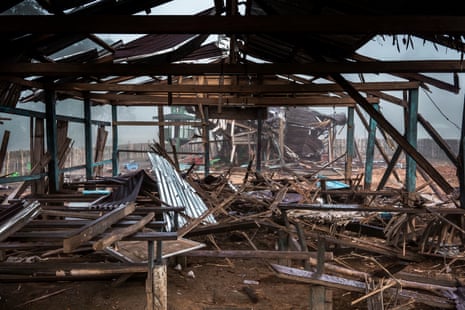
The report highlights a disturbing trend: cases of military forces or armed groups occupying schools or universities nearly doubled, increasing by 91% from the previous two years, with 1,912 recorded cases. Lisa Chung Bender, director of the GCPEA, described the findings as a warning that global norms protecting children are collapsing. "A warning that the world is drifting toward a place where even the youngest are no longer off-limits. And a warning that if we do not hold the line now, we may never get it back," she said.
The highest numbers of victims were reported in Myanmar, Nigeria, Yemen, and Cameroon, where more than 1,700 students and staff in total were killed or injured. In Nigeria, more than 700 students and staff were reportedly kidnapped. In Myanmar, at least 80 students and staff were killed, and about 240 were injured. Prof Tejendra Pherali, professor of education, conflict and peace at University College London, commented on the pattern: "It's heartbreaking to see numbers are rising; it is the same pattern every year. In my view, this is more systematic rather than episodic, and attacks are increasingly strategic."
Gender-Based Targeting and Impact on Vulnerable Groups
The report found that in at least 11 countries, women and girls were targeted because of their gender. In one example in Nigeria, on 17 November 2025, gunmen attacked a girls' boarding school, killing the vice-principal and abducting 25 female pupils. Students with disabilities, who already face significant obstacles to accessing education, were also affected. On 11 September 2025 in Lebanon, sources reported that the Israeli military carried out a controlled detonation to destroy a school for children with special needs.

Widespread Use of Explosives and International Law Violations
The use of high explosives, including drone-borne munitions, featured frequently in attacks on schools, resulting in extensive casualties, damage to infrastructure, and forcing many institutions to close. Kieran King, from the charity War Child UK, stated that attacks on education are a grave violation of international law, such as the Geneva Conventions. "The reality is that since 2010, we have seen a 60% increase of children living in conflict. Over the same period, we've seen grave violations against children, including attacks on education, increase by 373%," he said. King added that states acting without fear of sanction and aid cuts were worsening the situation.
Call for Action and Prevention
Despite the grim statistics, the GCPEA's Chung Bender insisted that the attacks are preventable. "We need states to end military use of schools, strengthen legal protection and accountability for attacks on education, and invest in monitoring, reporting and early warning systems," she said. The figures come as the number of conflicts between states has reached the highest level since the Second World War, with Uppsala University's conflict data programme registering 65 conflicts during 2025, 13 of which were classified as wars. More than 244,000 people were killed in organized violence in 2025, making it the second most bloody year since the genocide in Rwanda in 1994.
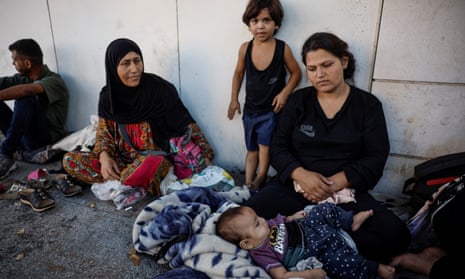
The report underscores the urgent need for global action to protect education from attack, ensuring that schools remain safe havens for learning and development. Without concerted efforts to enforce international law and hold perpetrators accountable, the future of millions of children remains at risk.
For more information, read the full Guardian article.