Read on France 24
Armenia Confirms Westward Turn in Parliamentary Elections
Armenian Prime Minister Nikol Pashinyan's ruling party won the parliamentary elections, as confirmed by the country's electoral commission with a 59% voter turnout. This victory cements Armenia's tilt toward the West, despite threats from Moscow and allegations of Russian interference. The election results signal a potential realignment of Armenia's foreign policy, moving away from its traditional ally Russia and toward closer ties with the European Union and other Western institutions.
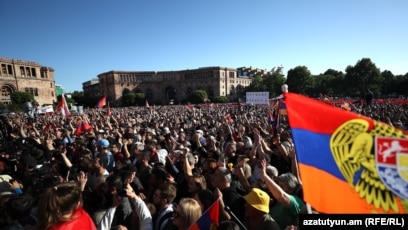
In a historic election that signals a major shift in the geopolitical landscape of the South Caucasus, Armenian Prime Minister Nikol Pashinyan's ruling party has secured a decisive victory in the country's parliamentary elections. According to Armenia's electoral commission, voter turnout reached 59%, reflecting significant public engagement. The outcome cements the nation's westward tilt, despite overt threats from Moscow and allegations of Russian interference in the electoral process.

The election results come at a time of heightened tension in the region, with Armenia increasingly seeking closer ties with the European Union and other Western nations. Pashinyan's pro-Western stance has been a cornerstone of his administration, advocating for deeper integration with Euro-Atlantic institutions. This move directly challenges the long-standing influence of Russia, which has historically been Armenia's primary security guarantor and economic partner.
Moscow's Reactions and Allegations of Interference
Moscow has reacted sharply to the election results, issuing threats and accusing Western powers of meddling. Russian officials have claimed that the election was marred by foreign interference, a charge that the Armenian government has vehemently denied. Independent observers, however, have flagged concerns about the increasingly polarized political environment, with hate speech and stigmatization marring the campaign period.
The electoral commission's announcement confirmed that Pashinyan's party won a majority, enabling it to form a government without coalition partners. This clear mandate gives the prime minister a strong hand to pursue his agenda of Western integration, which includes negotiating a comprehensive agreement with the European Union and seeking closer security cooperation with NATO allies.
However, the path forward is fraught with challenges. Russia remains a major trade partner and home to a large Armenian diaspora. The Kremlin has warned that any move to join Western military alliances would have "grave consequences." Nonetheless, the Armenian electorate appears to have made its choice, prioritizing sovereignty and alignment with European values over traditional ties.
Implications for Regional Stability
The election outcome is likely to reverberate across the region, particularly in the context of the Nagorno-Karabakh dispute and relations with neighboring Azerbaijan and Turkey. Pashinyan has signaled a willingness to pursue a more pragmatic foreign policy, seeking to balance regional pressures while drawing closer to the West. The election result could also embolden other post-Soviet states to reassess their relationships with Russia.
Armenian analysts have noted that the high voter turnout and the decisive victory indicate a broad public mandate for change. The government now faces the challenge of translating this electoral support into tangible improvements in governance, economic development, and security. The European Union has already welcomed the election results and expressed readiness to deepen cooperation with Armenia.
As the new government takes office, all eyes will be on how it navigates the delicate balancing act between Western aspirations and the practical realities of geography and security. The election marks a pivotal moment in Armenia's post-Soviet trajectory, one that could redefine its place in the world.