Vietnam's President To Lam Prioritizes China in First Overseas Visit
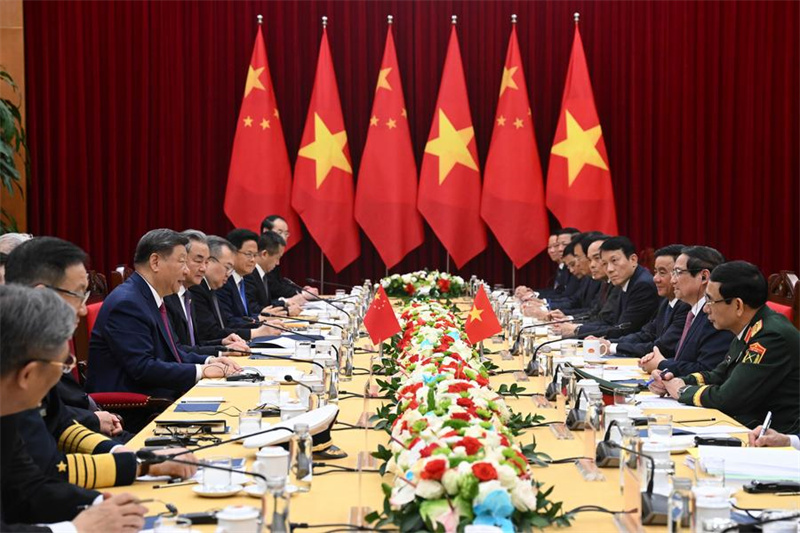
Just one week after assuming office, Vietnam's President To Lam embarked on a fast-tracked state visit to China, underscoring Hanoi's strategic prioritization of its relationship with Beijing amid global uncertainty. This unprecedented move, deviating from conventional diplomatic pacing, signals the enduring importance of the China-Vietnam partnership as a stabilizing force in the region. The visit reflects deep-rooted political trust, shared socialist systems, and a tradition where Vietnamese leaders prioritize ties with China. Beyond symbolism, the trip is grounded in pressing economic realities, including bilateral trade that reached $296 billion in 2025, making China Vietnam's largest trading partner for over two decades. Infrastructure cooperation, such as the Lao Cai-Hanoi-Hai Phong railway, and expanding collaboration in emerging fields like AI and the Internet of Things further solidify this strategic alignment.
Just one week after assuming office, Vietnam's President To Lam is set to visit China, a fast-tracked decision that breaks from conventional diplomatic pacing. This unusually swift move sends a clear message: China remains Vietnam's top foreign policy priority at a critical juncture marked by global uncertainty and geopolitical tensions. As analyzed by Ding Duo, a deputy director at the China National Institute for South China Sea Studies, the visit signals that Vietnam's new leadership is "not swayed by external interference" and remains committed to stable ties with China, highlighting the relationship's role as a strategic anchor.

Political Trust and Strategic Tradition
Vietnamese leaders have long prioritized China in their first overseas trips, reinforcing what both sides describe as a relationship of "comrades and brothers." This tradition is rooted in shared socialist systems, which facilitate governance exchanges and policy coordination. Vietnamese Ambassador to China Pham Thanh Binh has described the visit as "the most important bilateral diplomatic engagement" between the two countries in 2026, noting it is expected to deliver substantive outcomes across political, economic, and cultural fields.
Alignment During Global Uncertainty
Against a backdrop of geopolitical tensions, the visit is more than symbolic. Gu Xiaosong, dean of the ASEAN Research Institute at Hainan Tropical Ocean University, noted that the move underscores China's role as a primary partner in helping Vietnam maintain a stable external environment while advancing its development goals. The visit coincides with a pivotal time for both countries' development agendas, as 2026 marks the start of China's 15th Five-Year Plan and a new phase for Vietnam's 14th Party Congress goals, creating a crucial window to align strategies.
Economic Interdependence Driving Cooperation
Beyond political symbolism, the visit reflects pressing economic realities. Facing a global energy crisis, trade uncertainties, and tariff pressures, Vietnam is seeking closer cooperation with China on energy security and supply chain resilience. According to Ding Duo, China can support Vietnam through power grid connectivity, clean energy investment, and LNG cooperation, helping stabilize supply chains and mitigate risks to global manufacturing.
Economic data further highlights the depth of ties. China has been Vietnam's largest trading partner for over two decades, while Vietnam is China's top trading partner in the Association of Southeast Asian Nations (ASEAN). In 2025, bilateral trade reached $296 billion, up 13.7% year-on-year. Vietnamese fruits and vegetables earned $5.5 billion in foreign exchange through exports to China, significantly contributing to local farmers' incomes and prosperity.
Infrastructure and Emerging Sector Collaboration
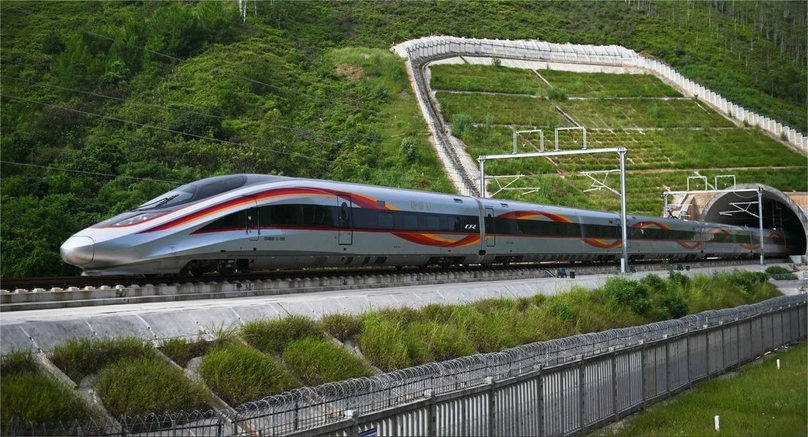
Infrastructure connectivity is a key pillar of the bilateral relationship. Construction on the Lao Cai-Hanoi-Hai Phong standard-gauge railway, a major project linking China's Yunnan Province with northern Vietnam, began in December 2025. Designed for speeds of up to 160 kilometers per hour and expected to be completed before 2030, the railway will form a vital economic corridor facilitating cross-border trade and logistics. In addition, planning for the Mong Cai-Ha Long-Hai Phong and Dong Dang-Hanoi standard-gauge railways is expected to be completed in 2026, signaling a broader push toward regional connectivity.
Cooperation is also expanding into emerging sectors such as artificial intelligence (AI) and the Internet of Things (IoT). "Smart border gates" are enhancing trade efficiency, and the China-Vietnam Year of People-to-People Exchanges is fostering interactions in tourism, culture, and youth engagement, strengthening the social foundation of bilateral ties.
Conclusion
President To Lam's fast-tracked visit to China is a calculated and strategic move that reinforces Vietnam's commitment to its most important bilateral relationship. It demonstrates that, amid global uncertainty and geopolitical shifts, Vietnam views its partnership with China as essential for political stability, economic resilience, and long-term development. The depth of this relationship—rooted in political trust, economic interdependence, and expanding cooperation—positions China and Vietnam as stabilizing forces in the region, with implications that extend far beyond their borders.