Read on PBS News
Gordon Wood, Pulitzer Prize-Winning Historian of the American Revolution, Dies at 92
Gordon S. Wood, the Pulitzer Prize-winning historian whose works reshaped the understanding of the American Revolution and the early Republic, passed away at age 92. Wood died Sunday after being struck by a car in a supermarket parking lot in East Providence, Rhode Island, according to police. The esteemed Brown University professor emeritus authored landmark works including 'The Creation of the American Republic' and 'The Radicalism of the American Revolution,' which won the Pulitzer in 1993. He was awarded the National Humanities Medal by President Barack Obama in 2011. His scholarship influenced generations of historians and students, even as he later became a central figure in academic debates over the role of slavery and marginalized groups in the founding era.
Gordon S. Wood, the Pulitzer Prize-winning historian whose work fundamentally reshaped the understanding of the American Revolution and the early Republic, died Sunday after being struck by a car in a supermarket parking lot in East Providence, Rhode Island, according to police. He was 92 years old. Wood, a professor emeritus at Brown University, was a titan in his field, authoring dozens of books and essays that became essential reading for anyone interested in the formation of the United States.
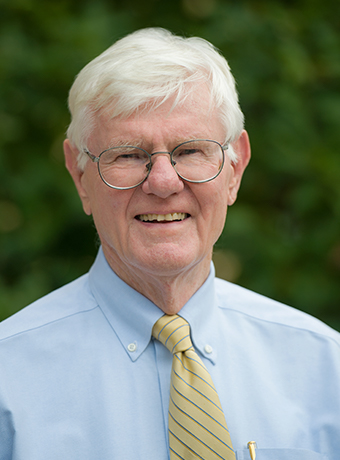
Wood's influence was both immediate and lasting. His first book, The Creation of the American Republic, won the Bancroft Prize in 1970 and remains a foundational text. In it, he argued that the U.S. Constitution was an unintentionally subversive document, created by elites but ultimately leading to the destruction of the social order they sought to maintain. This thesis was further developed in his Pulitzer Prize-winning The Radicalism of the American Revolution (1993), where he presented the Revolution as a profoundly transformative and democratizing event, altering everything from social relationships to how people dressed. He famously wrote that by the early 19th century, the Revolution had created "a society fundamentally different from the colonial society of the 18th century" and "unlike any that had existed anywhere in the world."
A Scholar of the Founding Era
Wood's body of work also included the epic Empire of Liberty (2009), a finalist for the Pulitzer, and other significant works such as Revolutionary Characters and The Americanization of Benjamin Franklin. His essays and reviews appeared frequently in The New York Review of Books and The New Republic. In 2011, President Barack Obama presented him with the National Humanities Medal for "scholarship that provides insight into the founding of the nation and the drafting of the U.S. Constitution." He also consulted on Ken Burns' PBS documentary about Thomas Jefferson and chaired an advisory panel for the National Constitution Center in Philadelphia.

Born in Concord, Massachusetts, a town steeped in American history, Wood initially found his high school history classes unbearable. His passion for the subject ignited in college at Tufts University, followed by a master's and Ph.D. from Harvard, where he studied under the celebrated Revolutionary War historian Bernard Bailyn. Wood would build upon his mentor's work in his own seminal writings.
Controversy and Legacy
In his later years, Wood became a central figure in heated academic debates. He was a prominent critic of The New York Times' 1619 Project, arguing that its contention that preserving slavery was a key motivation for the Revolution was flawed and encouraged a sense of "victimhood." He countered that the founders, including slave-owners like Jefferson, mistakenly believed slavery would die a natural death, and that the Revolution itself energized the American abolitionist movement. Yet, he also welcomed scholarly breakthroughs like Annette Gordon-Reed's work on Thomas Jefferson and Sally Hemings, calling it a "persuasive contextual case." He warned against the sin of "presentism," urging historians not to scold historical figures for mistakes that seem obvious in hindsight. Gordon Wood is survived by his wife, three children (two of whom became history professors), and a legacy of scholarship that will continue to be debated and studied for generations.