US-Iran Ceasefire: A Tactical Pause or Path to Peace?
In a dramatic eleventh-hour development, the United States and Iran have agreed to a two-week ceasefire, narrowly avoiding a potential escalation after a deadline set by US President Donald Trump. The agreement, which includes plans for negotiations in Islamabad, Pakistan, has raised critical questions about whether this represents a genuine turning point or merely a temporary buffer in a long-standing conflict. This article analyzes the geopolitical factors behind the ceasefire, the competing narratives from both sides, and the uncertain future of regional stability and the vital Strait of Hormuz.
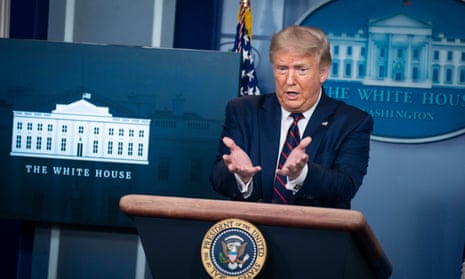
In a high-stakes geopolitical maneuver, the United States and Iran have averted immediate crisis by agreeing to a two-week ceasefire, announced less than two hours before a deadline set by US President Donald Trump. The agreement, which calls for negotiations to be held in Pakistan's capital, Islamabad, temporarily defuses tensions that had escalated with Trump's stark ultimatum regarding the Strait of Hormuz. This development prompts a crucial analysis: is this ceasefire a strategic off-ramp toward lasting peace, or simply a tactical pause in an unresolved conflict? Drawing on expert analysis from sources like CGTN, we explore the complex motivations and likely outcomes of this fragile arrangement.
The Ceasefire Agreement: Key Terms and Immediate Context
The core of the agreement, as reported, involves a two-week cessation of hostilities. Iranian Foreign Minister Seyed Abbas Araghchi stated that Iran would cease "defensive operations" provided attacks against it stop. Crucially, he promised safe passage through the strategically vital Strait of Hormuz during this period, albeit under "coordination" with Iranian armed forces. The decision came in the shadow of President Trump's deadline, which included a threat concerning the strait's closure. The immediate agreement to hold talks in Islamabad suggests third-party mediation, with Pakistan playing a host role, potentially alongside other actors like China facilitating indirect communication in the background.
Analyzing the Drivers: Why a Ceasefire Now?
Experts point to a confluence of political and strategic factors that created a window for this temporary deal. For Iran, the negotiations are being led by figures from its pragmatic political camp, which has historically favored dialogue with the US. For the United States, analysts like Wang Jin suggest a realization of the conflict's protracted nature, rising domestic public dissatisfaction, criticism from allies, and the sustained cost of military investment have pushed Washington toward talks.

Professor Sun Taiyi highlights the immediate political trigger. Trump's escalation of rhetoric to maximalist threats, including references to civilizational destruction, created a credibility dilemma. The ceasefire acts as a "strategic off-ramp" allowing de-escalation without an admission of failure. Furthermore, Sun notes the timing coincides with the US tax filing deadline on April 15, a period of intense domestic focus on the economy. A two-week ceasefire allows the administration to shift public narrative from war uncertainty to domestic economic messaging.
Competing Narratives and Underlying Intentions
Following the announcement, a clear divergence in "victory narratives" emerged, indicating deep-seated disagreements. Trump framed the move as the US having "met and exceeded all military objectives," while Iran stressed the ceasefire was temporary and contingent on negotiations over its own 10-point plan. Reporting highlighted discrepancies, with Iranian official messaging claiming sweeping gains including sanctions relief and regional control, claims quickly rejected by the US administration.
This narrative competition reveals the ceasefire's dual nature: it is as much about domestic political communication as it is about conflict management. As Sun notes, both sides are actively constructing stories for their home audiences. Substantively, the arrangement bears the hallmarks of a tactical pause rather than a durable settlement, providing a face-saving mechanism for de-escalation without resolving core disputes over Iran's nuclear program or regional influence.
The Future of the Strait of Hormuz
A central element of Trump's ultimatum was the "complete, immediate and safe opening" of the Strait of Hormuz. Expert analysis suggests a full return to pre-conflict freedom of navigation is unlikely. Wang Jin asserts that Iran will retain dominance over the strait, and the issue may not even be the central focus of core negotiations. The reality of "coordination" with Iranian forces implies a conditionally open, managed passage regime rather than absolute freedom.

Sun Taiyi explains that Iran may not need to physically block the strait; a credible threat of disruption is sufficient to exert control. The likely equilibrium is a managed passage system, which will remain a persistent source of friction. This points to a potential long-term militarization of this critical global shipping lane, with significant implications for energy security and regional deterrence postures.
Conclusion: A Temporary Buffer, Not a Turning Point
The consensus among analysts suggests this two-week window functions more as a temporary buffer than a genuine turning point. The ceasefire pauses escalation but does not resolve the structural drivers of the conflict. The risk of renewed escalation remains high, potentially triggered by actions from regional actors like Israel or a US attempt to reassert leverage. The next two weeks are likely a transitional period where large-scale fighting winds down, but sporadic negotiations afterward may yield little substantive progress. The larger risk, as outlined by experts, is the entrenchment of a new, unstable regional pattern where key waterways and security arrangements remain in a state of managed tension. The path to durable peace remains fraught, with this ceasefire representing only a brief respite in a complex and enduring geopolitical struggle.