Read on France 24
Remembering Jesse Jackson: Civil Rights Leader and Political Pioneer
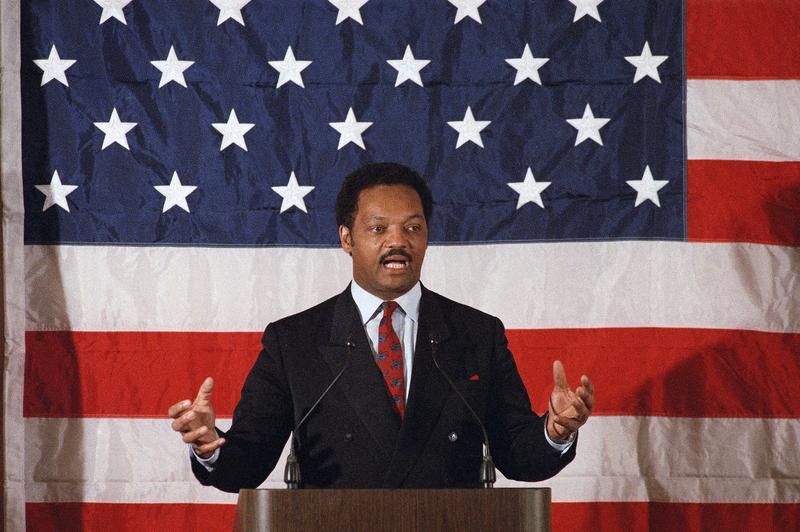
Jesse Jackson, the iconic Baptist minister and civil rights leader who fought for racial justice for over six decades, has died at age 84. Rising from his South Carolina roots to become a close associate of Martin Luther King Jr., Jackson's legacy was cemented by his groundbreaking presidential campaigns in the 1980s, which brought issues of racial and economic equality to the forefront of American politics. This article examines his life, his impact on the civil rights movement, and his enduring influence on American society.
The death of Reverend Jesse Jackson at age 84 marks the passing of a monumental figure in the American struggle for civil rights and social justice. For more than six decades, Jackson served as a powerful voice for the marginalized, a bridge between communities, and a political force who fundamentally reshaped the Democratic Party's engagement with Black voters. His journey from the segregated South to the national political stage is a testament to both the progress made and the ongoing fight for equality he championed until his final days.
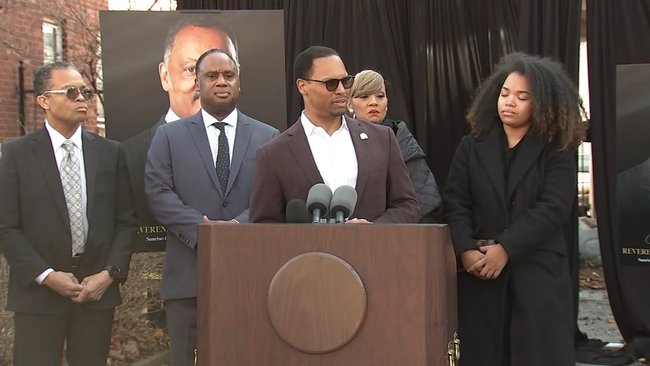
Born in 1941 in Greenville, South Carolina, Jackson's early life was shaped by the realities of Jim Crow segregation. His academic and athletic prowess earned him a college football scholarship, but it was his calling to the ministry and activism that defined his path. He rose to national prominence in the 1960s as a key lieutenant to Dr. Martin Luther King Jr., working with the Southern Christian Leadership Conference (SCLC). He was present at the Lorraine Motel in Memphis on the fateful day of King's assassination in 1968, a traumatic event that solidified his resolve to continue the work.
The Political Pioneer: Presidential Campaigns that Changed America
While his civil rights work was foundational, it was his two historic campaigns for the Democratic presidential nomination in 1984 and 1988 that catapulted Jackson into a new realm of national influence. As reported by France 24, these bids "propelled him into the national spotlight." He was the first African American candidate to mount a truly nationwide, competitive campaign for a major party's nomination.
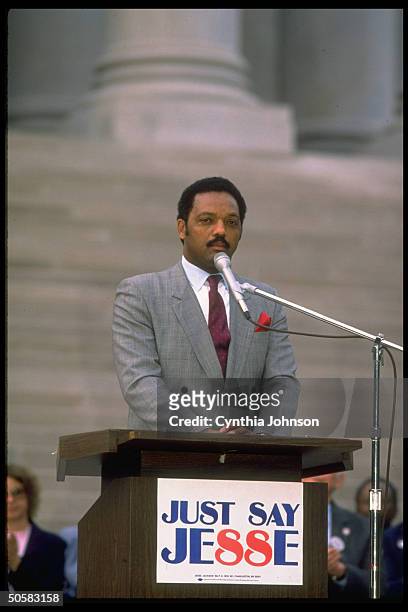
His 1984 campaign, under the banner of the "Rainbow Coalition," sought to build a multiracial alliance of the poor, working-class, and disenfranchised. Though he did not win the nomination, he secured 3.5 million votes and won primaries in five states. His 1988 campaign was even more successful, winning 11 contests and nearly 7 million votes, finishing second in the delegate count. These campaigns demonstrated the formidable voting power of Black Americans and forced the Democratic Party to more seriously address issues of racial justice, economic inequality, and foreign policy in the Middle East and South Africa.
A Legacy of Activism and Advocacy
Beyond electoral politics, Jackson's legacy is built on decades of direct action and advocacy. He founded Operation PUSH (People United to Save Humanity) in 1971, focusing on economic empowerment and corporate accountability. He later founded the National Rainbow Coalition, which merged with PUSH to continue his broad-based social justice work. He was known for his skillful use of the media, his powerful oratory, and his willingness to engage in protest and negotiation, from marching in Selma to negotiating the release of hostages abroad.
His work extended to international diplomacy, where he often acted as an unofficial envoy. He secured the release of American prisoners in Syria, Cuba, and Iraq, and was a persistent critic of apartheid in South Africa. At home, he remained a constant advocate for voting rights, affirmative action, and criminal justice reform, mentoring generations of activists and politicians who followed in his footsteps.
Enduring Impact on American Society
Jesse Jackson's impact is measured not just in policies changed, but in possibilities revealed. He helped normalize the idea of a Black candidate for the highest office, paving the way for future leaders like Barack Obama. He expanded the political vocabulary to include concepts of economic fairness alongside racial justice. His Rainbow Coalition model of multiethnic, multi-issue organizing remains a blueprint for progressive movements today.

While his later years were marked by health challenges, his voice never fully faded from the public square. He continued to speak out on contemporary issues, from police brutality to voter suppression, linking them to the long arc of the struggle he helped define. His passing closes a chapter in the direct lineage of the classic civil rights movement, but the movements he inspired continue the work.
In conclusion, Reverend Jesse Jackson was a transformative figure whose life bridged the era of lunch counter sit-ins and the era of Black Lives Matter. As a strategist, orator, and unyielding advocate, he dedicated his life to bending the moral arc of the universe toward justice. His legacy is a complex tapestry of monumental achievements, political near-misses, and an unwavering commitment to fighting for the "least of these." As America continues to grapple with the issues of race and equality he centered, the path he helped carve remains essential reading for anyone seeking to understand the nation's past and shape its future.