 Read on cbsnews.com
U.S. Gas Prices Remain High Despite Ceasefire: When Will Relief Arrive?
While a recent ceasefire between the U.S. and Iran has eased geopolitical tensions, American drivers are still facing painfully high fuel costs. The national average for a gallon of regular gas hit $4.16 this week, up significantly from pre-conflict levels. Experts suggest relief could begin as soon as this weekend, but warn that any price drops will be gradual and fragile, heavily dependent on the stability of the ceasefire and conditions in the vital Strait of Hormuz. This article analyzes the current price landscape, expert predictions for the coming weeks, and the key factors that will determine when and how much gas prices will fall.
The recent ceasefire between the United States and Iran provided a moment of geopolitical respite, but for American consumers, relief at the gas pump remains frustratingly out of reach. Despite a drop in global oil prices following the truce, the national average for a gallon of regular gasoline continued its upward creep this week, highlighting the complex and delayed relationship between international events and domestic fuel costs. Understanding the timeline for potential price relief requires examining expert analysis and the precarious factors that continue to influence the global energy market.
The Current Price Landscape
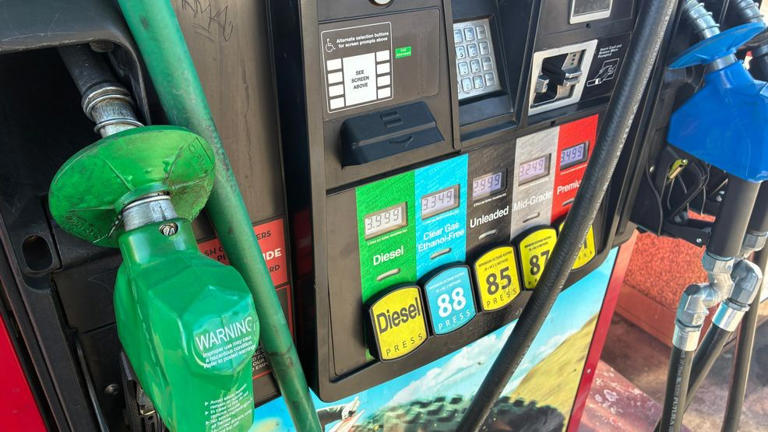
As of Wednesday, the national average price for a gallon of regular gasoline stood at $4.16, according to data from AAA. This represents a sharp increase from the $2.98 average just before the U.S. and Israel engaged Iran in late February, and is 91 cents higher than prices one year ago. The pain is not evenly distributed; in some states, prices have soared above $5 per gallon, while diesel fuel averages a staggering $5.67 nationally. These elevated levels persist even as the immediate threat of conflict has subsided, underscoring how fuel prices often "go up like a rocket, and come down like a feather," as noted by economist Mark Zandi.
Expert Predictions for Price Relief
Energy analysts are cautiously optimistic that drivers will soon see some relief, but they emphasize that decreases will be measured in cents, not dollars, and will unfold over weeks, not days. Patrick De Haan, a petroleum expert at GasBuddy, indicated that prices at the pump could start dropping as soon as this weekend, though the initial decline may only amount to a few cents per gallon. He suggested that if the ceasefire holds, the national average has a path to fall back below the psychologically significant $4 per gallon mark, but it would likely take a couple of weeks to reach that point.

Looking further ahead, Mark Zandi of Moody's Analytics provided a more detailed forecast. He predicts that if oil prices stabilize around $90 per barrel in the coming weeks, U.S. gasoline prices could continue to retreat and settle around $3.75 per gallon. By the end of the year, assuming oil drops to approximately $80 a barrel, he expects the national average to hover around $3.50 per gallon. However, Zandi tempered expectations, stating, "I don't think there is any going back to sub-$3 gallon for a while."
The Fragile Factors Influencing Future Prices
The primary caveat in all these forecasts is the fragility of the current ceasefire. De Haan warned that any drop in gas prices could quickly reverse if the deal between Washington and Tehran unravels. "If there's an abrupt halt or re-escalation, the decreases will stop, and prices could start to trend back up again," he explained. The global energy market's perception of risk remains the key driver.
A critical focal point is the Strait of Hormuz, the vital Persian Gulf waterway that normally facilitates one-fifth of the world's oil and liquefied natural gas shipments. The situation there remains tenuous. Bernard Yaros, lead U.S. economist at Oxford Economics, stated that the trajectory of gas prices "is going to really depend on the global energy market's perception of the safety of going through the Strait of Hormuz." While the White House has denied reports of the strait's closure, the mere threat of disruption to this chokepoint is enough to keep a risk premium baked into oil and gasoline prices.
Conclusion
For American drivers hoping for a quick return to cheaper fuel, patience will be necessary. The ceasefire has set the stage for potential price declines, but the process will be gradual and susceptible to reversal based on geopolitical developments. The most likely scenario, according to experts, involves a slow retreat over the next several weeks, with a national average potentially dipping below $4 per gallon. However, a return to the sub-$3 prices seen earlier this year is not in the immediate forecast. The coming days will be a critical test of the ceasefire's durability, and the prices displayed on gas station signs will be one of the most visible indicators of its success or failure for U.S. consumers.