Cease-Fire Contradictions: How Lebanon Became the Focal Point of U.S.-Iran Truce Tensions
A fragile two-week cease-fire between the United States and Iran is being tested by a critical point of contention: Lebanon. While Iran insists the truce covers Lebanon, the U.S. and Israel maintain it does not, leading to continued Israeli strikes against Hezbollah that have killed hundreds. This discrepancy exposes diverging priorities between Washington and Jerusalem, strains NATO alliances, and threatens to derail upcoming peace talks in Pakistan. The situation highlights the complex regional dynamics and conflicting interpretations that could determine whether this temporary pause evolves into lasting peace or collapses into renewed conflict.
The announcement of a two-week cease-fire between the United States and Iran on April 9, 2026, offered a fragile hope for de-escalation after over five weeks of devastating war. However, this tentative truce was immediately jeopardized by a fundamental disagreement over its geographic scope, with Lebanon emerging as the central flashpoint. While Iran and several European NATO allies insist Lebanon is covered by the agreement, the United States and Israel have explicitly stated it is not. This contradiction has allowed Israeli military operations against the Iran-backed Hezbollah militia in Lebanon to continue unabated, killing hundreds and threatening to unravel the entire diplomatic process. This article examines the origins of this critical discrepancy, the strategic priorities driving the key actors, and the immense challenges facing upcoming peace talks.
The Core Contradiction: Is Lebanon In or Out?
The cease-fire, brokered by Pakistan, was announced as a temporary halt to hostilities between the United States and Iran. However, the language regarding allied forces and other conflict zones proved ambiguous. Prime Minister Shehbaz Sharif of Pakistan stated on social media that the United States and Iran, "along with their allies," had agreed to an immediate cease-fire "everywhere including Lebanon and elsewhere." This interpretation was swiftly adopted by Iran, whose foreign ministry spokesman, Esmaeil Baghaei, declared that halting the war in Lebanon was an "inseparable" part of the deal and a precondition for Iran's attendance at peace talks.
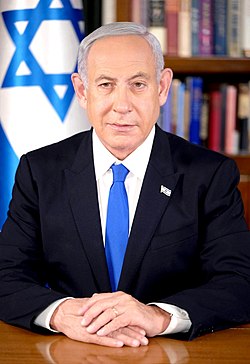
In stark contrast, both Washington and Jerusalem rejected this interpretation. "There is no cease-fire in Lebanon," Israeli Prime Minister Benjamin Netanyahu insisted on Thursday. U.S. Vice President JD Vance, attempting to downplay the conflict, attributed the differing views to a "reasonable misunderstanding." This discrepancy provided the political cover for Israel to launch its deadliest wave of airstrikes in Lebanon since the conflict began, killing over 300 people in a single day according to Lebanese health authorities.
Diverging U.S. and Israeli Priorities
The Lebanon dispute has exposed a growing divergence in strategic objectives between the United States and Israel, despite their close alliance in initiating the war against Iran. For Israel, the elimination of the Hezbollah threat from southern Lebanon is an urgent, existential priority. Prime Minister Netanyahu has stated that Israel will continue to strike Hezbollah "with force and will not stop" until the group is disarmed, viewing this as a necessary step to secure Israel's northern border.
For the Trump administration, however, the primary focus appears to be economic: reopening the Strait of Hormuz. Iran's effective blockade of this vital waterway, through which a fifth of the world's oil and gas passes, has triggered a global energy crisis, spiking gasoline prices and threatening the U.S. economy. President Trump has repeatedly denounced Iran for not fully reopening the strait, calling it a violation of the cease-fire. As one analyst noted, for the U.S., Lebanon is "a tertiary priority at best."
Netanyahu's Domestic and Diplomatic Tightrope
Prime Minister Netanyahu is navigating significant domestic and international pressures. Domestically, he faces elections before the end of October 2026 and a public weary of continuous conflict. His partnership with President Trump is a major political asset, making him reluctant to openly defy U.S. demands. In a concession to American pressure, Netanyahu announced on April 9 that Israel would begin direct talks with the Lebanese government about disarming Hezbollah, a move he had previously resisted.
However, he paired this diplomatic opening with a continued military offensive, stating talks would occur "under fire." This approach reflects a strategy of appearing responsive to U.S. calls for diplomacy while pursuing military objectives on the ground. The U.S. State Department has announced it will host a meeting with Israeli and Lebanese representatives next week to discuss cease-fire negotiations.
International Reactions and NATO Strains
The crisis over Lebanon has further strained the already tense relationship between the Trump administration and its NATO allies. European leaders have uniformly condemned the Israeli strikes and demanded Lebanon's inclusion in the cease-fire.
- Germany: Chancellor Friedrich Merz warned that "the severity with which Israel is waging war there could cause the peace process as a whole to fail."
- Britain: Prime Minister Keir Starmer stated Israel's attacks "shouldn't be happening" and that Lebanon "should be included in the cease-fire."
- France: Foreign Minister Jean-Noël Barrot argued Lebanon should not be the "scapegoat" of an Israeli government frustrated by the U.S.-Iran truce.
These criticisms have ignited fury from President Trump, who has lashed out at NATO, accusing the alliance of failing to support the U.S. war effort and reiterating his desire to acquire Greenland. The war has become a "trans-Atlantic stress test," in the words of Chancellor Merz, revealing deep fissures within the Western alliance.

The Upcoming Pakistan Talks and Iranian Demands
The fragility of the cease-fire sets a fraught stage for the planned peace talks in Islamabad, Pakistan, scheduled for April 11, 2026. Vice President JD Vance is set to lead the U.S. delegation, while Iran will be represented by Parliament Speaker Mohammad Bagher Ghalibaf. Iran has presented a sweeping 10-point proposal that includes maintaining control of the Strait of Hormuz, a full U.S. military withdrawal from the region, and an end to Israeli attacks in Lebanon.
Many of these demands directly conflict with U.S. interests and the 15-point framework previously laid out by American mediators. The continued violence in Lebanon gives Iran a potent point of leverage, as it can argue the U.S. is not upholding its end of the bargain. The success of the talks may hinge on whether a side deal can be reached to quiet the Lebanese front, satisfying Iran's demand while allowing Israel to claim a diplomatic, rather than purely military, path to addressing the Hezbollah threat.
Conclusion: A Precarious Path Forward
The dispute over Lebanon's inclusion in the U.S.-Iran cease-fire is more than a diplomatic misunderstanding; it is a reflection of fundamentally different war aims and regional priorities. For Israel, the conflict with Hezbollah is a core national security issue. For the U.S., ending the war is increasingly tied to economic stability and reopening global oil routes. For Iran, defending its proxy Hezbollah is a point of ideological and strategic principle.
The upcoming talks in Pakistan represent a critical juncture. If the parties cannot agree on a clear, unified interpretation of the cease-fire's terms—especially regarding Lebanon—the temporary truce will likely collapse, triggering a renewed and potentially wider conflict. The path to a durable peace requires not only addressing the direct U.S.-Iran hostilities but also reconciling the subsidiary conflicts that the war has inflamed, with the Lebanon-Israel front posing the most immediate and dangerous challenge.