Read on France 24
New Missile Footage Points to US Culpability in Deadly Iranian School Strike
Emerging video evidence analyzed by expert investigators suggests a US Tomahawk missile struck a compound in southern Iran, dangerously close to a girls' school where an earlier explosion killed over 165 people. This new footage adds significant weight to mounting claims of American responsibility for the attack, which occurred at the outset of the broader Middle East conflict. The incident raises profound questions about military accountability and the tragic civilian toll of the ongoing war.
In the complex and often opaque theater of modern warfare, visual evidence can serve as a crucial arbiter of truth. Newly surfaced footage from southern Iran is now casting a stark light on a tragic incident that occurred at the start of the ongoing Middle East conflict, pointing directly toward US military involvement. The video, analyzed by an expert investigative group, appears to show an American Tomahawk missile striking a compound in the city of Minab. The location of this strike is particularly alarming: mere meters from a girls' school that was the site of a catastrophic, unclaimed explosion which killed over 165 people. This development, as reported by France 24, represents a significant escalation in the evidentiary case regarding the incident's origins.
The Emergent Footage and Expert Analysis
The core of this developing story hinges on the forensic analysis of the video material. Investigative organizations specializing in open-source intelligence (OSINT) have scrutinized the footage frame by frame. Their preliminary assessment concludes that the weapon's characteristics, flight trajectory, and impact signature are consistent with a US-made Tomahawk land-attack cruise missile. The Tomahawk is a long-range, subsonic missile known for its precision, commonly launched from US Navy ships and submarines. The proximity of the missile's impact point to the school is not a matter of kilometers, but of meters, suggesting an extremely tight operational radius for the intended target.
Context: The Initial Tragedy and Mounting Evidence
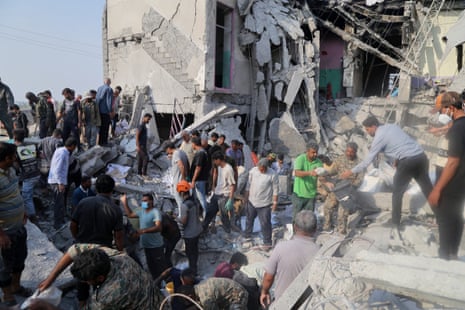
This new visual evidence does not exist in a vacuum. It arrives against the backdrop of the initial, devastating explosion at the school, which resulted in one of the single deadliest civilian casualty events in the early phase of the regional war. At the time, no state or group claimed responsibility, leaving families and international observers in a state of agonizing uncertainty. In the weeks following, however, mounting evidence from various sources has increasingly pointed toward US culpability. This footage is arguably the most tangible piece of that puzzle, providing a visual anchor for what was previously based on seismic data, satellite imagery, and munitions debris analysis.

Geopolitical Implications and the Question of Accountability
The potential confirmation of a US strike carries immense geopolitical weight. First and foremost, it raises urgent questions of military accountability and the adherence to international humanitarian law, which mandates distinction between military objectives and civilian objects. Striking a target adjacent to a school, regardless of intent, would be scrutinized under the principles of proportionality and precaution. Furthermore, such an act, if officially acknowledged or proven, would significantly alter the diplomatic landscape of the conflict, potentially hardening Iranian resolve and complicating any ongoing or future negotiation efforts. The incident underscores the fog of war and the challenges of verifying actions in a high-stakes, fast-moving conflict zone.
The Path Forward: Verification and Response
While the expert analysis is compelling, the formal verification process is critical. International bodies, journalists, and other independent investigators will likely seek to authenticate the footage and correlate it with other data points, such as official US military communications or logs of missile launches from the relevant timeframe. The response from the US government will be closely watched; official statements may range from denial and dismissal to a justification of the strike as targeting a legitimate military facility. The Iranian government's reaction, already steeped in accusations against the US, will be amplified by this visual evidence.
In conclusion, the emergence of this footage is a pivotal moment in understanding a specific tragedy within the larger Middle East war. It transforms abstract allegations into a concrete, visual claim of responsibility. The images from Minab do more than document an explosion; they challenge narratives, demand accountability, and highlight the devastating human cost when military action occurs in densely populated civilian areas. As the investigation continues, this footage will remain a central piece of evidence in the difficult quest to ascertain the truth behind one of the conflict's most grievous civilian losses.