Read on bbc.com
German Court Sentences Lebanese Man for Hezbollah Drone Procurement Role
A German court has sentenced a 35-year-old Lebanese man to six-and-a-half years in prison for membership in Hezbollah and for aiding its drone procurement program. The individual, identified as Fadel Z, was convicted of purchasing over €1.4 million worth of components, including motors and propellers, from companies across Europe, China, and the United States. Prosecutors detailed how these parts were used in explosive drones launched at Israel, linking one specific component to an attack on a retirement home in Herzliya in October 2024. The case highlights the international reach of Hezbollah's weapons procurement networks and Germany's legal actions against the group's activities on its soil.
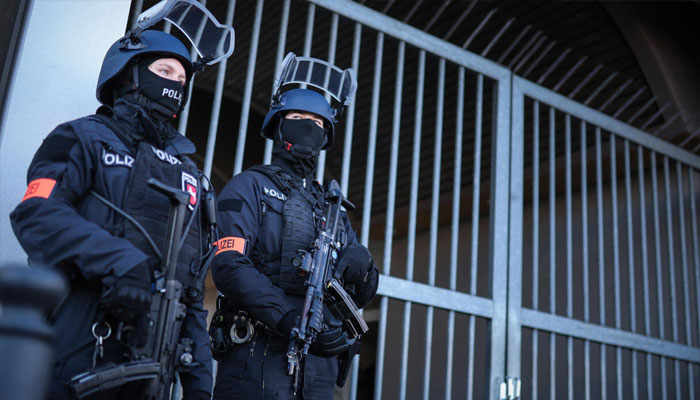
A court in Celle, Germany, has delivered a significant verdict in a case involving international terrorism financing and weapons procurement. The 35-year-old Lebanese man, identified only as Fadel Z under German privacy laws, was sentenced to six-and-a-half years in prison. His convictions include membership in Hezbollah—a Shia militia group whose military wing is designated as a terrorist organization by the European Union—aiding and abetting attempted murder, and multiple violations of EU embargo regulations. This case underscores the global nature of militant supply chains and the legal mechanisms employed to disrupt them.
The Charges and Conviction
The prosecution presented a detailed account of Fadel Z's activities over several years. He was found to have joined Hezbollah approximately a decade ago and later assumed a critical operational role. Specifically, the court heard evidence that he became a "foreign operator" for Hezbollah's drone program in 2022, initially operating from Barcelona, Spain, before moving his base to Germany in the summer of 2023. His primary function was to procure components essential for the construction of unmanned aerial vehicles (UAVs).
Scope of Procurement Activities
According to the German Federal Prosecutor's Office, Fadel Z was responsible for purchasing materials valued at approximately €1.4 million (around £1.2 million). The procurement list was extensive and tactical, including over 2,000 petrol and electric motors and more than 600 propellers. These components were sourced not from a single region but from a network of companies spread across Europe, China, and the United States, demonstrating the international complexity of such supply networks.

Methods of Evasion
To conceal the illicit nature of the purchases and circumvent export controls, Fadel Z employed sophisticated trade-based money laundering and obfuscation techniques. He frequently used front companies registered in his own name or in the names of associates to place orders with suppliers. Payments for the components were also funneled through these corporate entities. Furthermore, he arranged logistics, shipping the procured goods to Lebanon via container ships departing from ports in Hamburg and Spain, as well as by air freight.
Direct Link to Hostile Actions
The most severe charge—aiding and abetting attempted murder—stemmed from a direct link established between the procured components and actual attacks. Prosecutors successfully argued that two of the engines purchased by Fadel Z were integrated into explosive-laden drones that Hezbollah subsequently launched against Israel.
The Herzliya Attack
One of these drones was used in a specific incident on the night of October 11, 2024, which coincided with Yom Kippur, the Jewish holy day. The drone was flown into a retirement home in the town of Herzliya, near Tel Aviv. Although the explosive device detonated inside the building, a fortunate circumstance meant that none of the approximately 200 residents were injured. This attack formed the core of the attempted murder charge, directly connecting procurement activities in Europe to violence in the Middle East.

Broader Context and Implications
This case is not an isolated event but part of a broader pattern. According to statements from the German Federal Prosecutor's Office, Hezbollah has been running "an extensive drone program for some time." The office noted that following the Hamas attacks on Israel on October 7, 2023, Hezbollah "systematically fired rockets and explosive-laden drones at both military and civilian targets in Israel." The organization relies on a network of foreign operatives who covertly purchase components in Europe for export to Lebanon, as exemplified by Fadel Z's actions.
The conviction sends a strong message regarding Germany's commitment to enforcing its laws against terrorist group activities within its jurisdiction. Fadel Z, who most recently lived in Salzgitter, Lower Saxony, has one week to decide whether to appeal the verdict and will remain in custody during that period. His admission to the deliveries, as reported in German media, likely factored into the proceedings.
Conclusion
The sentencing of Fadel Z in Celle represents a significant judicial outcome in the fight against transnational terrorism financing and arms procurement. It highlights how national legal systems are grappling with the challenges posed by globalized supply chains for weaponry. The case vividly illustrates the tangible consequences of procurement networks, linking a man in Germany to an attempted attack on civilians in Israel. It serves as a reminder of the ongoing efforts by European authorities to identify, prosecute, and disrupt the logistical and financial support structures of proscribed terrorist organizations operating internationally.