Read on PBS News
The Shahed Drone Threat: Lessons from Ukraine's Frontline Defense
For over a decade, Iranian-made Shahed drones have evolved from regional tools to global threats, recently targeting U.S. bases in the Middle East while continuing their devastating campaign in Ukraine. Ukrainian forces in Kharkiv, who have faced these drones longer than any other military, have developed critical countermeasures through frontline innovation. This article examines the tactical evolution of Shahed drones, Ukraine's adaptive air defense strategies, and the implications for global security as these weapons proliferate.
The proliferation of Iranian-made Shahed drones represents one of the most significant shifts in modern asymmetric warfare. While recent attacks on American bases in the Middle East have brought these weapons into global focus, Ukrainian forces have been confronting them for years along the Eastern front. Special correspondent Jack Hewson's reporting from Kharkiv reveals how frontline troops have developed hard-won expertise against these persistent aerial threats, offering crucial insights for military strategists worldwide.
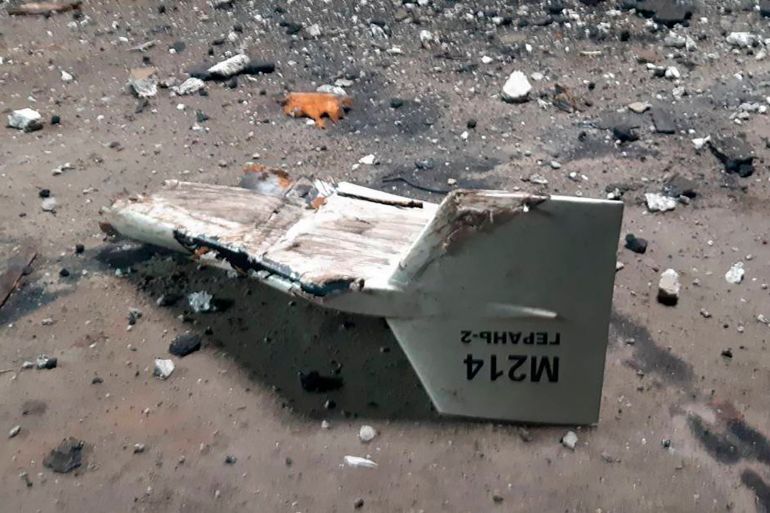
The Shahed Drone: Evolution of a Persistent Threat
Originally designed as a relatively simple loitering munition, Shahed drones have undergone significant evolution through battlefield testing in Ukraine. According to frontline Ukrainian troops interviewed by PBS NewsHour, these drones now represent a sophisticated threat that combines endurance, payload capacity, and increasing technological complexity. The basic gasoline-powered models travel at speeds up to 115 miles per hour with warheads containing 40-50 kilograms of explosives, but newer variants present even greater challenges.
Ukrainian commander "Mer" explained through an interpreter that Russian forces have modified their deployment tactics significantly: "Now the Shaheds are even being equipped with radio-electronic interference systems to interfere with our interceptor. The enemy also plays with the altitude and at the same time he began to launch a much larger number of Shaheds in one group. That is, before the group consisted of three or four enemy Shaheds. Now this group, their number has increased to eight or nine." This escalation in both quantity and quality demonstrates how battlefield experience drives weapons development in real-time.

Ukraine's Adaptive Defense Strategies
Ukrainian forces in Kharkiv province have developed a multi-layered approach to counter the Shahed threat, recognizing that air defense must begin far from populated centers. As reported from the field, interception operations start approximately 20 kilometers from the Russian front lines in areas like Izyum, where Shahed drones first enter Ukrainian airspace on their way toward Kharkiv city. This forward positioning represents a strategic shift from traditional city-centered air defense to perimeter protection.
The defensive network operates primarily from underground positions to avoid detection by Russian reconnaissance drones like the ZALA and Orlan models. These Russian drones pose a dual threat by both gathering intelligence and guiding Shahed drones and missiles to their targets. Ukrainian pilot Kucheriavyi noted the particular difficulty of intercepting Shaheds: "Because it flies low and is very difficult to detect, plus the fall weather conditions, and it simply flies fast." Despite these challenges, Ukrainian crews have developed specialized interceptor drones and adapted existing air defense systems to score regular hits against incoming threats.
Innovation Under Fire
Perhaps the most significant lesson from Ukraine's experience is how innovation occurs under combat conditions. Commander Mer explained that traditional military procurement processes cannot keep pace with battlefield evolution: "The state can only provide what has already proven itself and has results. What has proven itself and has results is no longer effective on the battlefield. Such dynamics mean that we have to try. We have to constantly put the latest technologies in place and gamble with what works."
This reality has created an unusual ecosystem where frontline units collaborate directly with startups and non-governmental organizations to develop and test new countermeasures. The rapid iteration cycle—where each Russian tactical innovation prompts Ukrainian counter-innovation—has accelerated technological development in ways that peacetime research and development cannot match.

Future Threats and Global Implications
The Shahed drone's evolution continues to present new challenges. Ukrainian technician "Akusher" revealed concerning developments: "Their warhead has from 40 to 50 kilograms of explosives, and they have already modified the design of the Shahed itself in the structure and are doubling the warhead. I would also like to add that they are pioneering using jet engines. True, they haven't been detected in our zone yet, but these are also their changes, their tactics." Jet-powered Shaheds could reach speeds exceeding 310 miles per hour, dramatically reducing interception windows.
These advancements have direct implications beyond Ukraine's borders. The same drones now targeting U.S. bases in the Middle East benefit from battlefield testing against Ukrainian defenses. As Iranian and Russian forces share tactical data and technological improvements, the global proliferation of these weapons systems creates new security challenges for conventional militaries worldwide. The lessons learned in Kharkiv's fields and villages may soon prove relevant to defense planners in multiple theaters of operation.
Conclusion: The Changing Face of Aerial Warfare
Ukraine's experience with Shahed drones demonstrates how relatively inexpensive asymmetric weapons can challenge even well-equipped conventional forces. The conflict has become a laboratory for drone and counter-drone warfare, with innovations emerging directly from frontline necessity rather than traditional military research channels. As these weapons continue to evolve and proliferate, the tactical knowledge gained by Ukrainian forces represents valuable intelligence for allied nations facing similar threats.
The ongoing adaptation on both sides—with Russian forces modifying deployment tactics and drone capabilities while Ukrainian defenders develop new interception methods—illustrates the dynamic nature of modern conflict. What began as a regional weapon has become a global concern, and the lessons from Kharkiv's air defense teams will likely influence military doctrine for years to come as nations grapple with the challenge of defending against persistent, evolving aerial threats.