Read on PBS News
The Shahed Drone Threat: Lessons from Ukraine's Frontline Experience
For over a decade, Iranian-made Shahed drones have evolved from regional weapons to global security threats, with recent attacks on U.S. bases highlighting their deadly capabilities. Ukrainian forces, who have faced these drones longer than any other military, are developing critical countermeasures through frontline innovation. This article examines the tactical challenges posed by Shahed drones, Ukraine's adaptive defense strategies, and the technological race unfolding in modern warfare, offering insights relevant to global defense forces facing similar threats.
The emergence of Iranian-made Shahed drones as a persistent threat to global security represents a significant shift in modern warfare tactics. While recent attacks on American bases in the Middle East have brought these weapons into sharp focus, Ukrainian forces have been confronting them for years along the eastern front. The experience gained by Ukrainian troops in Kharkiv and surrounding regions provides invaluable lessons for military strategists worldwide facing similar asymmetric threats.
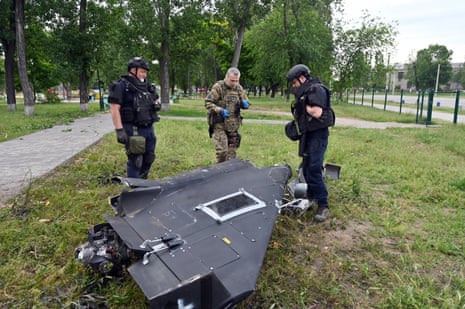
The Shahed Drone: Technical Specifications and Tactical Use
Shahed drones represent a category of loitering munitions that combine relatively low cost with significant destructive potential. According to frontline Ukrainian assessments, these drones typically carry warheads containing 40 to 50 kilograms of explosives, though modified versions may carry double that payload. The standard gasoline-powered propeller motor enables speeds up to 115 miles per hour, while newer jet-powered variants under development could reach speeds exceeding 310 miles per hour.
The tactical advantage of Shahed drones lies in their operational characteristics. They fly at low altitudes, making detection difficult for traditional radar systems, especially in challenging weather conditions. Their relatively quiet operation compared to traditional aircraft further complicates early warning efforts. Russian forces have employed these drones extensively for both reconnaissance and strike missions, with Ukrainian troops reporting that observation drones like the ZALA and Orlan often work in conjunction with Shaheds to identify and guide attacks on targets.

Ukrainian Defense Strategies and Adaptation
Ukrainian forces have developed a multi-layered defense approach against the Shahed threat, centered on pushing air defense networks closer to the front lines. As reported from Kharkiv province, interception efforts begin approximately 20 kilometers from Russian positions, well before drones reach major population centers. This forward deployment strategy aims to create a defensive buffer zone where Shaheds can be engaged before they threaten critical infrastructure.
The evolution of Russian tactics has necessitated continuous Ukrainian adaptation. Initially, Shaheds operated in groups of three or four, but Ukrainian commanders now report groups of eight or nine drones launched simultaneously. Furthermore, newer Shahed variants incorporate radio-electronic interference systems designed to disrupt Ukrainian interceptor drones, creating an ongoing technological arms race. Ukrainian units have responded by developing their own reconnaissance and interceptor drones, often supported by startups and NGOs rather than traditional military procurement channels.
Frontline Innovations and Challenges
The dynamic nature of drone warfare has created an innovation environment where battlefield testing drives technological development. According to Ukrainian commander "Mer," state-provided equipment often represents proven technology that may already be obsolete against evolving threats. This reality has forced frontline units to experiment with emerging technologies, creating what he describes as a constant gamble with what works in real combat conditions.
Ukrainian troops face additional challenges from complementary drone systems. First-person view (FPV) drones with expanded ranges now threaten vehicles up to 40 kilometers from front lines, sometimes guided by fiber-optic cables to evade electronic jamming. The Orlan reconnaissance drone presents particular difficulties due to its powerful optical and digital zoom capabilities, which enable precise targeting of Ukrainian positions, artillery, and equipment. These systems work in concert with Shahed drones to create a comprehensive surveillance and strike network.

Global Implications and Future Developments
The Ukrainian experience with Shahed drones offers critical insights for global defense forces, particularly as these weapons appear in multiple conflict zones. The proliferation of relatively inexpensive but effective drone technology represents a democratization of aerial warfare that challenges traditional military superiority based on expensive platforms. Nations hosting U.S. troops or facing similar asymmetric threats can benefit from understanding the tactical adaptations Ukrainian forces have developed through hard-won experience.
Future developments in drone warfare appear to be accelerating. Ukrainian intelligence indicates that Russian forces are experimenting with jet-powered Shahed variants that would dramatically increase speed and reduce interception windows. Simultaneously, the increasing payload capacity of these drones suggests a trend toward greater destructive potential per platform. These developments will likely drive corresponding advances in counter-drone technology, electronic warfare capabilities, and integrated air defense systems across multiple military organizations worldwide.
The ongoing conflict in Ukraine serves as a testing ground for next-generation warfare tactics and technologies. As Shahed drones continue to evolve and proliferate, the lessons learned by Ukrainian forces will become increasingly valuable to global security planning. The adaptation and innovation demonstrated along the Kharkiv front lines represent not just a localized response to immediate threats but a blueprint for modern military forces confronting similar challenges in an era of rapidly evolving asymmetric warfare.