Read on France 24
Fresh Evidence of Starvation Crimes in Darfur and Regional Political Discontent
A new report details allegations that Sudan's Rapid Support Forces systematically destroyed farms around El Fasher, contributing to starvation and mass killings in October 2025. This development coincides with political tensions in Congo-Brazzaville, where young voters express disillusionment as veteran leader Denis Sassou Nguesso seeks to extend his rule, and economic strain in Libya affecting Ramadan traditions. This article examines these interconnected crises across North and Central Africa.
A new report has surfaced, providing fresh and disturbing evidence of alleged starvation crimes committed in the Darfur region of Sudan. The accusations center on the actions of the paramilitary Rapid Support Forces (RSF), marking a significant escalation in the documentation of the ongoing conflict's humanitarian toll. Concurrently, political landscapes are shifting elsewhere in Africa, with Congo-Brazzaville approaching an election amid widespread voter apathy, and Libya grappling with economic pressures that are dampening traditional Ramadan celebrations. These events paint a picture of a continent facing complex challenges of conflict, governance, and economic stability.
Alleged Starvation Crimes in Darfur
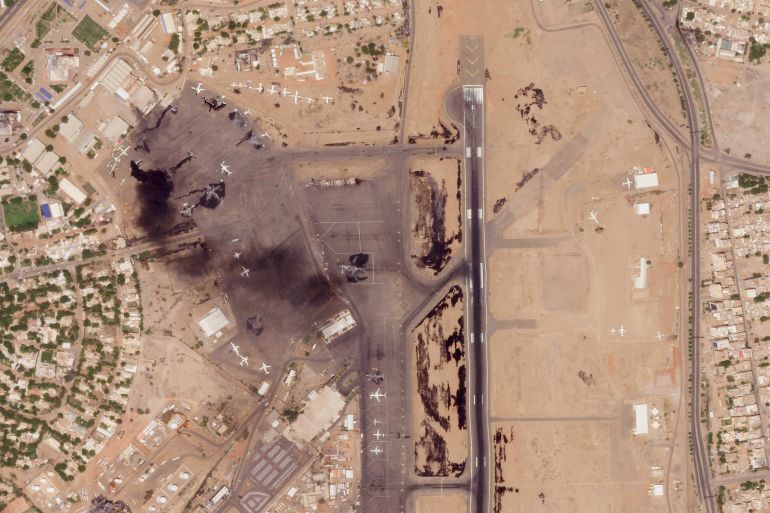
The core of the new allegations involves the systematic destruction of vital agricultural infrastructure. According to the report, Sudan's Rapid Support Forces are accused of deliberately targeting and destroying farms in the areas surrounding the city of El Fasher. This city, the capital of North Darfur state, has been a critical flashpoint in the wider Sudanese civil war. The timing of these alleged actions is particularly significant, as they are reported to have occurred in the lead-up to alleged mass killings in October 2025.
The Tactics of Starvation
Destroying farms is a tactic classified as a starvation crime under international law. By eliminating food sources and livelihoods, it weaponizes hunger against civilian populations. In the context of Darfur, where communities are heavily reliant on subsistence farming, such actions can have catastrophic and immediate consequences. This report suggests a calculated effort to weaken the resilience of communities in El Fasher, potentially to facilitate military gains or to punish populations perceived as supportive of opposing forces.
Political Disillusionment in Congo-Brazzaville
Shifting focus to Central Africa, the Republic of the Congo, often referred to as Congo-Brazzaville, is preparing for a pivotal electoral moment. However, the political atmosphere is characterized not by enthusiasm but by deep-seated disillusionment, particularly among the nation's youth. Veteran leader Denis Sassou Nguesso, who has ruled the country for most of the past four decades, is seeking to extend his tenure once more.
A Crisis of Faith in Politics
Many young voters report having lost faith in the political process, viewing elections as a foregone conclusion rather than a genuine contest of ideas and leadership. This sentiment reflects a broader trend of democratic fatigue and skepticism towards long-standing incumbents in several African nations. The challenge for Congo-Brazzaville is not just about who wins the election, but about restoring public trust in governance and creating inclusive political pathways for its younger generation.
Economic Strain During Ramadan in Libya
In North Africa, Libya faces a different kind of crisis—economic. High inflation is directly impacting cultural and religious practices, most notably the holy month of Ramadan. Traditionally a time of community, fasting, and festive evening meals (Iftar), the soaring cost of food and basic goods is forcing many Libyans to scale back their celebrations.
This economic pressure adds a layer of social strain to a country already struggling with political fragmentation and instability since the 2011 uprising. The inability to fully observe Ramadan traditions due to financial hardship is a poignant indicator of the everyday challenges faced by citizens, affecting social cohesion and quality of life during a sacred period.

Interconnected Regional Challenges
While occurring in different countries, these three situations—in Sudan, Congo-Brazzaville, and Libya—are interconnected by themes of instability and civilian hardship. They highlight the multifaceted nature of crisis in Africa, where armed conflict, political stagnation, and economic failure often feed into one another. The international community faces the complex task of addressing not only immediate humanitarian needs, as seen in Darfur, but also the underlying political and economic grievances that fuel long-term discontent, as evidenced in Congo-Brazzaville and Libya.
Accountability for the alleged crimes in Darfur, credible political transitions, and economic stabilization are not isolated goals but are essential for fostering a more stable and prosperous future for the region. The evidence presented in the new report on Sudan serves as a stark reminder of the human cost when these fundamentals break down.