The 2-Pound Dinosaur Rewriting Evolutionary History
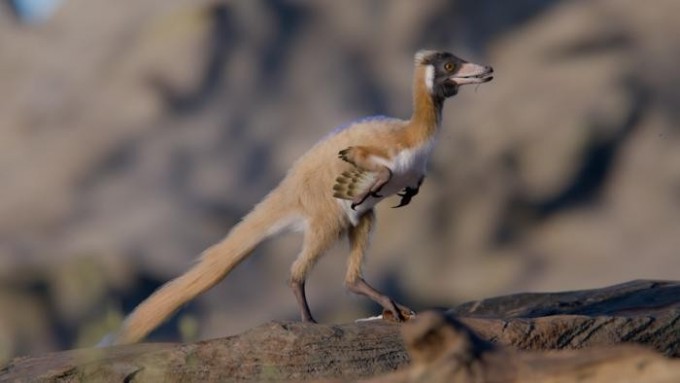
A nearly complete, 90-million-year-old dinosaur skeleton discovered in Patagonia is providing a 'Rosetta Stone' for understanding the enigmatic alvarezsaurs. The fossil of Alnashetri cerropoliciensis, weighing under two pounds, reveals this bizarre group of bird-like dinosaurs shrank to tiny sizes before developing their later specialized adaptations. This discovery challenges previous evolutionary timelines and offers crucial insights into how these animals spread across the ancient world.
The discovery of a nearly complete, 90-million-year-old dinosaur skeleton in the fossil-rich badlands of Patagonia is fundamentally reshaping our understanding of a peculiar evolutionary lineage. The fossil, belonging to the species Alnashetri cerropoliciensis, is acting as a paleontological 'Rosetta Stone,' finally allowing scientists to decipher the mysterious history of the alvarezsaurs—a bizarre group of bird-like dinosaurs known for their stubby arms and single enlarged thumb claws. This article explores the significance of this tiny, two-pound dinosaur and how it is rewriting the evolutionary narrative of its entire clade.
The Alvarezsaurs: A Long-Standing Paleontological Puzzle
For decades, alvarezsaurs have perplexed scientists. These small, bird-like theropods are characterized by highly unusual features, including tiny teeth and remarkably short forelimbs that terminate in a single, robust claw. The majority of well-preserved fossils had been found in Asia, creating a significant geographical and anatomical gap in the fossil record. Incomplete and fragmentary remains from South America made it difficult for researchers to piece together a coherent evolutionary story or understand how these animals were related to their global counterparts.
This knowledge gap left major questions unanswered: How did these strange adaptations evolve? Did they become small as a consequence of their specialized diet, or was small size a precursor? The discovery of the Alnashetri specimen, led by University of Minnesota scientist Peter Makovicky and Argentine paleontologist Sebastian Apesteguía, provides the critical missing link needed to solve this puzzle.
Alnashetri: The Patagonian 'Rosetta Stone'
The almost complete skeleton was unearthed in 2014 at the La Buitrera fossil area in northern Patagonia, Argentina—a site renowned for its exceptional preservation of Cretaceous-period animals. While the species was named years earlier based on fragmentary bones, this new specimen offered the first clear, articulated view of the animal's full anatomy. Meticulous preparation over a decade was required to clean and assemble the delicate, fragile bones of this tiny dinosaur.
Professor Peter Makovicky described the find's importance, stating it provides a reference point that allows paleontologists to accurately identify more incomplete fossils and map out key evolutionary transitions. The skeleton reveals that Alnashetri possessed longer arms and larger teeth than its later relatives, indicating that members of this lineage had already evolved extremely small body sizes before developing the highly specialized features associated with a hypothesized ant-eating diet.

Key Insights from a Tiny Titan
The Alnashetri fossil delivers several groundbreaking insights. First, microscopic analysis of the bone structure confirmed the individual was a fully grown adult, at least four years old, weighing less than two pounds. This makes it one of the smallest non-avian dinosaurs ever discovered in South America and places alvarezsaurs among the smallest dinosaurs known to science. The finding demonstrates that this lineage achieved and maintained minute body sizes throughout their evolutionary history.
Second, by re-examining alvarezsaur fossils held in museum collections across North America and Europe, the research team found evidence that these animals appeared much earlier than previously thought. Their widespread distribution likely occurred when Earth's continents were still connected as the supercontinent Pangaea. This suggests their global dispersal was a result of continental drift following Pangaea's breakup, rather than trans-oceanic migration—a crucial detail for understanding biogeographic patterns in the Cretaceous world.
Implications for Evolutionary Science
This discovery published in the journal Nature challenges the sequential model of evolution where specialized adaptations drive body size changes. Instead, Alnashetri shows that drastic miniaturization occurred first, potentially opening new ecological niches that later facilitated the evolution of specialized traits like short, powerful digging arms. It underscores the importance of exceptional fossil sites like La Buitrera, which continues to yield treasures including early snakes and small saber-toothed mammals, offering a unique window into an ancient ecosystem.
The research, supported by an international collaboration and funding from institutions like the National Geographic Society and the U.S. National Science Foundation, is far from over. Scientists indicate that the next chapter of the alvarezsaur story, already unearthed and being prepared in the lab, promises to further illuminate the evolutionary journey of these fascinating creatures. This tiny dinosaur from Patagonia proves that some of the most significant revelations in paleontology can come in the smallest packages, forcing us to rethink the pathways of life's history on Earth.