
Escalating Conflict: U.S. Casualties Mount as Iran War Widens
The U.S. Defense Department has confirmed the names of additional American service members killed in the expanding conflict with Iran, bringing the total to six. As the fifth day of joint U.S.-Israeli airstrikes continues, the war has triggered a regional crisis involving NATO allies, disrupted global energy markets, and prompted urgent evacuations of American citizens from the Middle East. This analysis examines the latest developments, including congressional challenges to presidential war powers, retaliatory strikes across multiple countries, and the mounting humanitarian toll.
The joint U.S.-Israeli military campaign against Iran, now in its fifth day, has entered a dangerous new phase with expanding regional consequences and mounting American casualties. The Defense Department's confirmation of additional service member deaths underscores the human cost of Operation Epic Fury, even as the conflict draws in NATO allies, disrupts critical energy supplies, and sparks a fierce political debate in Washington over presidential war powers. This unfolding crisis represents one of the most significant military confrontations in the Middle East in decades.

Mounting American Casualties and Evacuation Efforts
The human toll of the conflict became more starkly visible as the Pentagon released the names of additional American service members killed in Iranian retaliatory strikes. Major Jeffrey O'Brien, 45, a reserve officer from Waukee, Iowa, was confirmed killed in an Iranian drone attack in Kuwait on Sunday. The Defense Department also announced that Chief Warrant Officer Robert M. Marzan, 54, of Sacramento, California, is believed to have died in the same incident, bringing the total American fatalities to six. These soldiers were assigned to the 103rd Sustainment Command based in Des Moines, the same unit as four soldiers whose deaths were announced earlier in the week.
In response to the deteriorating security situation, the State Department has intensified evacuation efforts for American citizens in the region. Department officials revealed they have assisted approximately 6,500 people attempting to leave conflict zones, with a charter flight specifically arranged to transport Americans back to the United States. This marks a significant escalation from earlier statements, as officials clarified that outdated recordings suggesting citizens were "on their own" no longer reflected current policy. The evacuation efforts represent one of the largest such operations in the region since the withdrawal from Afghanistan.
Congressional Challenge to Presidential War Powers
In Washington, a deep partisan divide emerged over the constitutional authority to wage war as Senate Republicans blocked a measure that would have limited President Trump's ability to continue military operations against Iran without congressional authorization. The 53-to-47 vote followed party lines almost exactly, with only Senator Rand Paul of Kentucky breaking with his fellow Republicans to support the resolution introduced by Senator Tim Kaine of Virginia. The measure invoked provisions of the 1973 War Powers Act, which requires congressional approval for extended military engagements.

Republican leadership defended the president's actions, with Senator Mitch McConnell stating that "the Islamic Republic of Iran was, quite literally, founded on the premise of existential war against America and against Israel." However, some Republicans indicated their support might waver if the conflict expanded further, particularly if ground troops were deployed. The House is expected to vote on a similar measure, though it too is anticipated to fail along party lines. This legislative battle highlights ongoing tensions between executive and legislative branches regarding war-making authority that have persisted for decades.
Regional Escalation and NATO Involvement
The conflict has rapidly expanded beyond Iran's borders, drawing multiple regional actors into the fray. In a particularly dangerous development, NATO air defenses intercepted an Iranian ballistic missile headed toward Turkish airspace. Senior U.S. and Western officials confirmed the missile was targeting Incirlik Air Base in Turkey, a critical NATO installation hosting American troops. The interception was carried out by an SM-3 interceptor launched from a U.S. Navy ship in the eastern Mediterranean Sea, marking a direct NATO response to Iranian aggression.
Meanwhile, Israel has intensified its campaign against Hezbollah in Lebanon, ordering mass evacuations in southern regions and conducting strikes near Beirut that resulted in civilian casualties according to Lebanese health authorities. The Israeli military announced it had launched another wave of strikes on Tehran itself, bringing the total targets struck in the Iranian capital to over 200. These expanding fronts demonstrate how quickly the conflict has metastasized beyond its initial parameters, creating multiple flashpoints across the Middle East.
Humanitarian Crisis and International Response
The humanitarian toll continues to mount with devastating consequences for civilian populations. Iran's Red Crescent Society reported the death toll has risen to 787 since the U.S.-Israeli attacks began, with one of the deadliest incidents being the bombing of the Shajarah Tayyebeh girls' elementary school in Minab that killed at least 175 people, most of them children. Both U.S. and Israeli officials stated they were investigating the school attack, with Defense Secretary Hegseth emphasizing that "we of course never target civilian targets" while acknowledging the ongoing investigation.
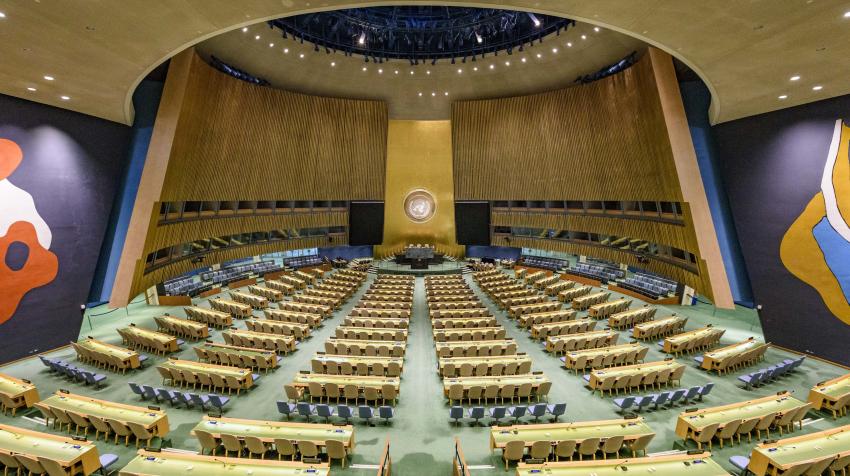
International organizations have expressed grave concern about the escalating violence. A United Nations human rights panel strongly condemned the attacks as violations of the U.N. Charter, noting that Iranians are "caught between large-scale military operations and a government with a long record of gross human rights violations." UNESCO specifically addressed the school bombing, calling it a "grave violation of the protection afforded to schools under international humanitarian law." These statements reflect growing international alarm about the conflict's humanitarian dimensions.
Global Economic and Diplomatic Fallout
The war has triggered significant disruptions to global energy markets and exposed diplomatic fractures among Western allies. Qatar's suspension of liquefied natural gas exports following attacks on its facilities sent prices soaring in Europe and Asia, with the main Asian LNG benchmark rising approximately 91% and European prices increasing about 44% since the conflict began. This development benefits Western energy companies like Shell, TotalEnergies, and ExxonMobil, who serve as alternative suppliers, but threatens economic stability in importing nations.
Diplomatically, the conflict has created unusual tensions between the United States and some European allies. Spain's government categorically denied White House claims that it had reversed its opposition to the war and was cooperating militarily, with Prime Minister Pedro Sánchez insisting Spain "will not be accomplices to something that is bad for the world." This contrasts with Britain, France, and Germany, who issued a joint statement promising defensive assistance. China announced it would send a special envoy to conduct mediation efforts, reflecting the global stakes of the escalating conflict.
Military Developments and Strategic Implications
From a military perspective, the conflict has seen several unprecedented developments. Defense Secretary Hegseth revealed that a U.S. submarine torpedoed an Iranian warship in the Indian Ocean—the first time an American submarine has fired a torpedo against an enemy vessel since World War II. The IRIS Dena, with a crew of 180, sank off the coast of Sri Lanka, where 32 survivors are recovering from injuries. Iranian Foreign Minister Abbas Araghchi condemned this as an "atrocity at sea," warning the U.S. would "come to bitterly regret precedent it has set."
General Dan Caine, Chairman of the Joint Chiefs of Staff, reported significant progress in degrading Iran's military capabilities, noting that Iranian ballistic missile launches have decreased by 86% since the conflict's first day. However, Iranian officials have warned they have not yet deployed their most advanced weaponry, possibly referring to hypersonic missiles they claim to possess—though many security experts doubt these claims. The U.S. military reports striking over 2,000 targets in Iran, focusing on mobile missile launchers and underground storage facilities.
Conclusion: An Unfolding Crisis with Global Implications
The expanding conflict between the United States, Israel, and Iran has evolved into a multi-front crisis with profound regional and global implications. With American casualties mounting, NATO directly engaged, energy markets disrupted, and diplomatic alliances strained, the situation grows more complex by the day. The congressional debate over war powers reflects deep divisions about the proper constitutional process for military engagement, even as the humanitarian toll continues to rise. As the conflict enters its next phase, the international community watches anxiously, aware that further escalation could have consequences far beyond the Middle East. The coming days will test not only military strategies but also diplomatic channels and international resolve to prevent a wider regional war.


