Discovery of an Ultra-Fast Pulsar Near the Milky Way's Central Black Hole
Astronomers from Columbia University, working with the Breakthrough Listen initiative, have identified a potential ultra-fast pulsar candidate spinning every 8.19 milliseconds in the extreme environment near Sagittarius A*, the supermassive black hole at the heart of our galaxy. This discovery, detailed in The Astrophysical Journal, could provide a unique cosmic laboratory for testing Einstein's Theory of General Relativity under the most intense gravitational conditions. If confirmed, this millisecond pulsar would act as a precise natural clock, allowing scientists to measure the warping of space-time around a black hole with unprecedented accuracy.
In a groundbreaking discovery that could reshape our understanding of gravity and space-time, scientists have detected a promising signal from the chaotic heart of our galaxy. Researchers from Columbia University, in collaboration with the Breakthrough Listen Galactic Center Survey, have reported the identification of a candidate ultra-fast pulsar located perilously close to Sagittarius A*, the supermassive black hole anchoring the Milky Way. This finding, published in The Astrophysical Journal, represents a significant milestone in astrophysics, offering a potential new tool to probe the fundamental laws of the universe under conditions of extreme gravity.
The Significance of the Discovery
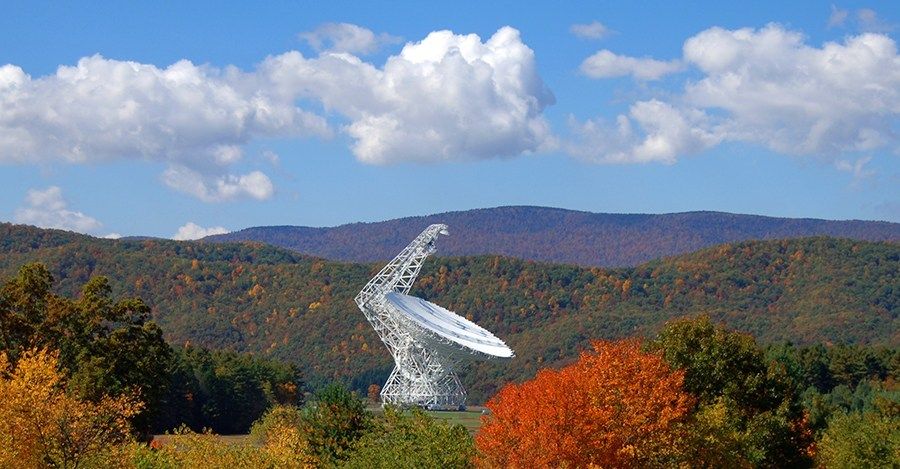
The candidate object, identified as a millisecond pulsar (MSP) with a spin period of 8.19 milliseconds, was found during one of the most sensitive radio surveys ever conducted of the galactic center. Led by recent Columbia PhD graduate Karen I. Perez, the research team utilized data from the Breakthrough Listen initiative, which is primarily known for its search for extraterrestrial intelligence but also conducts cutting-edge astrophysical research. The turbulent region surrounding Sagittarius A* is filled with gas, dust, and intense radiation, making the detection of such a faint, periodic signal a remarkable technical achievement.
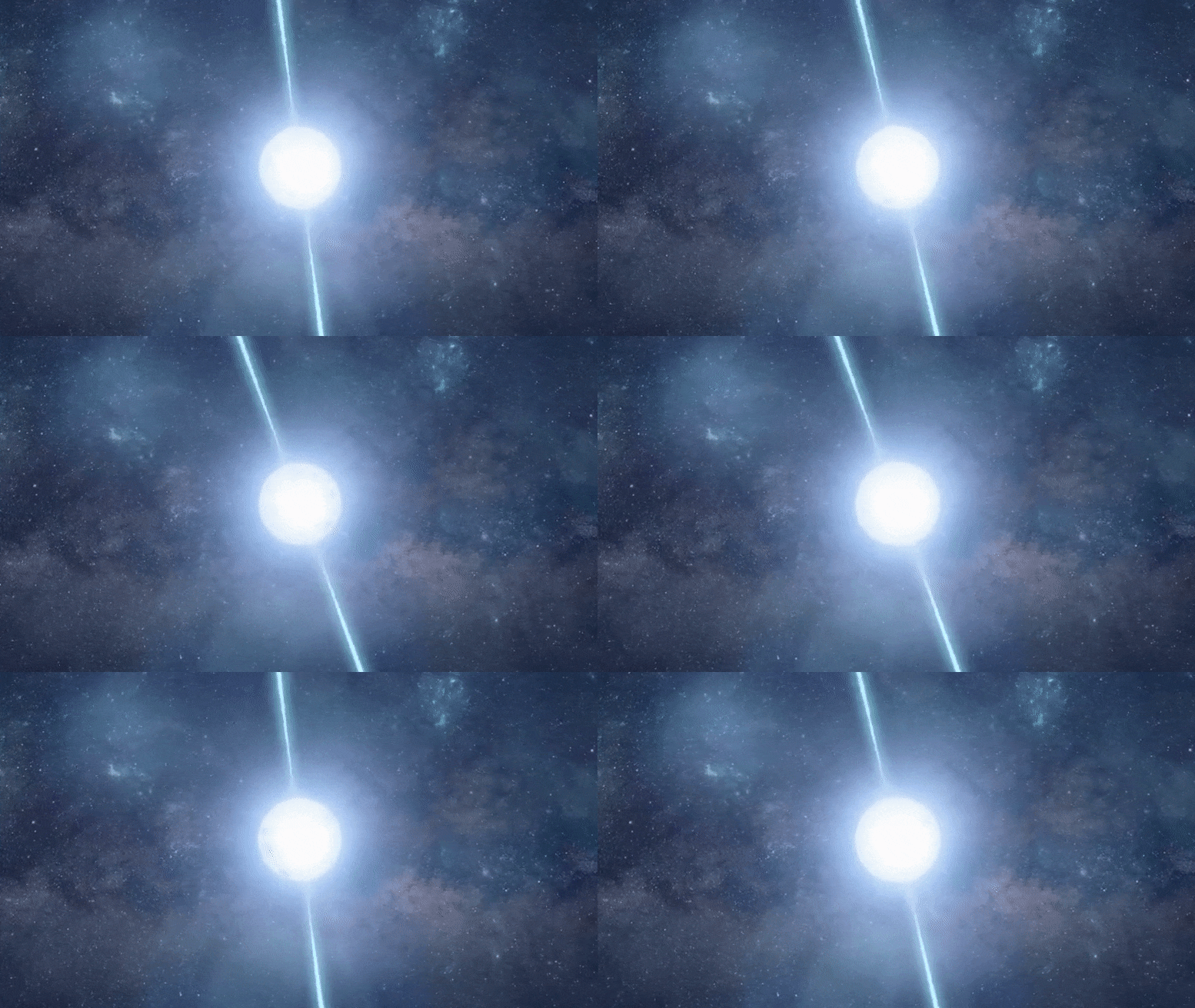
Pulsars are the dense, rapidly spinning remnants of massive stars that have exploded as supernovae. These neutron stars possess powerful magnetic fields and emit beams of radio waves from their magnetic poles. As they rotate, these beams sweep across space like a cosmic lighthouse, producing regular pulses of radiation that can be detected on Earth. Millisecond pulsars are a special subclass that spin hundreds of times per second, and their pulse arrival times are exceptionally stable, making them nature's most precise clocks.
A New Laboratory for Testing General Relativity
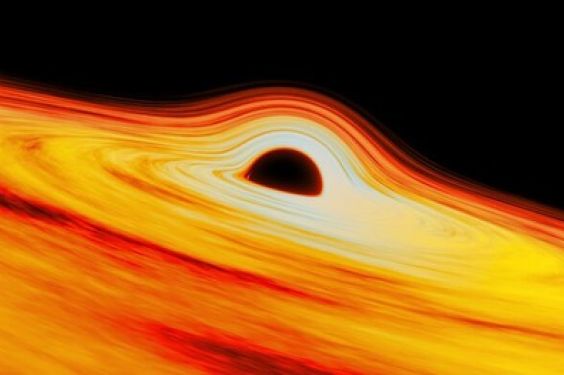
The primary scientific excitement stems from the pulsar candidate's proximity to a supermassive black hole. Sagittarius A* has a mass equivalent to about four million suns, creating a gravitational field so intense that it dramatically warps the fabric of space-time around it. According to Einstein's General Theory of Relativity, massive objects distort space-time, and this distortion affects the motion of objects and even the passage of light.
"Any external influence on a pulsar, such as the gravitational pull of a massive object, would introduce anomalies in this steady arrival of pulses, which can be measured and modeled," explained co-author Slavko Bogdanov, a research scientist at the Columbia Astrophysics Laboratory. A confirmed pulsar in this orbit would act as a probe. As its radio pulses travel through the severely curved space-time near the black hole, they would experience delays and deflections. By meticulously timing the arrival of these pulses over years, astronomers could detect subtle deviations predicted by General Relativity, potentially revealing new physics or putting the theory to its most stringent test yet.
The Path to Confirmation and Future Research
The researchers emphasize that the detected signal is currently a candidate. The extreme environment of the galactic center is noisy, and distinguishing a true pulsar signal from other astrophysical phenomena is challenging. The team is now actively analyzing follow-up observations to verify the discovery. In a move that underscores the collaborative nature of modern science, Breakthrough Listen has made the survey data publicly available, inviting astronomers worldwide to conduct independent analyses.
"We're looking forward to what follow-up observations might reveal about this pulsar candidate," said lead author Karen I. Perez. "If confirmed, it could help us better understand both our own Galaxy, and General Relativity as a whole." A confirmed pulsar-black hole binary system would be an astronomical treasure, enabling studies not only of gravity but also of the population of neutron stars in the galactic center, the behavior of matter in strong magnetic fields, and the accretion processes of Sagittarius A* itself.
This discovery highlights the unexpected dividends of broad scientific surveys. While Breakthrough Listen scans the cosmos for signs of intelligence, its powerful instruments and vast datasets continue to yield profound insights into fundamental astrophysics. The potential confirmation of an 8.19-millisecond pulsar orbiting our galaxy's central black hole would open a rare window into the most extreme gravitational regime in our cosmic neighborhood, offering a chance to observe the universe's most precise clocks ticking within its most powerful gravity wells.