Read on nature.com
The Measurement Gap: Why Our Understanding of Public Science Perception Is Incomplete
The scientific community faces a crisis of cultural authority, often attributed to public scientific illiteracy or declining trust. However, this diagnosis may be flawed, stemming from incomplete measurement tools. For decades, researchers have relied on narrow surveys assessing factual knowledge or confidence levels, which remove science from the social and institutional contexts in which the public encounters and judges it. This article argues that the real problem is not a crisis of public understanding but a deeper neglect of how the public perceives science's norms, practices, and institutional operations. A shift in focus is needed to truly gauge public sentiment.
The perceived crisis in public trust of science is a dominant narrative in today's discourse. From vaccine hesitancy to climate policy disputes, the scientific community often interprets these challenges as a problem rooted in the public—a result of limited scientific literacy, misinformation, or eroding confidence in experts. However, a critical examination reveals a more fundamental issue: we may not truly know what the public thinks about science because our primary tools for measurement are fundamentally limited. This gap in understanding stems from an over-reliance on surveys that assess factual knowledge or abstract trust, thereby divorcing science from the complex social and institutional contexts in which people actually experience it.

The Limits of Traditional Measurement Tools
For decades, the study of public understanding of science has been dominated by survey-based methodologies. These tools typically ask respondents to recall scientific facts—such as whether the Earth revolves around the Sun—or to rate their level of confidence in scientists and scientific institutions. While these surveys have provided valuable longitudinal data, they have also perpetuated significant gaps in our knowledge. The core limitation is that they treat scientific understanding as a form of civic competence measured by the ability to comprehend technical information, rather than as a nuanced understanding of science as a social enterprise.
This approach blurs a crucial distinction. Knowing a scientific fact is not the same as understanding how science operates as a professional field governed by specific norms, incentives, and institutional structures. When surveys report that a quarter of respondents answer a basic astronomy question incorrectly, it dramatizes a knowledge gap but says little about how those same people evaluate scientific expertise, assess evidence in a health crisis, or reason about science's role in societal governance. The problem, therefore, is not that existing measures are wrong, but that they are profoundly incomplete.
Moving Beyond Facts and Trust
A more accurate assessment of public perception requires a broader conceptual framework. It must account for the public's understanding of the institutions of science—how research is funded, how conflicts of interest are managed, and how uncertainty is communicated. In everyday controversies, public concerns frequently hinge on issues of transparency, independence, and accountability, rather than on a simple lack of factual knowledge or trust. For instance, someone might express confidence in the scientific method while simultaneously questioning the influence of pharmaceutical funding on vaccine research.
Standard trust measures often collapse these nuanced distinctions. They fail to capture why credibility is granted or withdrawn in specific contexts. To bridge this gap, researchers need to reorient their questions. Instead of asking "Do you trust scientists?", surveys could probe how the public evaluates the norms that organize scientific work. Do people see credibility as grounded in rigorous evidence, replication of studies, and openness to critique? How do they view the obligations of scientists when evidence conflicts with public opinion or deeply held beliefs? These questions shift the focus from science as an abstract authority to science as a belief system and a professional institution.
Reimagining Public Understanding: A Three-Part Framework
A new science of public understanding should be built on a broader definition. This framework, as suggested by analysis in Nature, would unfold across three interconnected areas:
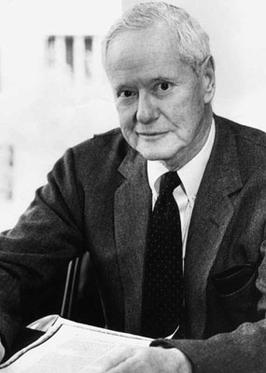
- Shared Knowledge of Scientific Norms and Practices: This involves public awareness of the principles—like those outlined by sociologist Robert K. Merton, including universalism and organized scepticism—that are meant to guide credible scientific work.
- Public Expectations of Science's Societal Role: What does the public believe scientists and scientific organizations should do for society? This includes expectations around communication, engagement, and the application of research for the public good.
- Judgements on the Ideal-Reality Gap: This is perhaps the most critical area. It measures the distance between public ideals for science and their perceptions of how science is actually practised, funded, and integrated into policy and public life.
By centering science's institutions and their cultural meaning, this approach provides a more holistic and context-rich picture of public perception. It acknowledges that people encounter science not as a list of facts, but through experiences with healthcare systems, environmental regulations, technology debates, and media narratives.
Conclusion: From Misdiagnosis to Meaningful Engagement
The current moment is frequently misdiagnosed as a crisis of public literacy or trust. In reality, it may reflect a deeper, long-standing neglect of the public's sophisticated reasoning about science's role in society. By relying on narrow metrics, the scientific community risks misunderstanding the public it seeks to engage and serve. The path forward requires a fundamental shift in how we conceptualize and measure public understanding. We must develop tools that explore how the public apprehends the norms, institutions, and social contract of science. Only then can we move beyond simplistic narratives of deficit and distrust toward a more authentic and productive dialogue between science and society.