Read on France 24
Macron at AI Summit: Europe to Shape Global AI Rules as a 'Safe Space'
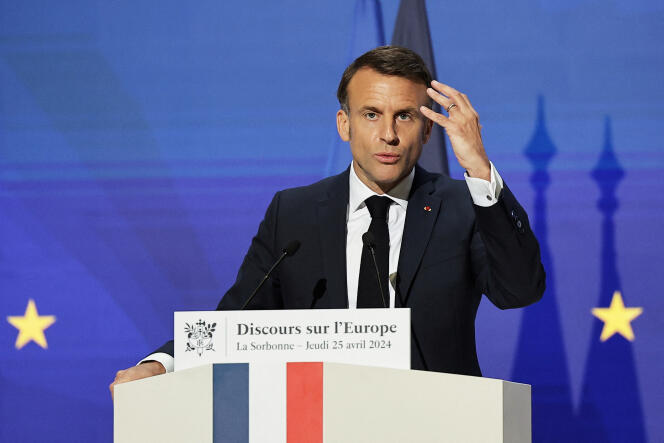
French President Emmanuel Macron, speaking at the AI Impact Summit in New Delhi, declared Europe's intent to continue shaping the global regulatory framework for artificial intelligence in collaboration with allies like India. He positioned the EU as a 'safe space' for innovation and investment, balancing technological advancement with robust safeguards, particularly emphasizing the protection of children from digital abuse. This stance reaffirms Europe's leadership role following its pioneering AI Act, while addressing international concerns about regulatory overreach.
At the AI Impact Summit in New Delhi, French President Emmanuel Macron delivered a significant address outlining Europe's strategic vision for the future of artificial intelligence. His speech positioned the European Union not as a mere regulator, but as a collaborative architect of the global digital landscape, determined to forge a path that fosters innovation while embedding fundamental protections.
Europe's Determined Role in Shaping Global AI Governance
President Macron's core message was one of assertive partnership. He stated the EU is "determined to continue to shape the rules of the game... with our allies such as India." This declaration comes against the backdrop of the EU's landmark Artificial Intelligence Act, adopted in 2024, which has established the bloc as a first-mover in comprehensive AI regulation. The Act, which is being implemented in phases, creates a risk-based framework that can ban systems posing "unacceptable risks," such as real-time biometric identification in public spaces.
The 'Safe Space' Paradigm: Balancing Innovation and Protection
Macron directly addressed a common critique of European policy—that it is overly focused on restriction. "Europe is not blindly focused on regulation," he asserted. "Europe is a space for innovation and investment, but it is a safe space." This concept of a 'safe space' is central to the European approach, aiming to create a predictable, trustworthy environment that attracts long-term investment in AI development. The strategy includes tangible support for the sector; Macron noted France is "doubling the number of AI scientists and engineers trained" and that new startups are creating tens of thousands of jobs.

A Key Priority: Protecting Children in the Digital Age
A major pillar of Macron's address was the urgent need to protect children from digital harms, framing it as a civilizational imperative. "One of our G7 priorities will be, as well, children's protection against AI and digital abuse," he stated. He powerfully argued, "There is no reason our children should be exposed online to what is legally forbidden in the real world." This priority is being backed by legislative action in France, where lawmakers have passed a bill to ban social media use for under-15s, awaiting a Senate vote. This follows a similar move by Australia in December 2025.
International Collaboration and the Road Ahead
Macron's speech emphasized that this regulatory and protective journey is not a solitary European endeavor. He expressed confidence that India "will join this club" of nations committed to these principles. This outreach is crucial, as the global nature of AI technology demands international cooperation to establish effective norms. The summit itself served as a platform to align perspectives between major democratic economies, navigating the tension between innovation and necessary oversight highlighted by previous debates, such as U.S. Vice President JD Vance's warning in Paris against "excessive regulation."
In conclusion, President Macron's summit address clearly delineated Europe's dual-track strategy for artificial intelligence: to be a proactive shaper of global standards in concert with allies, and to cultivate its own market as a secure, innovation-friendly jurisdiction. By championing child protection as a non-negotiable element of digital civilization, Europe is seeking to define an ethical baseline for the AI era. The success of this vision will depend on its ability to translate principled regulation into a competitive advantage that attracts global talent and investment, proving that safety and innovation are not mutually exclusive but fundamentally linked.