Read on France 24
Beyond Trade: How Fighter Jet Deals Shape Geopolitical Alliances
While trade agreements and economic partnerships form the bedrock of international relations, high-stakes defence contracts, particularly for advanced fighter jets, represent a deeper level of strategic alignment. The recent €30 billion Rafale jet deal between France and India exemplifies how military hardware sales transcend commerce, influencing geopolitical balances, strategic autonomy, and alliances in a rapidly realigning world. This article explores the unique significance of such defence pacts and their implications for global power dynamics.
In the complex tapestry of international relations, trade deals and economic partnerships are common threads. Yet, the sale of advanced fighter jets represents a fundamentally different weave—one of deep strategic trust, technological interdependence, and geopolitical signaling. As highlighted by recent developments, such transactions are not merely commercial but are pivotal instruments in shaping global alliances and national security postures.

The Strategic Weight of Defence Contracts
Unlike standard trade agreements, major defence contracts, especially for cutting-edge platforms like fighter jets, involve decades-long commitments. They create a symbiotic relationship between buyer and seller, encompassing not just the hardware but also training, maintenance, spare parts, and often technology transfer. This creates a long-term dependency and alignment of strategic interests that few other partnerships can match.
Case in Point: The France-India Rafale Deal
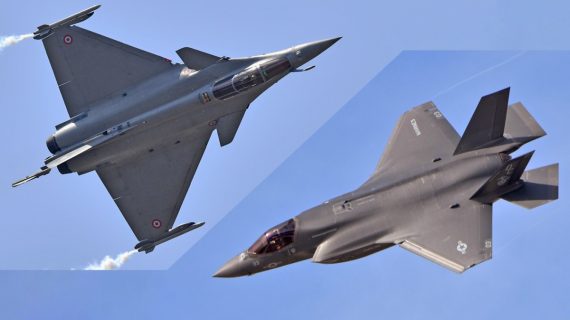
A prime example of this dynamic is the ongoing defence relationship between France and India. Reports indicate French President Emmanuel Macron's efforts to finalize a massive €30 billion sale of 114 Rafale fighter jets to India. This potential deal, a third batch following previous sales, underscores a sustained partnership. For France, such a sale is crucial not only economically but also geopolitically, as it seeks to establish its Rafale as a credible alternative to American-made aircraft like the F-35 within NATO and beyond.
India's Calculus: Diversification and Strategic Autonomy
For India, the pursuit of advanced French jets is a key part of its broader defence diversification strategy. Historically reliant on Russian military hardware, India is consciously expanding its supplier base to include Western partners like France and the United States. This move is driven by a desire for strategic autonomy, reducing over-dependence on any single nation, and accessing the latest military technology. The Rafale deal, therefore, is a significant step in weaning itself off Russian supplies, a process mirrored in its energy sector as it faces pressure to reduce discounted crude oil imports from Moscow.
Broader Geopolitical Implications
Such mega-defence deals have ripple effects across the global stage. They can subtly shift regional power balances and influence the foreign policy orientations of the involved nations. A closer defence tie with France and Europe potentially draws India into a tighter strategic dialogue with the West, even as it maintains its traditional non-aligned stance. Concurrently, fast-tracked trade negotiations with the United States and the European Union complement this military cooperation, creating a multi-faceted partnership.

The Challenge of Affording Strategic Autonomy
The central question for both nations, as in any such high-level alignment, is the extent of strategic autonomy they can preserve. For France, selling jets to India is a way to assert its independent defence industrial base and diplomatic influence. For India, buying from France, the US, and others allows it to balance relationships without being beholden to a single bloc. However, this autonomy comes with complex negotiations, cost scrutiny—as seen in past Rafale deals—and the constant need to navigate the pressures of a world where the US, China, and Russia are major poles of influence.
In conclusion, while trade deals build economic bridges, defence contracts like fighter jet sales forge strategic bonds. The potential €30 billion Rafale agreement between France and India is a testament to how military hardware has become a currency of geopolitics. It highlights a world where nations are constantly recalibrating alliances, with advanced technology sales serving as both a cause and a consequence of this realignment. The ultimate success of such partnerships will depend on a delicate balance: achieving mutual security objectives while preserving the strategic independence each nation values.