Read on bbc.com
US Military Buildup in the Middle East Amid Critical Iran Nuclear Negotiations
The United States is significantly increasing its military presence in the Middle East as diplomatic negotiations with Iran over its nuclear program enter a critical phase. President Trump has stated the world has roughly ten days to see if a 'meaningful deal' can be reached, warning that otherwise 'bad things happen.' This article analyzes the escalating tensions, the diplomatic efforts led by US envoys, Iran's warnings of retaliation, and the growing congressional opposition to unauthorized military action, providing a comprehensive overview of this high-stakes geopolitical standoff.
The geopolitical landscape of the Middle East is once again at a critical juncture, as the United States undertakes a significant military surge in the region concurrent with high-stakes nuclear negotiations with the Islamic Republic of Iran. This dual-track approach of diplomacy backed by force underscores the complex and volatile nature of US-Iran relations. President Donald Trump has publicly framed a tight deadline, suggesting the next ten days will determine whether a peaceful agreement is possible or if conflict becomes inevitable. This article examines the drivers behind the US military buildup, the state of nuclear talks, Iran's calculated responses, and the domestic political constraints shaping American policy.

The US Military Surge and Strategic Posturing
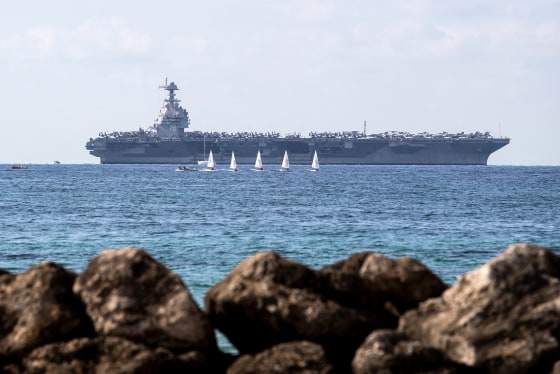
In recent weeks, the United States has markedly increased its military footprint across the Middle East. This deployment includes advanced naval assets, most notably the USS Abraham Lincoln aircraft carrier, signaling a readiness to project power. This mobilization is not occurring in a vacuum; it is a direct accompaniment to diplomatic negotiations, serving as both a deterrent and a potential instrument of coercion. The White House has framed this posture as a necessary measure to ensure Iran negotiates in good faith, with press secretary Karoline Leavitt warning Tehran would be "very wise" to secure a deal. Historically, such shows of force have preceded major conflicts in the region, raising global concerns about the potential for miscalculation and escalation.
Diplomatic Negotiations: A Narrow Window for a Deal
Parallel to the military buildup, American and Iranian negotiators have been engaged in talks, with meetings reported in Switzerland. President Trump has characterized these discussions, led by Special Envoys including Jared Kushner, as "very good" but acknowledged the historical difficulty of reaching a "meaningful deal" with Iran. The core issue remains Iran's nuclear program, which Western nations fear could lead to weapons development. The Trump administration has set an implicit deadline, with the President stating the world will find out "over the next, probably, 10 days" whether an agreement can be forged. This creates immense pressure on both sides, compressing complex diplomatic issues into a short timeframe where the alternative, as Trump stated, is that "bad things happen."
Iran's Defiant Stance and Threats of Retaliation
Iran has responded to the US pressure campaign with defiance and its own warnings. The Iranian government has formally notified the United Nations that it would consider US bases in the region as legitimate targets if those bases are used in any military aggression against Iran. In a letter to UN Secretary-General António Guterres, Tehran's mission argued that President Trump's rhetoric indicated a real risk of attack, though it insisted Iran does not seek war. Further amplifying this stance, Supreme Leader Ayatollah Ali Khamenei has used social media to issue threats, suggesting Iran possesses capabilities to sink US warships. Satellite imagery also indicates Iran has been reinforcing its own military facilities, preparing for a potential confrontation.
Domestic and International Political Constraints
The path to conflict is not unobstructed. Within the United States, a bipartisan group in Congress is mobilizing to check presidential war powers. Lawmakers like Democrat Ro Khanna and Republican Thomas Massie have announced intentions to force a vote citing the 1973 War Powers Act, which requires congressional approval for sustained military engagement. Khanna has warned that a war with Iran would be "catastrophic," endangering thousands of US troops in the region. Internationally, key allies are showing reluctance. The BBC reports that the British government has not granted the US permission to use UK bases, such as RAF Fairford or Diego Garcia, to support potential strikes on Iran—a significant logistical and diplomatic hurdle.
Conclusion: A Precarious Balance Between Diplomacy and Force
The coming days represent a precarious balancing act between diplomacy and the threat of military force. The US strategy of coupling negotiations with a visible military surge aims to maximize leverage but also risks triggering the very conflict it seeks to avoid. Iran's warnings of retaliation and its military preparations indicate it will not capitulate under pressure alone. The outcome likely hinges on whether negotiators can bridge the deep-seated mistrust and substantive disagreements over nuclear limits and sanctions relief within the constrained timeline. Furthermore, domestic US political opposition and allied reservations introduce critical checks on unilateral action. The world is indeed watching this ten-day window, which will test whether decades of tension can be resolved at the negotiating table or if the region is poised for another devastating conflict.