Read on PBS News
U.S. Missile Deployments to the Philippines: Strategic Deterrence and Regional Tensions
The United States is planning to deploy additional advanced missile systems to the Philippines, a move that has drawn strong condemnation from China. This strategic deployment, including systems like the Typhon, aims to bolster deterrence in the contested South China Sea. The Philippines, a longstanding U.S. treaty ally, has rejected Chinese demands to remove the weapons, framing their presence as essential for regional stability. This article examines the geopolitical implications of these deployments, the reactions from involved nations, and the potential impact on one of the world's most critical maritime corridors.
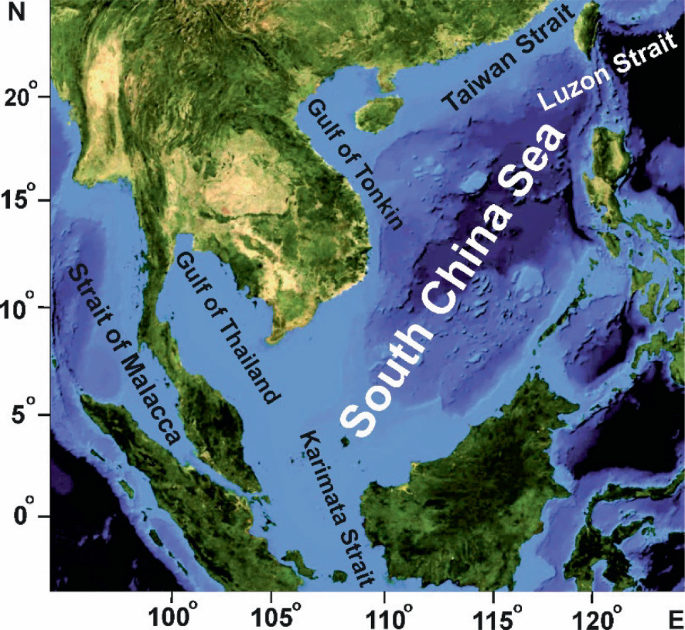
The strategic landscape of the Indo-Pacific is undergoing a significant shift as the United States enhances its military footprint in the Philippines. Recent announcements confirm plans for further deployments of cutting-edge missile launchers to the archipelago, a decision that has sharply escalated diplomatic tensions with China. These moves are framed by Washington and Manila as necessary measures to preserve freedom of navigation and deter aggression in the disputed South China Sea, a vital global trade route. However, Beijing perceives the installations as a direct threat aimed at containing its rise, warning that such actions undermine regional peace. This development underscores the deepening great-power competition and the complex security dilemmas facing Southeast Asia.

Strategic Rationale and Planned Deployments
The core of the U.S.-Philippines defense collaboration, as outlined in their recent joint statement, involves increasing deployments of "U.S. cutting-edge missile and unmanned systems." This initiative builds upon existing installations, notably the Typhon mid-range missile system deployed to Luzon in 2024 and an anti-ship missile launcher deployed in 2025. According to Philippine Ambassador to Washington Jose Manuel Romualdez, discussions have centered on deploying "upgraded" types of launchers, which the Philippines may eventually purchase. The stated purpose is purely defensive and deterrent. As Ambassador Romualdez emphasized to the Associated Press, "Every time the Chinese show any kind of aggression, it only strengthens our resolve to have these types." The systems are intended to modernize the Philippine military and demonstrate the alliance's capability to respond to coercive activities.
China's Firm Opposition and Regional Reactions
China has repeatedly expressed alarm over these deployments, labeling them a threat to regional stability. Beijing argues that the U.S. weapons, which can strike targets well within Chinese territory from Philippine soil, are explicitly designed to contain China's growth. Chinese officials have formally requested the Philippines to withdraw the missile launchers, a demand President Ferdinand Marcos Jr. has firmly rejected. The U.S. and Philippines jointly condemned what they termed China's "illegal, coercive, aggressive, and deceptive activities" in the South China Sea. This firm stance aligns with other regional claimants like Vietnam and Malaysia, who are also involved in territorial standoffs, though the direct stationing of U.S. missile systems represents a significant escalation in military posture.
Capabilities and Strategic Implications
The deployed systems significantly alter the military calculus in the region. The Typhon system is a land-based weapon capable of firing Standard Missile-6 (SM-6) and Tomahawk Land Attack Missiles. Tomahawks have a range exceeding 1,000 miles, placing key Chinese coastal infrastructure and military facilities well within reach from launch sites in northern Luzon. Furthermore, the deployment of the Navy Marine Expeditionary Ship Interdiction System (NMESIS) to Batan island, just south of Taiwan, aims to control the crucial Bashi Channel—a vital trade and military passage. These deployments provide the U.S. and Philippines with enhanced anti-access/area-denial (A2/AD) capabilities, intended to complicate potential adversarial operations in these strategic waterways and uphold the principle of unimpeded lawful commerce.
Alliance Dynamics and Future Trajectory
The missile deployments are a tangible manifestation of the strengthened U.S.-Philippines alliance under the Marcos administration. They are part of a broader suite of enhanced security engagements, including expanded joint military exercises and support for Philippine military modernization. While the immediate goal is deterrence, the long-term trajectory suggests a deeper integration of defense infrastructures. The presence of these systems, used to familiarize Filipino troops during joint drills, points toward potential future acquisitions by the Philippine armed forces. This deepening partnership signals a collective commitment to a rules-based order in the Indo-Pacific, even as it inevitably fuels geopolitical friction with China. The coming months will likely see continued diplomatic protests from Beijing and a sustained U.S.-Philippine focus on implementing these defense plans.
In conclusion, the planned U.S. missile deployments to the Philippines represent a pivotal moment in Indo-Pacific security. Driven by shared concerns over Chinese activities in the South China Sea, the move reinforces the U.S.-Philippine treaty alliance as a cornerstone of regional deterrence. While Manila and Washington insist the posture is defensive, Beijing views it as an offensive threat, guaranteeing ongoing tension. The situation underscores the delicate balance between asserting sovereign defense rights and managing the risks of escalation in one of the world's most contested regions. The stability of the South China Sea will heavily depend on whether these deployments succeed as a deterrent or become a catalyst for a more volatile security dilemma.