Read on France 24
US Military Buildup in Middle East Sets Stage for Potential Confrontation with Iran
The United States has significantly escalated its military presence in the Middle East, deploying 13 warships and a large fleet of aircraft, with a second aircraft carrier en route. This buildup, occurring less than a year after President Donald Trump ordered strikes on Iranian nuclear facilities, creates a volatile situation with the potential for renewed conflict. The deployment includes advanced fighter jets and support aircraft, signaling readiness for sustained operations. As diplomatic talks continue in Geneva, the concentration of American firepower in the region adds considerable pressure on Tehran to reach a nuclear agreement or face possible military action.
The strategic landscape of the Middle East has shifted dramatically with a substantial US military deployment that positions American forces for potential conflict with Iran. This escalation comes amidst ongoing diplomatic efforts and follows previous military actions, creating a tense environment where the threat of confrontation looms large. The scale and composition of the deployed forces suggest preparation for sustained operations rather than limited strikes, indicating a significant shift in US strategic posture toward Tehran.

Scale of the Military Deployment
According to reports from FRANCE 24, the United States currently maintains 13 warships in the Middle East region. This naval force includes one aircraft carrier, the USS Abraham Lincoln, accompanied by nine destroyers and three littoral combat ships. The deployment represents a substantial concentration of naval power in strategically important waters, particularly the Arabian Sea and Persian Gulf areas where tensions with Iran have historically been highest.
Additional Forces in Transit
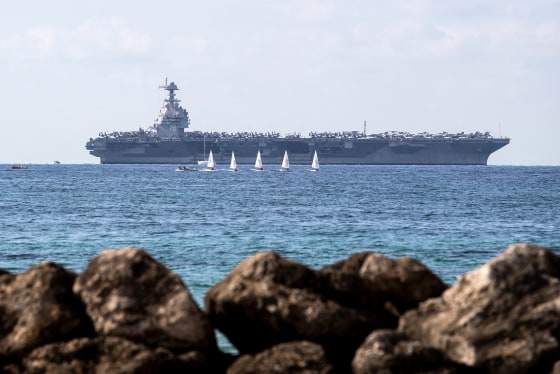
Beyond the already deployed forces, the USS Gerald R. Ford—the world's largest aircraft carrier—is currently transiting from the Atlantic Ocean to the Middle East after being ordered there by President Trump earlier this month. This massive warship is accompanied by three destroyers, further augmenting American naval capabilities in the region. The presence of two aircraft carriers simultaneously in the Middle East is relatively rare and occurred previously in June of last year during coordinated strikes on Iranian nuclear facilities.
Air Power and Support Assets
The military buildup extends beyond naval forces to include a significant air component. Open-source intelligence and flight-tracking data indicate the United States has deployed multiple advanced aircraft to the region. These include F-22 Raptor stealth fighter jets, F-15 and F-16 warplanes, and KC-135 aerial refuelling aircraft essential for sustaining extended air operations. Additionally, E-3 Sentry airborne warning and control aircraft and various cargo planes have been observed operating in the Middle East, suggesting comprehensive preparation for potential air campaigns.
Political Context and Diplomatic Efforts
This military escalation occurs against a complex political backdrop. President Trump ordered the USS Abraham Lincoln to the Middle East as Iran was cracking down on widespread protests that began with economic grievances but evolved into broader opposition to the Islamic republic. The US president had previously warned Iran that Washington would intervene militarily if Tehran killed protesters, and he encouraged Iranians to challenge state institutions with promises that "help is on the way."
Ongoing Negotiations
Despite the military posturing, diplomatic channels remain active. US and Iranian officials held talks in Geneva aimed at averting military intervention, with Iran reporting afterward that they had agreed on "guiding principles" for a potential deal. However, White House Press Secretary Karoline Leavitt noted that while there was "a little bit of progress made," significant differences remain between the two sides. Leavitter emphasized that "Iran would be very wise to make a deal," suggesting the military buildup serves as leverage in negotiations.

Strategic Implications and Regional Stability
The concentration of American military power in the region creates what analysts describe as "a momentum of its own." Susan Ziadeh, a senior adviser at the Center for Strategic and International Studies, noted during a panel discussion that "sometimes that momentum is a little hard to just put the brakes on." This dynamic raises concerns that even without explicit orders for strikes, the presence of substantial forces could lead to unintended escalation through miscalculation or incidents at sea or in the airspace of the volatile region.
Conclusion
The US military buildup in the Middle East represents a significant escalation in tensions with Iran, creating conditions where military confrontation becomes increasingly plausible. While diplomatic efforts continue, the substantial deployment of warships, aircraft carriers, and advanced fighter jets serves both as preparation for potential conflict and as leverage in negotiations. The situation remains fluid, with the coming weeks likely to determine whether the massive concentration of American military power will result in renewed strikes against Iran or successfully pressure Tehran into a diplomatic agreement that addresses US concerns about Iran's nuclear program and regional activities.