Read on the Guardian
A Decade of Warnings: The Domestic Violence History of an Alleged Triple Murderer
Court documents reveal Julian Ingram, the man accused of murdering three people in Lake Cargelligo last month, had a documented history of domestic violence threats dating back a decade. In 2016, he was sentenced to prison for threatening a former partner with a gun and making death threats against her, her child, and her mother. This case raises critical questions about risk assessment, bail decisions, and the systemic handling of repeat domestic violence offenders, highlighting the tragic consequences when warning signs are potentially overlooked.
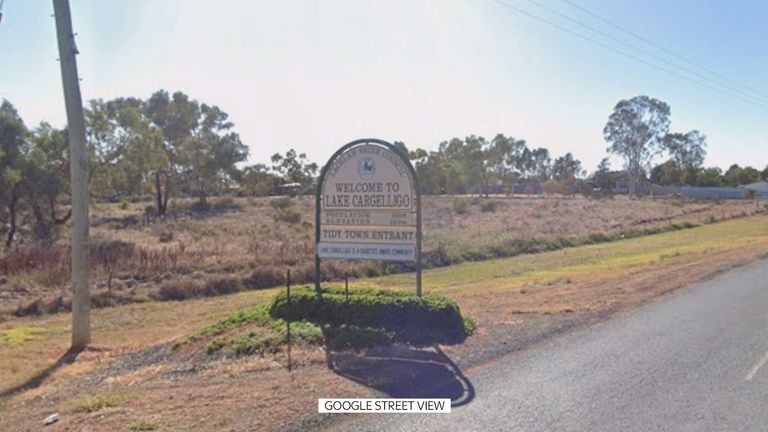
The tragic alleged triple murder in Lake Cargelligo, New South Wales, last month has cast a stark light on the complex and often fatal trajectory of domestic violence. Julian Ingram, also known as Julian Pierpoint, stands accused of shooting dead his pregnant former partner Sophie Quinn, her new boyfriend, and her aunt. As a large-scale manhunt for the 37-year-old continues, exclusive court documents obtained by Guardian Australia reveal a disturbing pattern of behavior that spanned nearly a decade, raising urgent questions about systemic responses to domestic violence and risk assessment.
A Pattern of Threats and Intimidation
According to court documents, in 2016—a full decade before the alleged murders—Julian Ingram pleaded guilty to two domestic violence-related offences. The charges stemmed from threats made against a former de facto partner, referred to pseudonymously as Tessa, with whom he shared a child. The relationship was described as being marked by Ingram's "jealous and controlling nature." Court records detail how Tessa was "too scared to develop a relationship with another man" due to fear of retaliation from Ingram.
The specific threats were chillingly explicit. Ingram accused Tessa of being intimate with a handyman repairing her home—a home that had "many holes in the walls from previous unreported domestic violence incidents." He then stated,
"He wont [sic] be fixing it for much longer. I have a gun and a hole for him. I will do you and him in."He further threatened to burn her house down in a text message and made threats against her mother and children.
Judicial Outcomes and a Reduced Sentence
Following these threats, an Apprehended Violence Order (AVO) was issued against Ingram to protect Tessa. However, he breached this order just over a month later. Court documents describe a terrifying incident where Tessa heard Ingram's voice very close to her house, singing a made-up song he used during their relationship. She panicked and ran inside, while Ingram was alleged to have laughed an "evil" laugh. When arrested that evening, he was dressed entirely in black with a black bandanna.
In April 2016, Ingram was sentenced to eight months in prison with a six-month non-parole period for two counts of stalking or intimidating with intent to cause fear or physical harm and for breaching the AVO. However, he successfully appealed this sentence. In September 2017, his prison term was reduced to 300 hours of community service. Notably, the court documents reveal there was no order as part of the original sentence or the appeal for him to attend a behavioural change program.
Escalation to Murder and Police Scrutiny
The connection between this past behavior and the recent alleged murders is now under intense scrutiny. Last month, Ingram allegedly shot dead Sophie Quinn, who was pregnant, along with her new boyfriend and her aunt. Police are now facing questions over their decision to grant Ingram bail just two months prior to the alleged murders, following charges of assaulting Quinn. Police have stated that a risk assessment at the time found he did not pose an "unacceptable risk" and noted his previous compliance with court orders.
As part of the bail conditions, Ingram was required to report daily to the Lake Cargelligo police station and abide by an AVO. A critical incident investigation, overseen by the police watchdog, has now been launched. This investigation will examine Ingram's "full domestic violence history" and his access to firearms, as well as the broader police handling of the case.

A History of Violence Across Multiple Relationships
The court documents paint a picture of a man with a sustained history of violence across multiple relationships. Since 2014, six AVOs have been issued against Ingram relating to five different people. This includes two AVOs for Tessa and one for Sophie Quinn. In 2022, he was convicted of grabbing a family member by the throat after an argument about Christmas presents, for which he received an 18-month community corrections order.
The case underscores a devastating narrative seen too often: a pattern of escalating domestic violence where prior incidents, while serious, may not be weighted heavily enough in subsequent risk assessments. The reduction of a prison sentence to community service for explicit death threats, the granting of bail despite a recent assault charge, and the absence of mandated behavioural intervention collectively form a tragic backdrop to the alleged murders in Lake Cargelligo.
This tragedy forces a painful re-examination of how the justice system identifies, manages, and intervenes with repeat perpetrators of domestic violence. It highlights the critical need for consistent, risk-aware responses that prioritize victim safety above procedural compliance, aiming to prevent history from repeating itself with the most catastrophic of consequences.