Diplomatic Tensions Escalate as Philippines Rebukes China Over South China Sea Dispute
A diplomatic dispute between the Philippines and China has intensified following a warning from Beijing's embassy in Manila that deteriorating relations could cost millions of Filipino jobs. The Philippine Department of Foreign Affairs has taken strong exception to what it calls a 'coercive' tone, accusing China of weaponizing economic cooperation as leverage. The confrontation stems from a Philippine Coast Guard official's presentation featuring a caricature of Chinese President Xi Jinping, which Beijing labeled as 'smears and slanders.' This latest incident occurs against a backdrop of repeated maritime confrontations in the contested South China Sea, where both nations maintain competing territorial claims.
A diplomatic confrontation between the Philippines and China has reached new intensity, with Manila issuing a sharp rebuke to Beijing's embassy over what it characterizes as coercive economic warnings. The dispute centers on competing narratives about sovereignty and diplomatic conduct in the strategically vital South China Sea, where both nations maintain overlapping territorial claims. This latest escalation highlights the fragile nature of bilateral relations and raises questions about how economic considerations are being leveraged in geopolitical disputes.
The Diplomatic Confrontation
The Philippine Department of Foreign Affairs issued a statement late Monday taking "strong exception" to the tone adopted by China's embassy in Manila. This response came after Chinese embassy spokesman Ji Lingpeng warned that "any serious damage to diplomatic relations, including downgrading of those relations, would cost millions of jobs." The Philippine government characterized this framing as potentially coercive and undermining constructive bilateral dialogue, according to Al Jazeera's reporting.
Origins of the Dispute
The current diplomatic flare-up traces its origins to a presentation by Commodore Jay Tarriela, a senior Philippine Coast Guard official, at an academic forum. During his presentation, Tarriela displayed a caricature of Chinese President Xi Jinping, which Beijing's embassy in Manila subsequently described as "smears and slanders." The embassy demanded that Tarriela be held "accountable" for his actions, a demand that itself provoked a strong reaction from Philippine lawmakers.
Legislative Response
The Philippine Senate responded to China's intervention by passing a resolution condemning the embassy's actions as "improper." Lawmakers declared that Commodore Tarriela had been acting within his official duties when he made the presentation. Some senators went further, calling for the expulsion of Chinese embassy officials or the recall of Ambassador Jing Quan, demonstrating the depth of legislative concern over Beijing's diplomatic approach.
Economic Context and Counterarguments
Manila-based think tank Stratbase Institute has challenged China's warning about potential job losses, describing it as "exaggerated and not supported by empirical evidence." The institute pointed to data suggesting China's economic footprint in the Philippines is more limited than Beijing's rhetoric implies. According to the referenced report, official figures from the Philippine central bank show Chinese foreign direct investment inflows reached $3.1 million in the eleven months to November 2025, representing a decline of more than 50 percent year on year.
Broader South China Sea Context
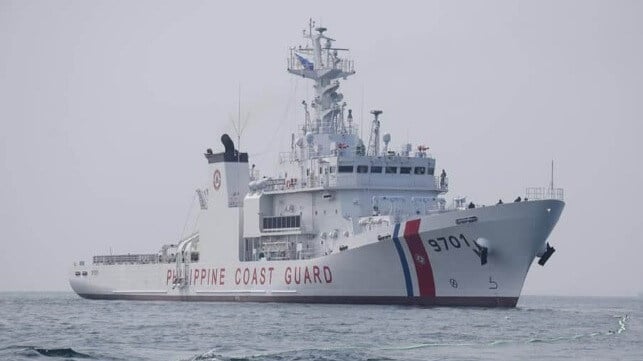
This diplomatic dispute occurs against a backdrop of repeated maritime confrontations between Philippine and Chinese vessels in the contested South China Sea. China has been repeatedly accused of conducting dangerous maneuvers against Philippine vessels, deploying water cannon, and obstructing resupply missions to Filipino-held outposts in disputed areas. Beijing, in turn, accuses the Philippines of intruding on what it considers its sovereign territory, creating a persistent cycle of confrontation and accusation.

Legal and Diplomatic Implications
The 2016 ruling by the Permanent Court of Arbitration in The Hague found China's expansive claims in the South China Sea to have no legal basis under international law. Beijing has refused to recognize this ruling, creating a fundamental legal impasse. The Philippine Department of Foreign Affairs has reiterated Manila's commitment to engaging Beijing diplomatically, even as it accuses China of "continued illegal, coercive, aggressive and deceptive activities" in the South China Sea.
Conclusion
The escalating diplomatic dispute between Manila and Beijing represents more than a simple bilateral disagreement—it reflects deeper tensions about sovereignty, international law, and the appropriate conduct of diplomatic relations. While the Philippines has emphasized its commitment to peaceful management of maritime disputes, China's warnings about economic consequences suggest a willingness to leverage multiple dimensions of national power. As both nations navigate these complex waters, the international community watches closely, recognizing that the South China Sea remains one of the world's most significant geopolitical flashpoints with implications for regional stability and international maritime law.