Read on the Guardian
Hungary Faces Political Crisis as Anti-Roma Remarks Spark Mass Protests
Hungary is confronting a significant political scandal and public outcry after senior politician János Lázár made racist remarks against the Roma community. Thousands are set to protest in Budapest demanding his resignation, with the controversy erupting just ten weeks before a crucial national election. The incident has triggered widespread condemnation from Roma organizations, opposition parties, and civil society, potentially impacting the electoral prospects of Prime Minister Viktor Orbán's Fidesz party. This article examines the political implications, historical context of Roma discrimination in Hungary, and the growing public discontent with the government.
Hungary stands at a political crossroads as a racist remark by a senior government official has ignited nationwide outrage and mobilized thousands of protesters. The controversy surrounding János Lázár, a high-ranking ally of Prime Minister Viktor Orbán, has exposed deep societal divisions and threatens to influence the outcome of the upcoming national election. This incident represents more than an isolated gaffe; it reflects systemic issues of discrimination and the growing public frustration with Hungary's political establishment.
The Controversial Remarks and Immediate Fallout
During a political forum earlier this month, János Lázár addressed Hungary's labor shortage with comments that quickly escalated into a national scandal. According to The Guardian's coverage, Lázár stated that migration was not the solution to the country's workforce challenges, then suggested Roma people would clean bathrooms on InterCity trains, using an offensive racial slur in his speech. The remarks, captured on video, spread rapidly across social media and traditional news outlets, triggering immediate condemnation.
The backlash was swift and widespread. Hungarian Roma organizations, numerous NGOs, and opposition politicians united in demanding both an apology and Lázár's resignation from his government position. Péter Magyar, leader of the largest opposition party Tisza, declared that Lázár had "crossed all boundaries" with his comments. This unified response highlights how the remarks touched a nerve beyond partisan politics, addressing fundamental issues of human dignity and equality.

Political Context and Electoral Implications
The timing of this scandal is particularly significant, occurring just ten weeks before a national election that could either cement or break the rule of Orbán's Fidesz party. Independent polls currently show a stable lead for the opposition Tisza party ahead of Fidesz, and analysts suggest the outrage over Lázár's remarks could further alienate undecided voters from the governing party. As reported by The Guardian, political scientist Balázs Böcskei notes that Fidesz's campaign has failed to gain significant ground, attributing this to both strong opposition and "public policy failures" in crucial areas like the economy and welfare services.
This incident follows a pattern of public discontent with the Fidesz government. In 2024, mass demonstrations forced the resignation of party president Katalin Novák after a controversial pardon decision. Further protests erupted in 2025 over systemic abuse at a juvenile correctional center. Ádám Lakatos, an 18-year-old Roma activist organizing Saturday's protest, captured the growing sentiment: "Fidesz's actions have become unacceptable for Hungarians, for Europe and for the entire world."
Systemic Discrimination Against Roma Communities
The controversy has brought renewed attention to the systemic discrimination faced by Roma communities in Hungary. Roma people experience significantly worse living conditions, higher poverty levels, and lower life expectancy than the general Hungarian population. Szandi Minzári, a 37-year-old international policy expert with Roma heritage, noted that during Fidesz's 16 years of rule, the government "has not created jobs, or supported [Roma] families."
Roma individuals are overrepresented in low-paying public jobs, a situation that activists argue can be exploited by local politicians for electoral gain. Independent organizations have raised concerns that public work programs are being leveraged by officials to secure votes, creating a cycle of dependency and political manipulation. This context makes Lázár's remarks particularly damaging, as they reinforce stereotypes and dismiss the community's potential beyond menial labor.

The Protest Movement and Broader Implications
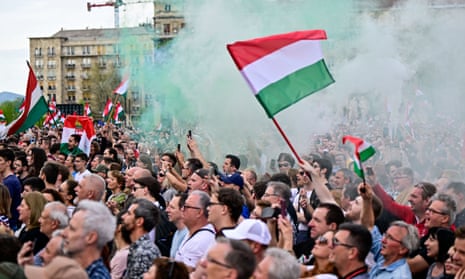
The planned protest in Budapest represents more than a reaction to a single incident; it symbolizes growing resistance to discriminatory policies and rhetoric. Organizers expect thousands to gather, demanding accountability at the highest levels of government. What makes this movement particularly noteworthy is its cross-community support. As The Guardian reports, non-Roma Hungarians like Tamás Könyves are joining the protest, with Könyves stating, "I feel it is my duty to speak up and stand up for the Roma community."
Bernadett Orbán (no relation to the Prime Minister), a 33-year-old activist, suggested that Lázár's resignation "would be a positive move for Fidesz, helping recover some Roma support, and setting an example." However, she expressed skepticism that he would actually step down, noting his recent appearance alongside Prime Minister Orbán at a party event despite the controversy. This highlights the tension between political expediency and maintaining party loyalty.
Conclusion: A Nation at a Crossroads
The scandal surrounding János Lázár's remarks has exposed fundamental tensions in Hungarian society and politics. As the country approaches a crucial election, this incident has become a flashpoint for broader discussions about equality, representation, and political accountability. The massive protest planned for Budapest represents not just anger over racist comments, but accumulated frustration with a government facing multiple crises of confidence.
Whether this controversy will significantly impact the election remains uncertain, but it has undoubtedly shifted the political conversation. It has forced Hungarians to confront uncomfortable truths about discrimination in their society and has mobilized diverse segments of the population in defense of basic human dignity. The coming weeks will reveal whether this moment becomes a turning point in Hungary's political trajectory or another chapter in its ongoing political struggles.