Read on bbc.com
Israel's Controversial Push for the Death Penalty: A Deepening Divide
In the aftermath of the October 7th attacks, a highly controversial legislative push is underway in Israel to reintroduce the death penalty specifically for Palestinian attackers convicted of fatal terrorism. Proposed by the far-right Jewish Power party, the bill has passed its first parliamentary reading, sparking intense debate about justice, deterrence, and racial discrimination. While supporters argue it's a necessary 'vaccine' against future violence and a tool to prevent hostage negotiations, human rights groups condemn it as 'racialized capital punishment' that violates international law and Jewish ethical principles. This article examines the historical context, political motivations, and profound societal divisions surrounding this polarizing proposal.
In the shadow of the devastating October 7th attacks, Israel's political landscape is grappling with one of its most contentious legislative proposals in decades: the reintroduction of the death penalty specifically targeting Palestinians convicted of fatal terrorist attacks. This move, championed by far-right factions within the governing coalition, represents a dramatic shift in a country that has executed only two people in its history—most recently over sixty years ago. The proposal has ignited fierce debate, exposing deep societal fractures about justice, security, and the very identity of the Jewish state in its response to unprecedented trauma.

The Legislative Push and Its Proponents
The current death penalty bill was introduced by the Jewish Power party, a far-right faction whose leader, Itamar Ben Gvir, serves as National Security Minister. Following the October 7th attacks that killed approximately 1,200 Israelis, the legislation gained renewed momentum despite earlier security establishment opposition. The bill passed its first of three required parliamentary readings in November 2023 by a vote of 39-16 in the 120-seat Knesset.
Proponents frame the legislation as both a moral imperative and a practical security measure. Zvika Fogel, chair of the parliamentary national security committee and a key advocate, describes it as "the most moral, the most Jewish and the most decent thing" and "another brick in the wall of our defence." The stated purposes include increasing deterrence, reducing incentives for hostage-taking by eliminating prisoners for potential swaps, and providing retribution for victims' families.

Victims' Perspectives and Political Symbolism
Support from bereaved families has become a powerful emotional component of the campaign. Dr. Valentina Gusak, whose 21-year-old daughter Margarita was killed fleeing the Nova music festival, testified before parliament comparing capital punishment to "preventive treatment" in medicine—"a vaccine against the next murder." Similarly, lawmaker Limor Son Har-Melech, who sponsors the bill, shared her personal story of her husband being killed by Palestinian gunmen in 2003, noting that one of his killers was later released in a prisoner exchange and allegedly participated in the October 7th attacks.
The political symbolism surrounding the legislation has become increasingly overt. Ben Gvir distributed sweets after the bill's first reading passed, while Jewish Power MPs have taken to wearing golden noose-shaped lapel pins. These actions underscore what opponents describe as a politics of revenge rather than justice.
Historical Context and Legal Framework
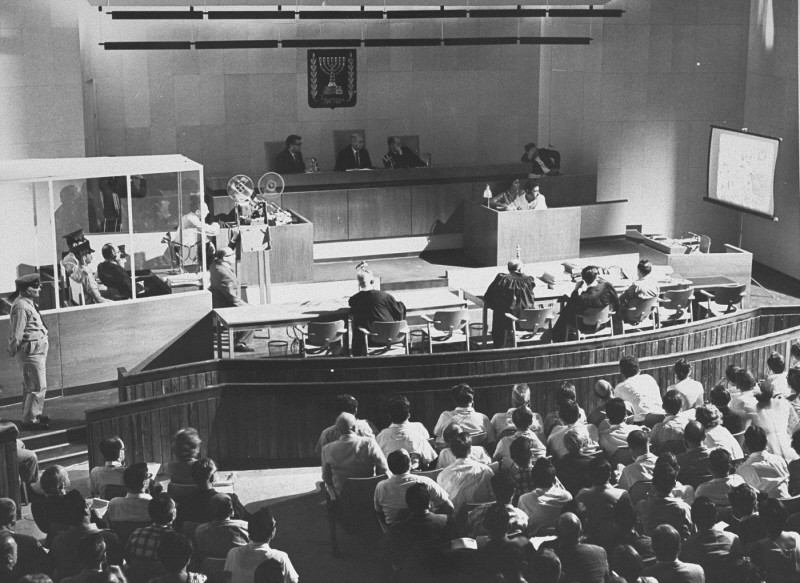
Israel's historical use of the death penalty is exceptionally limited. The state has executed only two individuals: Meir Tobianski in 1948 for treason (posthumously exonerated) and Nazi war criminal Adolf Eichmann in 1962 following a highly publicized trial. While capital punishment technically exists in military law for certain crimes, all death sentences handed down by military courts to convicted terrorists or enemy fighters have been commuted to life imprisonment upon appeal.
The current proposal creates a dual-track system with racial distinctions. Mandatory death sentences would apply in Israeli military courts, which exclusively try Palestinians from the occupied West Bank. After a compulsory appeal, executions by hanging would occur within 90 days. In regular Israeli courts, the death penalty would be permitted but not mandatory, applying theoretically to any terrorist regardless of ethnicity—though proponents explicitly state they don't believe Jewish terrorists exist.
Opposition and Human Rights Concerns
Human rights organizations have condemned the proposed law as "one of the most extreme legislative proposals" in Israel's history. Tal Steiner, executive director of the Israeli NGO HaMoked, argues that "the fact that we're even re-discussing bringing this back into the legal system in Israel is itself a low point." The primary objections center on three areas: racial discrimination, ethical violations, and practical ineffectiveness.
The bill's targeting of only Palestinians—not Jewish Israelis—for capital punishment has drawn accusations of "racialized capital punishment." As Steiner notes, the law is "meant to apply only to Palestinians, never to Jews, only to people who kill Israeli citizens, never for example to Israeli citizens who kill Palestinians." This selective application raises fundamental questions about equality before the law in a state that defines itself as both Jewish and democratic.
Ethical, Religious, and International Law Objections
Opponents challenge the legislation on multiple grounds. Religiously, many argue it contradicts Jewish law (Halakha), which traditionally restricts capital punishment to near-impossible standards of evidence and procedure. Ethically, they point to the irreversible nature of execution and the risk of killing innocent people. Legally, Arab-Israeli parliamentarian Aida Touma-Suleiman contends the bill violates international law and treaties Israel has signed.
From a security perspective, previous Israeli security establishments have opposed capital punishment as ineffective for deterrence and likely to increase tensions. This view acknowledges that many Palestinians who carry out deadly attacks are already shot during the incidents by security forces or armed civilians, making additional deterrence questionable.
Political Calculations and Broader Context
The death penalty debate occurs within a complex political landscape. The legislation was initially paused after October 7th because security officials feared it would jeopardize hostage negotiations. Ben Gvir was among the few ministers to vote against the US-brokered ceasefire deal that returned hostages in exchange for Palestinian prisoners, stating his opposition to "all hostage agreements."
Jewish Power has threatened to leave the coalition government if the bill doesn't advance, using it as leverage in an election year. Meanwhile, the government has been taking steps to reduce judicial oversight—a context that makes Supreme Court review of the death penalty law particularly contentious. Touma-Suleiman predicts that even if passed, the Supreme Court would strike it down, allowing right-wing factions to argue that "unelected judges" are overriding democratic decisions.

International Implications and Shifting Norms
Israel's move toward capital punishment contrasts with global trends toward abolition. According to BBC reporting, the UN Committee against Torture expressed "deep concern" last year about reports of "organized and widespread torture and ill-treatment" of Palestinian detainees—allegations Israel denies. The death penalty proposal may further strain Israel's international relations and complicate its positioning on human rights issues.
Concurrently, another parliamentary committee is working on legislation to establish a dedicated military tribunal for members of Hamas's Nukhba force captured on October 7th. These individuals could face charges of war crimes and crimes against humanity—similar to Eichmann's charges—and potentially the death penalty under the proposed law, creating parallel judicial processes for different categories of offenders.
Conclusion: A Nation at a Crossroads
Israel's death penalty debate represents more than a legal technicality—it reflects a society grappling with profound trauma while navigating competing values of justice, security, and equality. The proposal has become a symbol of the country's political direction after October 7th, with implications for its democratic character, international standing, and internal social cohesion.
As the legislation advances through parliamentary processes, it will continue to test Israel's institutions, from the Knesset to the Supreme Court, and challenge its citizens to define what kind of justice serves both their security needs and their ethical traditions. In a region where cycles of violence and retribution have persisted for generations, this controversial bill raises fundamental questions about whether capital punishment represents a break from those cycles or their ultimate institutionalization.