Infinite Jest at 30: The Legacy of a Difficult Novel and Its Controversial Fandom
As David Foster Wallace's monumental novel Infinite Jest celebrates its 30th anniversary with a new paperback edition, we examine its enduring cultural impact. This 1,079-page masterpiece, with its complex narrative structure and challenging prose, has become both a literary touchstone and a cultural phenomenon. While often associated with the maligned 'litbro' archetype—male readers who wear their literary accomplishments as badges of honor—the novel's true legacy extends far beyond this stereotype. We explore how Infinite Jest continues to resonate in an era of declining fiction readership and what its challenging nature says about contemporary literary culture.
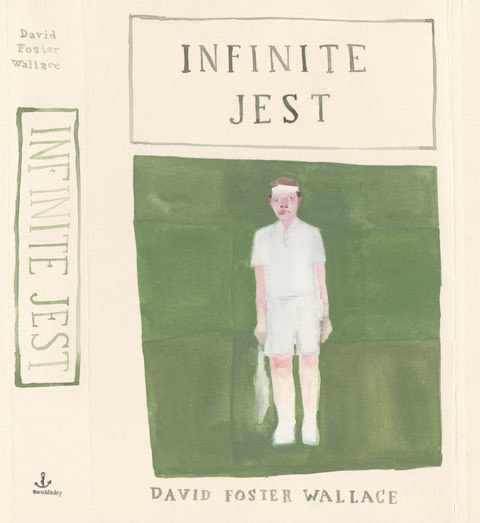
Three decades after its initial publication, David Foster Wallace's Infinite Jest returns to bookshelves with a commemorative 30th-anniversary paperback edition. This monumental 1,079-page novel, complete with 96 pages of "Notes and Errata," remains one of the most discussed and debated works of late-20th-century American literature. Its re-release invites reflection not only on the book's literary merits but also on the cultural phenomenon surrounding it—particularly the much-maligned "litbro" reader who has become synonymous with its fandom.
The Monumental Achievement of Infinite Jest
Published in February 1996, Infinite Jest unfolds in a near-futuristic North American Superstate where the United States, Canada, and Mexico have merged into the Organization of North American Nations. In this world, corporate interests have extended their reach to the calendar itself, with companies bidding for naming rights to years—the novel primarily takes place during the "Year of the Depend Adult Undergarment." The plot centers on Hal Incandenza, a teenage tennis prodigy struggling with marijuana addiction, and a sprawling cast of characters whose lives intersect around a mysterious video cartridge so compellingly entertaining that it can hypnotize and kill viewers.
Wallace's novel represents a remarkable synthesis of literary traditions and pop culture references. As noted in Wired's analysis, the book draws from sources as diverse as Homer, Shakespeare, Dostoyevsky, Joyce, the Beatles, M*A*S*H, and Nightmare on Elm Street movies. This intertextual richness, combined with Wallace's distinctive prose style—featuring sentences that can stretch to 600 words—creates what the article describes as "a kind of mega-text" that speaks directly to specific generations of readers.
The Litbro Phenomenon
The term "litbro" has emerged in literary discourse to describe a particular type of male reader drawn to challenging literature by male authors. These readers often project an air of literary snobbery and treat their reading accomplishments as cultural cachet. In her foreword to the new anniversary edition, musician and author Michelle Zauner characterizes typical Infinite Jest fans as "a breed of college-aged men who talk over you, a sect of pedantic, misunderstood young men for whom, over the course of thirty years, Infinite Jest has become a rite of passage."
This archetype gained particular prominence through social media accounts like @GuyInYourMFA, which satirized pretentious male graduate students eager to offer tortured literary analyses. The phenomenon reflects what Zauner identifies as the "defining feature" of the litbro canon: "A white, male protagonist, isolated and misunderstood, stands at odds with social norms and expectations and either grapples internally to critique them or identifies the source of ideology and seeks violent revenge against it."
This characterization applies not only to the books' protagonists but often to their authors and readers as well. Infinite Jest presents a particularly compelling case—a book about a depressive prodigy, written by a depressive prodigy, often read by those who see themselves in similar terms. As Hal Incandenza declares early in the novel: "I read ... I bet I've read everything you've read. Don't think I haven't. I consume libraries."
Beyond the Stereotype
While the litbro stereotype persists in cultural discourse, it represents only one facet of Infinite Jest's readership and legacy. The Wired article notes that reliable indicators suggest such readers "exist in a vanishingly small minority," particularly given broader trends in fiction consumption. A 2022 survey from the National Endowment for the Arts reported that only about 28 percent of men read fiction, part of a generalized decline in fiction readership that media outlets like the BBC have addressed in discussions about "the death of reading."
This creates what the article describes as "a weird double-bind" for male readers: "You're damned if you don't read, but damned if you turn to a canon of literature targeted to your tastes and demographic identity." In this context, the litbro phenomenon might be seen not as a cultural problem but as a response to broader literary disengagement.
The Enduring Relevance of Infinite Jest
Beyond its association with a particular reader demographic, Infinite Jest continues to resonate for its prescient insights into contemporary culture. Zauner's foreword highlights how Wallace anticipated developments ranging from "brain-dead celebrity politicians to doom-scrolling media addiction to the continued corporate subsidization of all of modern existence." The novel's exploration of entertainment addiction, corporate influence on daily life, and the search for authentic connection in a mediated world feels increasingly relevant in the digital age.

The book's challenging nature—with its endnotes, complex vocabulary, and non-linear narrative—represents not merely difficulty for difficulty's sake but an attempt to create a reading experience that demands and rewards sustained attention. In an era of fragmented digital consumption, this quality may be more valuable than ever. As the Wired article concludes: "There is an increasingly rare pleasure afforded by getting sucked into a big, fat, funny, smart book that demands and rewards sustained attention."
Conclusion: Reading in a Changing Literary Landscape
As Infinite Jest reaches its 30th anniversary, its legacy extends beyond the litbro stereotype to touch on fundamental questions about reading in contemporary culture. In a landscape where, as the article notes, "the literary novel holds about as much weight as the opera or stamp-collecting," the commitment to challenging fiction represents a meaningful cultural stance. The novel's return invites both longtime fans and new readers to engage with its complexities—not as a badge of intellectual superiority but as an opportunity for genuine literary engagement.
Ultimately, Infinite Jest endures not because of its association with a particular reader type but because of its literary ambition, cultural prescience, and capacity to challenge readers intellectually and emotionally. Its anniversary offers a chance to move beyond reductive stereotypes and appreciate the novel on its own terms—as a monumental achievement in American literature that continues to provoke, challenge, and inspire three decades after its initial publication.