Infinite Jest at 30: The Enduring Legacy and the 'Litbro' Phenomenon
As David Foster Wallace's monumental novel 'Infinite Jest' celebrates its 30th anniversary with a new edition, we examine its complex legacy. The notoriously challenging 1,079-page book remains a definitive American novel of the 1990s, but its fandom has become synonymous with the controversial 'litbro' archetype—college-aged men who wear their literary completion badges with obnoxious pride. While this demographic can be annoying, they represent a rare breed of readers in an era of declining fiction consumption, raising questions about literary snobbery, gender dynamics in reading culture, and what it means to be a serious reader in contemporary society.
February 2024 marks three decades since the publication of David Foster Wallace's Infinite Jest, a novel that has achieved near-mythical status in American literary culture. As publisher Back Bay Books releases a special 30th anniversary edition, the conversation inevitably turns not just to the book's formidable literary achievements but to its equally formidable reputation among readers. At 1,079 pages with 96 pages of "Notes and Errata," Wallace's magnum opus demands sustained attention, complex navigation between main text and endnotes, and a tolerance for winding sentences that can stretch to 600 words. This very difficulty has transformed merely completing the novel into a literary merit badge—one worn with particular pride by a demographic that has itself become the subject of cultural critique: the so-called "litbro."

The Infinite Jest Phenomenon
Infinite Jest unfolds in a near-futuristic North American Superstate where the United States, Canada, and Mexico have merged into the Organization of North American Nations. In this world, corporate interests have subsumed even the marking of time, with companies bidding for naming rights to calendar years—the bulk of the novel takes place during the "Year of the Depend Adult Undergarment." The title refers to a plot-driving video cartridge deemed so addictively entertaining it can hypnotize and kill viewers, serving as Wallace's prescient metaphor for entertainment addiction in an increasingly mediated world.
The novel follows Hal Incandenza, a pot-addled teenage tennis prodigy, alongside a sprawling cast of characters whose lives intersect in unexpected ways. Wallace's narrative volleys between arch irony and deep sincerity, drawing from sources as diverse as Homer, Shakespeare, Dostoyevsky, the Beatles, Alcoholics Anonymous literature, and Nightmare on Elm Street movies. As Michelle Zauner notes in her foreword to the anniversary edition, the book spoke directly to "generations of certain kinds of readers"—specifically, those who saw in its difficulty not just a challenge but an opportunity for intellectual distinction.

The Rise of the 'Litbro' Archetype
The term "litbro" has emerged in literary discourse to describe a particular type of reader: typically male, often college-aged, drawn to challenging literature by male authors, and prone to projecting an air of literary snobbery. As Zauner describes them, these are "a breed of college-aged men who talk over you, a sect of pedantic, misunderstood young men for whom, over the course of thirty years, Infinite Jest has become a rite of passage." The litbro canon includes authors like Thomas Pynchon, William Gaddis, Roberto Bolaño, Bret Easton Ellis, and Cormac McCarthy—writers whose work is either structurally challenging or thematically intense.
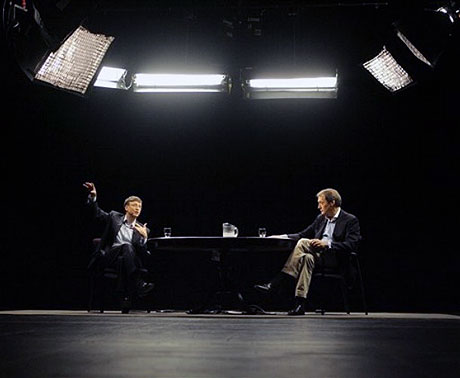
Wallace occupies an interesting position within this canon. Unlike Hemingway with his bulls or the Beat writers with their drug-fueled adventures, Wallace made intellectual rigor itself seem somehow cool. His 1997 interview with Charlie Rose—where he appeared hunched over in round wire-rim glasses with greasy hair bound by a white bandana—epitomized this brainy-but-brawny persona. The author became a rockstar figure for readers who saw in his work not just literary merit but a model of how to be intellectual in contemporary culture.
Literary Machismo and Its Discontents
The litbro phenomenon represents the latest iteration of literary machismo, a tradition stretching back through Hemingway's bullfighting to Melville's whaling ships. What distinguishes the contemporary version is its focus on difficulty as a form of cultural capital. As Zauner observes, the "defining feature" of the litbro canon is male loneliness: "A white, male protagonist, isolated and misunderstood, stands at odds with social norms and expectations and either grapples internally to critique them or identifies the source of ideology and seeks violent revenge against it."
This characterization applies equally to the books' protagonists, their authors, and their readers. Infinite Jest in particular is a book about a depressive prodigy written by a depressive prodigy for readers who likely saw themselves as similarly gifted and anguished. The novel's opening scene features Hal attempting to pitch himself to college admissions officers with the declaration: "I read ... I bet I've read everything you've read. Don't think I haven't. I consume libraries." This line has become something of a mantra for the litbro demographic.
Gender Dynamics and Literary Culture
The litbro phenomenon raises important questions about gender dynamics in literary culture. Critics have noted that the two most notable female characters in Infinite Jest—the controlling matriarch nicknamed "The Moms" and radio jockey Joelle van Dyne, referred to as the "P.G.O.A.T." (Prettiest Girl of All Time)—reflect limitations in Wallace's characterization of women. Similar criticisms have been leveled at other authors in the litbro canon, from Jonathan Franzen's treatment of female characters to the more extreme cases of William S. Burroughs (who shot his wife) or Wallace's own reportedly volatile personal relationships.
This context has led some to view the litbro's embrace of certain authors as implicitly endorsing problematic attitudes. Yet as Zauner discovered in her anthropological reading of Infinite Jest, the reality is more nuanced. She came to see Wallace's readers not as misogynists but as "people who had committed an act of defiance and tenacity, curiosity and rigor, and after it all, were sad to see its end."
The Paradox of Male Readership
Contemporary literary culture finds itself in a peculiar double bind regarding male readers. On one hand, think pieces fret about the litbro and the "performative male reader"—a newer archetype who supposedly doesn't read big books but merely displays them for social capital. On the other hand, reliable data suggests men are reading less fiction overall. A 2022 survey from the National Endowment for the Arts found only about 28 percent of men read fiction, and women publish more fiction than men.
This creates a strange cultural dynamic where men are "damned if you don't read, but damned if you turn to a canon of literature targeted to your tastes and demographic identity," as the Wired article notes. Against this backdrop, the litbro—for all his potential annoyances—represents at least some engagement with serious literature in an era of declining reading rates.
Beyond the Stereotype: Why Infinite Jest Endures
Thirty years after its publication, Infinite Jest continues to resonate not because of its difficulty but because of its prescience. Wallace anticipated numerous contemporary phenomena: brain-dead celebrity politicians, doom-scrolling media addiction, corporate subsidization of everyday life, and the very entertainment addiction that gives the novel its title. His vision of a future where even time has been branded feels increasingly relevant in our age of sponsored content and influencer culture.
The novel's structural innovation—requiring readers to flip between main text and endnotes—anticipated the hyperlinked experience of internet reading. Its blend of high and low culture, from Shakespeare to M*A*S*H*, modeled an inclusive approach to cultural reference that has become standard in contemporary fiction. And its central concern with addiction, whether to substances, entertainment, or self-consciousness, speaks to ongoing conversations about mental health and digital saturation.
Conclusion: The Value of Difficult Reading
As we mark Infinite Jest's 30th anniversary, the conversation around litbros and literary snobbery ultimately points to larger questions about the value of difficult art in an attention-starved culture. In a world where the literary novel holds diminishing cultural weight, there's something commendable about readers who devote time to "libraries, piled paperbacks, and dog-eared tomes bisected by multiple bookmarks," as the Wired article observes.
The litbro may be annoying in his pedantry and performative erudition, but he represents a commitment to sustained attention that grows increasingly rare. As Zauner concludes in her foreword, against "a culture of Philistinism and flattening cultural horizons, a shallow performance of erudition and, heck, even snobbery, is surely preferable to wholesale illiteracy." The challenge for contemporary literary culture is not to police who reads what or how they perform their readership, but to foster more readers period—even, or especially, the occasionally annoying ones who take pride in having conquered a 1,079-page novel about tennis, addiction, and the end of entertainment as we know it.