Read on foxsports.com
The Westminster Dog Show at 150: A Legacy of Canine Competition
The Westminster Kennel Club Dog Show celebrates its 150th anniversary, marking a historic milestone as one of America's longest-running sporting events. This article explores the evolution of the show from its Gilded Age origins to its modern-day status as the 'Super Bowl of dog shows,' examining what has changed and what remains timeless about this iconic canine competition.
The Westminster Kennel Club Dog Show, often dubbed the "World Series of dogdom" or the "Super Bowl of dog shows," is celebrating a monumental 150th anniversary. This milestone, set to be marked with the start of the 150th annual show on Saturday, solidifies its place as one of the United States' most enduring and famous sporting events, with a history rivaled only by the Kentucky Derby in terms of continuous annual presentation. As the show prepares to broadcast live on FOX networks, it offers a fascinating lens through which to view the evolution of canine culture, competition, and companionship in America.

The Origins and Enduring Name
The show's story begins not with a grand plan for a national institution, but with a group of Gilded Age gentleman hunters who enjoyed gathering at the Westminster Hotel in New York. As detailed in a Fox Sports report, these founders would "belly up to the bar and brag about their dogs." Their casual gatherings evolved into the "First Annual New York Bench Show of Dogs" in 1877. While the Westminster Hotel is long gone, the name it inspired has endured for a century and a half, becoming synonymous with the pinnacle of purebred dog competition.
Evolution of the Competition
The scale and scope of Westminster have transformed dramatically since 1877. The inaugural event was nonetheless impressive for its time, featuring approximately 1,200 dogs representing a few dozen breeds, from pugs to mastiffs. The Associated Press coverage from that first show noted the "noticeable delegates" among the bulldogs and found a family of "Japanese spaniels" to be "highly amusing." A standout English setter was valued at a staggering $5,000, a sum that contrasted sharply with the average New York laborer's wage of about $1.30 per day.

In contrast, the modern Westminster show is a vastly larger affair. This year's event boasts 2,500 dogs representing up to 212 breeds and 10 "varieties" (subsets like smooth vs. wirehaired dachshunds). The competition has also formalized. Today, every canine competitor holds a champion ranking in a sport governed by a complex point system and official breed "standards." The coveted Best in Show trophy, a central focus of the modern event, wasn't introduced until 1907; the early shows had no overall prize. Furthermore, the show has expanded beyond conformation to include separate titles in agility and other canine sports, which now kick off the event.
What Has Changed and What Hasn't
According to Westminster Kennel Club President Donald Sturz, while the "trappings" and "window dressing" have evolved, the core of the event remains constant. "The heart of it, which is the love of dogs ... that has been the same," Sturz states. The breeds themselves show both continuity and change. Many are much the same as they were 150 years ago, though Sturz notes that details like muzzle length or coat thickness may have shifted in some breeds, and better nutrition may have led to slight changes in size or bone structure.
The atmosphere has maintained a unique blend of elite competition and accessible passion. From its earliest days, the event attracted a well-dressed, pedigreed crowd—The New York Times in 1877 remarked on the spectators' "air of good breeding." This clubby gentility persists, with handlers in suits and dresses and judges in black tie for the upper rounds. The competition is intense, with many top dogs handled by professionals and supported by advertising campaigns in dog magazines.
However, the field is not exclusively professional. Many competitors handle their own dogs and come from diverse backgrounds including policing, medicine, the military, and corporate jobs. Some of the dogs themselves have serious jobs outside the ring, such as bomb-sniffing or search-and-rescue work. "It’s an elite event, but it’s one that we want everyone to feel that they can access and be a part of," explains Sturz, who is a clinical psychologist and retired school superintendent.
Cultural Impact and Contemporary Conversations
Westminster's prominence has made it a cultural touchstone and a platform for broader conversations about dogs. Its move to television in the late 1940s and now to streaming has vastly expanded its audience. It also inspired the 2000 cult-classic mockumentary "Best in Show," directed by Christopher Guest, who researched the event extensively. Former show host David Frei believes the film, which poked fun at the people rather than the dogs, ultimately helped grow Westminster's audience.
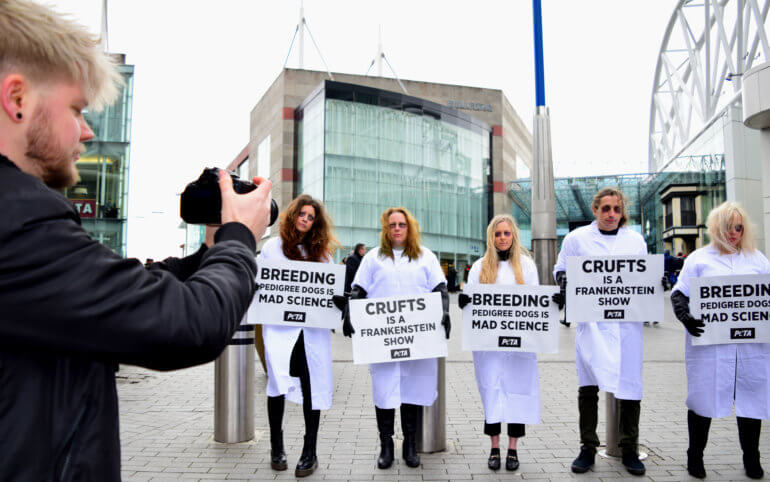
With prominence has come scrutiny. The show has long been a magnet for debates about dog breeding and health. Concerns date back to at least 1937, when questions were raised about the health of collies with narrow heads. In recent years, animal welfare groups like PETA have demonstrated at the event, highlighting issues such as breathing problems in flat-faced (brachycephalic) breeds. PETA has criticized the show for clinging to an "outdated obsession with aesthetics." In response, Sturz points to the club's "longstanding history of showing its commitment to dog welfare," including donations to veterinary scholarships, rescue groups, and pet-friendly domestic violence shelters—a tradition that began with proceeds from the very first 1877 show helping the ASPCA build its first shelter.
A Living Legacy
As the Westminster Kennel Club Dog Show enters its 150th year, it stands as a remarkable living legacy. It has survived venue changes and even tragedy, such as the partial collapse of its building before the 1880 show that killed four people, including a Westminster official. It has adapted from a gentlemen's pastime to a major televised sporting event, all while navigating evolving attitudes toward animal welfare. Through it all, the celebration of the human-canine bond has remained its unwavering constant. The show that started in a hotel bar continues to capture the imagination of dog lovers across the nation, proving that some traditions only grow richer with time.