Read on the Guardian
Panama Canal Ports in Transition: Court Cancels Chinese-Linked Concession
Panama's Supreme Court has ruled a 25-year port concession held by a subsidiary of Hong Kong's CK Hutchison unconstitutional, a decision that aligns with longstanding US efforts to limit Chinese influence over the strategic Panama Canal. President José Raúl Mulino has assured that port operations at both ends of the canal will continue without interruption, with a transitional handover to Danish logistics giant AP Moller-Maersk planned. The ruling has drawn sharp criticism from Beijing and Hong Kong, raising questions about legal certainty and geopolitical tensions in a vital global trade artery.
The strategic Panama Canal, a linchpin of global maritime trade, is at the center of a significant legal and geopolitical shift. Panama's Supreme Court has declared unconstitutional the 25-year concession for ports at both ends of the waterway, held by a subsidiary of Hong Kong-based CK Hutchison. This ruling, which advances a key US foreign policy objective of curbing Chinese influence in the region, has immediate operational and diplomatic ramifications. President José Raúl Mulino has moved swiftly to assure global shipping that the canal's ports will operate normally, outlining a transitional plan to maintain stability.

The Court Ruling and Its Immediate Aftermath
On Thursday, Panama's Supreme Court issued a ruling that canceled the concession held by Panama Ports Company (PPC), a subsidiary of CK Hutchison. The court's decision was based on an audit by Panama's comptroller that alleged irregularities in the 25-year extension granted to the concession in 2021. The brief statement from the court provided no specific guidance on the timeline for executing the ruling or the subsequent steps for the ports.
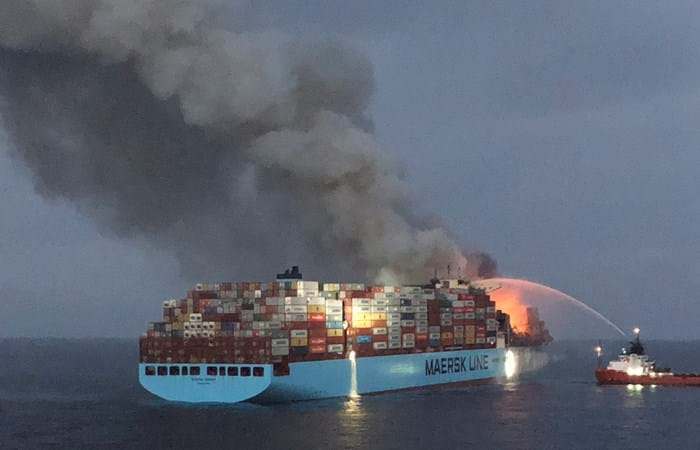
In response, President Mulino addressed the nation on Friday, emphasizing continuity. He stated that until the court's ruling is formally executed, maritime officials would work alongside PPC to ensure uninterrupted operations. Crucially, he announced that once the concession is formally ended, a subsidiary of the Danish logistics conglomerate AP Moller-Maersk would operate the ports during a transitional phase. This move is designed to provide stability while a new, permanent concession process is developed. "Panama moves forward, its ports will continue operating without interruption and we will continue serving the world as the logistics centre of excellence that we are," Mulino affirmed.
Geopolitical Undercurrents and US Policy
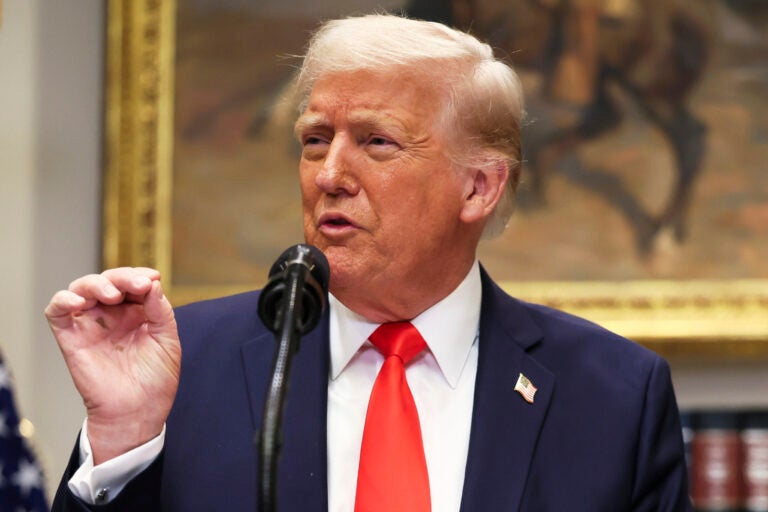
The court's decision did not occur in a vacuum; it intersects directly with longstanding US foreign policy in the region. The Trump administration prioritized blocking Chinese influence over the Panama Canal, viewing it as a critical national security issue. This policy stance was underscored when then-Secretary of State Marco Rubio made Panama his first overseas stop, explicitly framing the operation of the canal's ports as a security concern for Washington. Former President Donald Trump has even suggested that Panama should return the canal to US control, highlighting the waterway's perceived strategic importance.
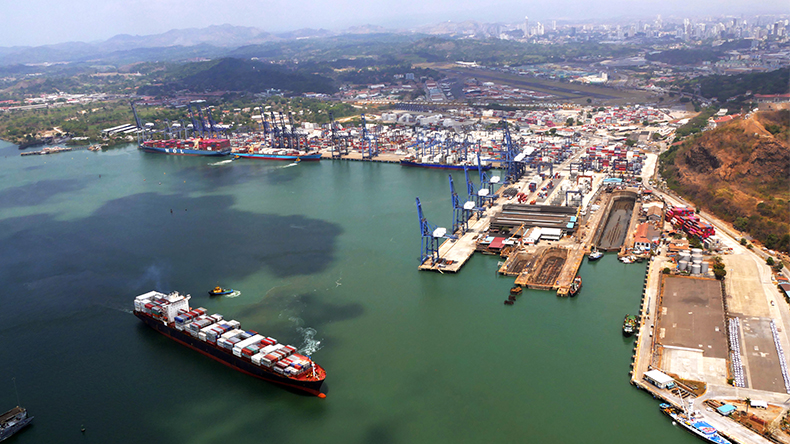
Despite repeated assurances from Panama's government and the canal authority that China held no operational influence over the waterway itself, the US perspective has consistently treated the port concessions as a potential vector for strategic leverage. The court's ruling, therefore, can be seen as a judicial action that aligns with and advances this US policy aim, effectively removing a Chinese-linked entity from a position of control over critical canal infrastructure.
International Repercussions and Legal Challenges
The ruling has triggered immediate and strong reactions from Hong Kong and Beijing. The Hong Kong government "firmly rejected" the decision, stating it "strongly opposed any foreign government using coercive, repressive or other unreasonable means to seriously harm the business interests of Hong Kong enterprises." It called on Panama to respect contractual spirit and provide a fair business environment, advising Hong Kong enterprises to carefully review their investments in the country.
In Beijing, Chinese foreign ministry spokesperson Guo Jiakun stated that China would "take all necessary measures to safeguard the legitimate rights and interests of the Chinese company," though no specific steps were detailed. For its part, PPC issued a statement asserting it had not been formally notified of the decision and that its concession was the result of a transparent international bidding process. The company argued the ruling lacked a legal basis and jeopardized the rule of law, legal certainty in Panama, and the wellbeing of thousands of Panamanian families dependent on port activity. PPC reserved all rights to pursue legal action in Panama or internationally.
Looking Ahead: Stability and Sovereignty
The primary challenge for Panama is navigating this transition without disrupting the flow of global commerce. The canal handles approximately 3% of global maritime trade, making operational continuity paramount. The planned involvement of AP Moller-Maersk, a globally respected neutral player, as a transitional operator is a strategic choice aimed at depoliticizing port management in the short term and ensuring technical expertise.
This episode underscores the complex interplay between national sovereignty, international business law, and great-power competition. Panama is asserting judicial and regulatory control over a critical national asset, a move that aligns with the strategic interests of a powerful ally. However, it also risks perceptions of compromised legal certainty for foreign investors. The coming months will be critical as Panama works to execute the court's ruling, manage the transition with Maersk, and design a new concession process that balances economic efficiency with its geopolitical realities. The smooth handling of this process will be a major test of Panama's reputation as a stable and reliable logistics hub.