Read on Nature
Understanding the Publisher Correction for a New Mongolian Dinosaur Discovery
A recent publisher correction issued by Nature clarifies the copyright attribution for a significant paleontological discovery: a new species of domed pachycephalosaur dinosaur from the early Cretaceous period of Mongolia. This article explains the context of the correction, the importance of the underlying research, and what such formal amendments mean for the scientific record. While the correction is minor, it underscores the meticulous process of maintaining accuracy in scholarly publishing.
In the meticulous world of academic publishing, even minor administrative details are subject to rigorous verification. A recent Publisher Correction issued by the prestigious journal Nature pertains to a groundbreaking paleontological paper titled "A domed pachycephalosaur from the early Cretaceous of Mongolia." This correction, while not altering the scientific findings, serves as a reminder of the formal processes that ensure the integrity of the published scientific record. The original research, published in September 2025, describes a significant new dinosaur discovery, and the subsequent correction clarifies its proper copyright attribution.

The Nature of the Correction
The correction, published online on January 30, 2026, addresses a specific detail in the article's metadata. According to the notice, the copyright line in both the HTML and PDF versions of the originally published article has been amended. The corrected copyright now reads: "© North Carolina Department of Natural and Cultural Resources and the Authors, under exclusive licence to Springer Nature Limited." This change formally acknowledges the institutional rights holder alongside the authors and the publishing license granted to Springer Nature, the publisher of Nature.
Such corrections are a standard part of scholarly communication. They ensure that all aspects of a publication, from data and conclusions to authorship and rights management, are accurately represented. This particular amendment does not affect the study's methodology, results, or interpretations regarding the dinosaur fossil. Its purpose is purely administrative, rectifying the attribution of copyright to reflect the involved institutions correctly.
The Significance of the Underlying Discovery
While the correction itself is procedural, the research it pertains to is substantively important. The original article presents the discovery and analysis of a new pachycephalosaurid dinosaur from the early Cretaceous strata of Mongolia. Pachycephalosaurs are known as the "bone-headed" dinosaurs, characterized by their thick, domed skull roofs, which were likely used in intra-species combat or display.
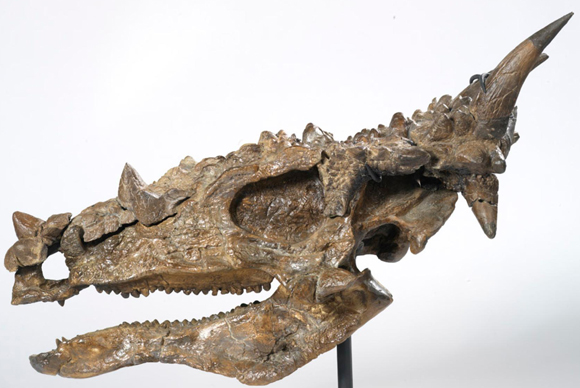
The discovery adds a new data point to our understanding of dinosaur diversity and evolution in Asia during the Cretaceous period. The research was conducted by a large, international team of scientists from institutions in the United States, Mongolia, Canada, Japan, and South Africa, highlighting the collaborative nature of modern paleontology. The lead authors are Tsogtbaatar Chinzorig and Lindsay E. Zanno, with corresponding affiliations to North Carolina State University and the North Carolina Museum of Natural Sciences.
The Process of Publisher Corrections
Publisher corrections are formal notices issued by journals to address errors or omissions in previously published articles. They are a critical component of maintaining transparency and trust in scientific literature. Corrections can range from minor typographical fixes and updated author affiliations to more significant amendments concerning data or figures. In all cases, the goal is to provide a clear, permanent, and linked record of the change so that future readers access the most accurate version of the work.
The process for issuing a correction is typically initiated by the authors or the journal's editorial staff upon identifying an error. The correction is then peer-reviewed or editorially assessed before being published with its own unique Digital Object Identifier (DOI), linking it permanently to the original article. This creates a transparent chain of documentation for the scholarly record.
Conclusion
The publisher correction for "A domed pachycephalosaur from the early Cretaceous of Mongolia" exemplifies the ongoing commitment to accuracy in scientific publishing. While the amendment is administrative—updating a copyright line—it is part of a system designed to uphold the highest standards of record-keeping. The real story remains the fascinating paleontological discovery itself, which contributes valuable knowledge about dinosaur life in ancient Mongolia. This event reminds us that science is a cumulative and self-correcting endeavor, where even the formal scaffolding supporting a discovery is subject to scrutiny and refinement.