Read on bbc.com
The 'Crying Horse' Phenomenon: How a Manufacturing Error Became a Symbol for China's Young Workers
A frowning horse plush toy, created accidentally when a worker sewed its smile upside down, has become a viral sensation in China ahead of the Lunar New Year. Shop owners report that the toy's gloomy expression deeply resonates with young workers, who see it as a reflection of their own feelings about corporate life. The toy, which features the phrase 'money comes quickly,' has sold out and spurred increased production, tapping into a broader sentiment about work-life balance and emotional expression among China's youth.
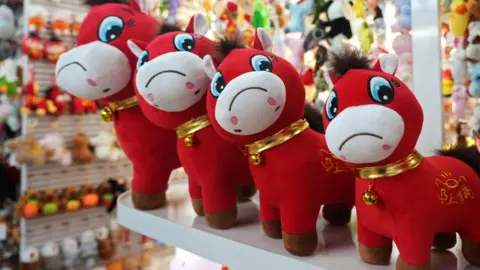
Ahead of the Lunar New Year celebrations for the Year of the Horse, an unlikely cultural icon has emerged in China: a small, frowning plush horse. What began as a simple manufacturing error—a smile sewn upside down—has transformed into a viral bestseller, capturing the collective mood of a generation. Shop owners report that the toy's deliberately sad expression is not a deterrent but a powerful draw, particularly for young workers who see their own professional struggles mirrored in the stuffed animal's face. This phenomenon offers a unique window into contemporary workplace culture and the search for "emotional value" among China's youth.
The Accidental Origin of a Viral Sensation
The story begins in Yiwu, a major manufacturing and wholesale hub in eastern China. At a shop called Happy Sister, a worker mistakenly sewed the smile on a horse plush toy upside down, resulting in a distinctly frowning expression. The shop's owner, Zhang Huoqing, initially expected to issue a refund to the customer who received the flawed product. However, after an image of the melancholic horse began circulating online, demand exploded. The toy, which stands about 20cm (7.8 inches) tall and costs 25 yuan (£2.62), quickly sold out. It is red for good luck, adorned with a golden collar and bell, and bears the embroidered phrase "money comes quickly" in golden letters—an ironic contrast to its sorrowful visage.
Why the 'Crying Horse' Resonates
The toy's unexpected popularity is rooted in its perceived authenticity. Zhang Huoqing told Reuters that customers directly linked the toy's expression to their own lives. "A lot of customers like it, and they said it makes sense: that it suits the spirit of today's corporate slaves," Zhang explained. The phrase "corporate slaves" is a common, self-deprecating term used by young office workers in China to describe feelings of being overworked and undervalued. Another buyer, known online as Tuan Tuan Mami, told the South China Morning Post, "This little horse looks so sad and pitiful, just like the way I feel at work." The toy has become a tangible object for projecting and processing workplace grievances.
Reflecting a Dichotomy in Modern Work Life
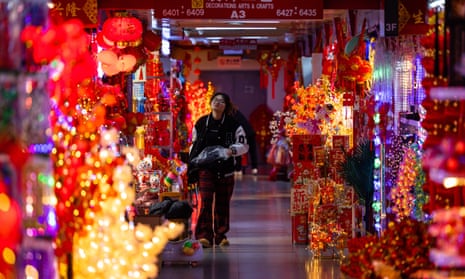
Commentary from both sellers and buyers highlights a sharp dichotomy between work and personal life. Zhang noted that people joke "the crying horse is how you look at work, while the smiling one is how you look after work." This sentiment was echoed by another Yiwu shop owner, Lou Zhenxian, who described young people going to work in a state akin to the crying horse and then becoming "immediately happy" when they clock out. However, Lou also expressed concern about this mindset, telling Reuters, "I believe you should work hard when at work and be happy after work, it shouldn't be two extreme opposites." Her comment underscores a generational tension between traditional attitudes toward diligence and younger workers' desire for emotional validation and balance.
Cultural Context and Commercial Response
The timing of the trend is significant, coinciding with the upcoming Lunar New Year, which in February will usher in the Year of the Horse. The zodiac connection has undoubtedly fueled interest. More importantly, the toy sells what Lou Zhenxian called "emotional value," a commodity increasingly sought by young consumers. The commercial response has been swift. Zhang's factory has surged production to meet domestic demand, and media reports indicate interest from other countries as well. The toy's success demonstrates how a product can transcend its intended function when it authentically connects with a prevailing social sentiment.
Conclusion: More Than Just a Toy
The 'crying horse' is more than a viral oddity; it is a cultural artifact that gives form to the unspoken frustrations of many young Chinese workers. It represents a shift toward valuing products that acknowledge life's complexities rather than offering simplistic cheer. As Tuan Tuan Mami stated, her hope in buying the toy was to "leave all my grievances at work behind and keep only happiness." Whether the frowning plush is a harmless coping mechanism or a symbol of deeper workplace issues is a matter of perspective. What is clear is that in its accidental frown, millions have found a surprisingly relatable companion for the modern workday.