Read on PBS News
Legal Battle and Political Ambition: The Fate of the Former U.S. Institute of Peace Building
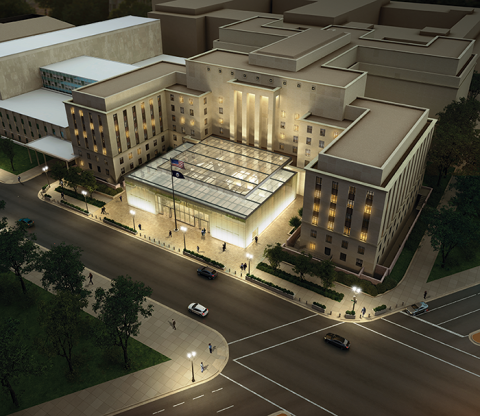
The former U.S. Institute of Peace headquarters in Washington, D.C., is at the center of a complex legal and political dispute. Seized by the Trump administration in 2025, the building has been renamed and is now being considered as a potential headquarters for the newly announced Board of Peace. This move is being challenged in court by former institute staff, who argue the takeover was illegal, creating a significant legal limbo with implications for property rights, executive power, and international diplomacy.
The iconic building that once housed the U.S. Institute of Peace (USIP) on the National Mall now stands as a symbol of a contentious political and legal clash. What was designed as a center for conflict resolution has itself become a battleground, entangled in litigation and international ambition. This article examines the ongoing dispute over the facility, its controversial renaming, and its potential new role as the headquarters for former President Donald Trump's proposed Board of Peace, a situation that raises profound questions about governmental authority and institutional independence.
The Seizure and Legal Challenge
In 2025, the Republican administration under former President Donald Trump seized control of the U.S. Institute of Peace building and terminated almost all of the institute's staff. The USIP was established by Congress as an independent, non-governmental organization dedicated to preventing and resolving violent international conflicts. The administration's action prompted immediate legal retaliation from former employees and executives of the think tank.
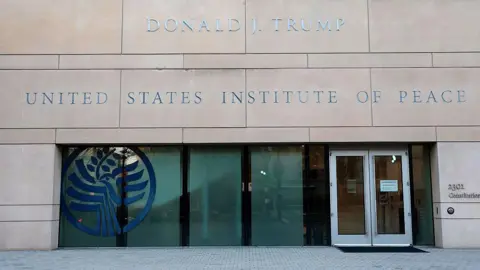
A federal judge subsequently ruled that the takeover was illegal, stating that the USIP, as a congressionally established entity, is not subject to executive branch control. However, this ruling's enforcement was suspended when the government filed an appeal, placing the building's status in a state of legal limbo. George Foote, counsel for the former USIP leadership, argued forcefully against the administration's continued use of the property, stating, "A stay is not permission for the loser of a case to hijack the property of the winning party. The government does not have a license to rename the USIP headquarters building or lease it out for ten years."
Renaming and the Board of Peace Proposal
Despite the ongoing litigation, the administration renamed the facility the "Donald J. Trump U.S. Institute of Peace." Recent reports indicate that the Trump administration is now seriously considering basing the newly announced Board of Peace in this very building. According to administration officials who spoke anonymously, the topic has been a matter of serious internal discussion, though a final decision on the board's administrative headquarters has not been made.
The Board of Peace was unveiled by Trump at the World Economic Forum in Davos, Switzerland, in January 2026. Its initial 27 founding members, consisting of world leaders, are tasked with overseeing a Gaza ceasefire plan. However, the board's charter suggests broader ambitions to address and resolve other global conflicts, leading some allies to suspect it may be an attempt to create a rival to the U.N. Security Council. The connection to the disputed building was hinted at when the administration used the board's logo superimposed over an image of the USIP building's distinctive domed roof during its announcement.

Implications and Ongoing Conflict
The potential use of the building for the Board of Peace adds another layer of complexity to the legal dispute. George Foote explicitly stated that the government "certainly has no right to open the building to a new international organization like the proposed Board of Peace." This situation creates a multifaceted conflict involving property rights, the separation of powers between the executive and legislative branches, and the optics of launching a new international peace initiative from a headquarters mired in legal controversy.
The standoff represents more than a simple real estate dispute; it is a test case for the limits of executive authority over congressionally chartered, independent institutions. The outcome will set a precedent for how similar entities are treated in the future and could influence the perception and legitimacy of the Board of Peace itself, as it seeks to establish its role on the global stage from a foundation of legal uncertainty.