Read on PBS News
Canada Rules Out China Free Trade Deal Amid U.S. Tariff Threats
Canadian Prime Minister Mark Carney has definitively stated that Canada will not pursue a comprehensive free trade agreement with China, responding directly to threats from U.S. President Donald Trump to impose 100% tariffs on Canadian goods. This declaration comes amid escalating trade tensions and a broader geopolitical struggle between the United States and China, with Canada caught in the middle. Carney clarified that recent agreements with Beijing only address specific tariff issues rather than establishing a full trade partnership, while emphasizing Canada's commitment to its existing North American trade obligations.
In a significant geopolitical statement, Canadian Prime Minister Mark Carney has firmly declared that Canada has "no intention" of pursuing a comprehensive free trade agreement with China. This announcement comes as a direct response to escalating threats from U.S. President Donald Trump, who warned of imposing 100% tariffs on Canadian imports if Ottawa proceeded with a trade deal with Beijing. The situation highlights Canada's delicate balancing act between its largest trading partner and the world's second-largest economy.

The U.S. Tariff Threat and Canada's Response
President Trump's threat to impose 100% tariffs on goods imported from Canada represents one of the most aggressive trade measures proposed between the two North American allies. According to reporting from PBS NewsHour, Trump specifically warned that if Canada proceeded with a trade agreement with China, he would implement these severe tariffs. The U.S. president framed the issue in stark terms, claiming "China is successfully and completely taking over the once Great Country of Canada" in a social media post that has since drawn international attention.
Prime Minister Carney's response was unequivocal. During his statements, he emphasized that Canada's recent agreement with China merely addresses specific tariff issues that developed in recent years, rather than establishing a comprehensive free trade framework. "What we have done with China is to rectify some issues that developed in the last couple of years," Carney explained, distinguishing between targeted tariff adjustments and broader trade integration.
Canada's Trade Policy Framework
Carney clarified that under the existing United States–Mexico–Canada Agreement (USMCA), Canada has commitments not to pursue free trade agreements with nonmarket economies without prior notification. "We have no intention of doing that with China or any other nonmarket economy," the prime minister stated, reinforcing Canada's adherence to its North American trade obligations. This position reflects Canada's strategic prioritization of its relationship with the United States, which remains its largest trading partner by a significant margin.
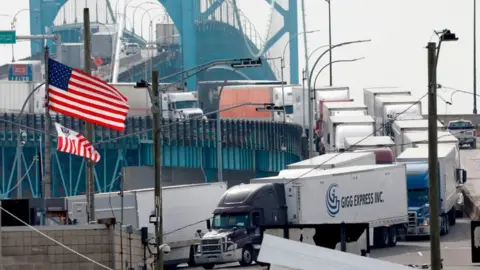
The recent tariff adjustments with China specifically address electric vehicles and agricultural products. In 2024, Canada had mirrored United States policy by imposing a 100% tariff on Chinese electric vehicles and 25% tariffs on steel and aluminum. China responded with 100% tariffs on Canadian canola oil and meal, plus 25% tariffs on pork and seafood. Carney's recent agreement reduces Canada's electric vehicle tariff to 6.1% with an initial annual cap of 49,000 vehicles, while securing reduced Chinese tariffs on affected Canadian agricultural exports.
Broader Geopolitical Context
This trade dispute occurs within a larger geopolitical struggle between the United States and China, with Canada positioned as a strategic middle power. Carney has emerged as a vocal advocate for coordinated action among middle powers, famously stating at the World Economic Forum in Davos that "Middle powers must act together because if you are not at the table, you are on the menu." This philosophy reflects Canada's attempt to navigate an increasingly polarized global landscape while protecting its economic interests.
The tension extends beyond trade to questions of sovereignty and international alignment. Trump has repeatedly questioned Canadian sovereignty, even suggesting Canada should be absorbed into the United States as a 51st state. These comments, combined with Trump's push to acquire Greenland, have strained traditional alliances and created uncertainty within the NATO framework. U.S. Treasury Secretary Scott Bessent further escalated rhetoric by accusing Carney of "virtue-signaling to his globalist friends at Davos" rather than pursuing substantive policy.

Economic Implications and Industry Concerns
The Canadian automotive industry has expressed significant concerns about the potential consequences of these trade tensions. The chief executive of the Canadian Vehicle Manufacturers' Association warned in a video shared by President Trump that "there will be no Canadian auto industry without U.S. access," noting that the Canadian market alone is too small to justify large-scale manufacturing investments from China. This highlights the fundamental economic reality that Canada's manufacturing sector remains deeply integrated with the United States.
Carney has attempted to address these concerns by noting that the initial cap on Chinese electric vehicle imports represents only about 3% of the 1.8 million vehicles sold annually in Canada. Additionally, he has indicated that China is expected to begin investing in the Canadian auto industry within three years as part of the recent agreement. However, these assurances have done little to calm the broader political storm surrounding Canada's trade relationships.
Conclusion: Navigating Complex Trade Waters
Canada's declaration that it will not pursue a free trade agreement with China represents a strategic decision to prioritize its relationship with the United States amid escalating global tensions. While Prime Minister Carney has secured targeted tariff adjustments with Beijing, he has drawn a clear line against deeper economic integration that would violate Canada's commitments under USMCA. This position reflects the complex reality facing middle powers in an increasingly polarized world, where economic relationships have become instruments of broader geopolitical competition.
The coming months will test whether targeted tariff adjustments can satisfy both China's economic interests and America's security concerns, or whether Canada will face continued pressure from both economic superpowers. What remains clear is that Canada's trade policy will continue to navigate carefully between competing interests, seeking to protect its economic sovereignty while maintaining vital relationships with both of the world's largest economies.