Read on PBS News
Federal Response Shifts After Second Fatal Shooting by ICE Agents in Minneapolis
Following bipartisan backlash over the fatal shooting of a second U.S. citizen by federal immigration agents in Minneapolis, President Trump dispatched his border czar and signaled potential cooperation with Minnesota officials. The incident involving ICE agents and 37-year-old ICU nurse Alex Pretti has sparked widespread anger, legal challenges, and calls for independent investigations as a federal judge considers halting the ongoing immigration crackdown in the Twin Cities.
The fatal shooting of a second U.S. citizen by federal immigration agents in Minneapolis has triggered significant political and public backlash, prompting a shift in the Trump administration's response. Following bipartisan criticism, President Trump sent border czar Tom Homan to Minnesota and engaged in discussions with Governor Tim Walz about reducing federal presence and ensuring independent investigations. This incident, which resulted in the death of ICU nurse Alex Pretti, has intensified scrutiny of ICE and Border Patrol operations in the Twin Cities, where tensions remain high amid ongoing legal challenges to the immigration crackdown.
Escalating Crisis in Minneapolis
The shooting of Alex Pretti marks the second fatal encounter between U.S. citizens and federal immigration agents in Minnesota within a month, creating what residents describe as an atmosphere of "sadness, anger and exhaustion." The incident occurred during what the Department of Homeland Security has termed "Operation Metro Surge," an immigration enforcement operation that has been ongoing for over a month. According to reports from PBS NewsHour, the operation has involved significant federal presence in the Twin Cities, with Border Patrol and ICE agents conducting enforcement actions that have drawn increasing criticism from both political parties.

Political Response and Administrative Shifts
Following the shooting, President Trump faced bipartisan blowback that prompted a notable shift in his administration's approach. In a TRUTH Social post, the president described a "very good call" with Governor Tim Walz where they "seemed to be on a similar wavelength." This communication led to several significant developments: the dispatch of border czar Tom Homan to Minnesota, agreement to potentially reduce the number of federal agents in the state, and commitment to allow the Minnesota Bureau of Criminal Apprehension to conduct an independent investigation into Pretti's death.
Governor Walz confirmed in a statement that he had a "productive call" with President Trump, noting that the president agreed to "look into reducing the number of federal agents in Minnesota and to coordinate with state officials." Reports indicated that Border Patrol senior official Greg Bovino and some agents would be leaving the state, which Walz described as "really good news" and evidence of the president following through on their conversation.

Contradictory Accounts of the Shooting
The circumstances surrounding Alex Pretti's death have become a point of significant controversy, with conflicting narratives emerging from federal officials and video evidence. Initially, Department of Homeland Security officials claimed Pretti had been "brandishing a firearm," with Homeland Security Secretary Kristi Noem describing the situation as one where "an individual arrived at the scene to inflict maximum damage on individuals and to kill law enforcement." White House Deputy Chief of Staff Stephen Miller went further, calling Pretti "a would-be assassin" in a social media post.
However, multiple bystander videos and subsequent analysis tell a different story. A frame-by-frame examination by The New York Times and other news organizations showed Pretti holding a phone, not a gun, at the time of the encounter. The analysis revealed that agents removed a gun from Pretti's hip just one second before the first shots were fired. Rob Doar, general counsel for the Minnesota Gun Owners Caucus, emphasized that Pretti had a valid permit to carry a firearm in Minnesota and was exercising his legal rights, stating there was "no evidence Pretti was trying to shoot agents."
Legal Challenges and Community Impact
The incident has sparked multiple legal actions and continued community unrest. Minnesota officials were in court on two fronts following the shooting: one case aimed to preserve evidence in Pretti's death after state investigators were blocked from examining the scene, while another lawsuit sought to end "Operation Metro Surge" entirely. A federal judge is currently deciding whether the immigration crackdown can continue amid these legal challenges and public safety concerns.
Community response has been marked by grief and frustration. Rose Zelee, a Minneapolis resident who witnessed the shooting, described the experience as "terrifying," while Emily and Brandon Del Bel from neighboring St. Louis Park expressed feeling "paralyzed" by grief. Tensions escalated further when a demonstration outside a hotel believed to be housing ICE agents turned destructive, leading to confrontations with law enforcement.

Remembering Alex Pretti
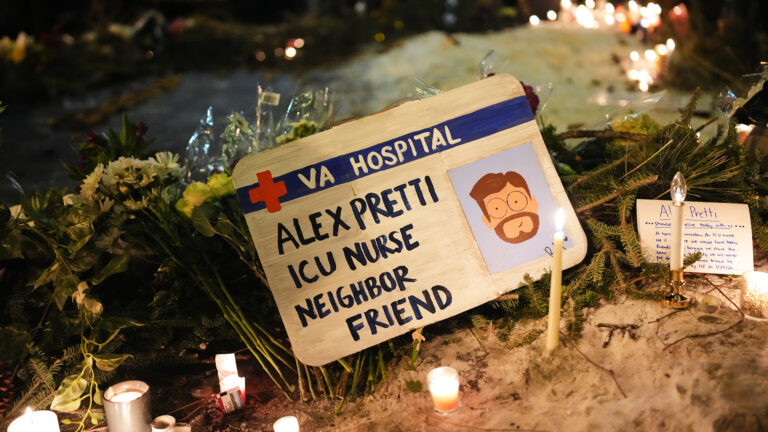
Amid the political and legal battles, friends and colleagues have worked to counter the official narrative about Pretti's character. Dr. Dimitri Drekonja, an infectious disease physician who worked with Pretti for eight years, described him as "a really fun guy" who was "helpful, friendly, and engaging." Drekonja expressed disbelief at descriptions of Pretti as a domestic terrorist, stating such characterizations were "contrary to everything that I have known for eight years."
Colleagues have emphasized Pretti's dedication as an ICU nurse and his positive impact on those around him. Drekonja pointed to photos showing Pretti smiling with his mountain bike and in official portraits as truer reflections of his character than images from his final moments. This personal remembrance stands in stark contrast to the political and media narratives that have dominated discussions of the incident.
Broader Political Implications
The shooting has created unusual political alliances and divisions, with Republican politicians joining Democrats in criticizing federal actions. Louisiana Republican Senator Bill Cassidy described the shooting as "disturbing" and called for a full joint federal and state investigation. This bipartisan concern reflects growing unease about the scope and conduct of federal immigration operations in American cities.
The situation in Minneapolis represents a critical test for federal-state relations in immigration enforcement and raises fundamental questions about the appropriate use of federal force in domestic law enforcement situations. As legal proceedings continue and investigations unfold, the outcome will likely influence future immigration enforcement strategies and the balance between federal authority and local autonomy.
The Minneapolis shootings have exposed deep tensions in American immigration policy and law enforcement practices. With a federal judge considering whether to halt the immigration crackdown, independent investigations underway, and political pressure mounting from both parties, the situation remains fluid. The administration's shift in response—sending officials to Minnesota and discussing reduced federal presence—suggests recognition of the political and practical challenges posed by the current approach. However, with community anger still high and legal battles continuing, lasting resolution remains uncertain as Minneapolis grapples with the consequences of federal immigration enforcement in its streets.