 Read on cbsnews.com
Federal Judge Orders Evidence Preservation in Minneapolis ICE Shooting Case
A federal judge has issued a temporary restraining order against the U.S. Department of Homeland Security, barring the department from altering or destroying evidence related to the fatal shooting of ICU nurse Alex Pretti by a Border Patrol agent in south Minneapolis. The order comes amid conflicting accounts of the incident, with video evidence contradicting official statements, and follows state investigators being blocked from accessing the crime scene despite having a judicial warrant. This marks the second fatal shooting by federal immigration agents in Minneapolis within three weeks, escalating tensions in a city already grappling with the largest immigration enforcement operation in U.S. history.
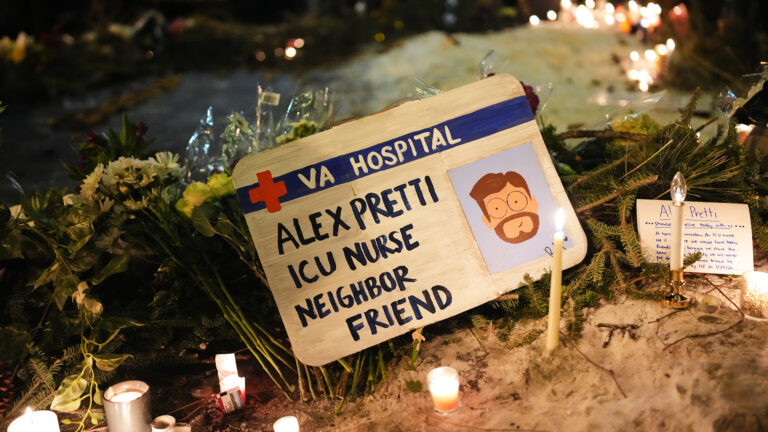
A federal judge has taken the extraordinary step of intervening in a fatal shooting investigation involving federal immigration agents in Minneapolis, issuing a temporary restraining order to preserve evidence after state authorities were blocked from accessing the crime scene. U.S. District Court Judge Eric Tostrud granted the order against the U.S. Department of Homeland Security on Saturday, barring the department from altering or destroying evidence connected to the killing of 37-year-old Alex Pretti, an ICU nurse at the Minneapolis VA hospital. The judicial intervention comes amid mounting tensions between state and federal authorities, with video evidence contradicting official accounts and raising serious questions about transparency and accountability in federal law enforcement operations.

The Shooting Incident and Conflicting Accounts
According to the Department of Homeland Security, Border Patrol agents were conducting a targeted operation against an individual wanted for domestic assault when Pretti approached them with a 9mm semi-automatic handgun. DHS officials claim agents attempted to disarm Pretti, who "violently resisted," prompting an agent to fire "defensive shots" in fear for his life and the safety of fellow officers. However, this account has been directly contradicted by multiple videos from the scene and witness statements.
Videos verified by CBS News show Pretti holding a cellphone in his right hand with nothing in his left hand before being shot. The footage shows a federal agent in a gray jacket reaching into a scuffle empty-handed and emerging with a gun in his right hand, turning away from Pretti when the first shot is fired. Witness affidavits filed in court state that Pretti "did not approach agents with a gun" but rather "approached them with a camera" and was attempting to help a woman who had been knocked to the ground when agents threw him down.
State Investigation Blocked
The Minnesota Bureau of Criminal Apprehension reported being denied access to the shooting scene twice on Saturday morning, despite having obtained a judge's signed search warrant. BCA Superintendent Drew Evans called the federal government's actions "astonishing" and a "sharp departure from normal best practices and procedure." Court documents filed by the BCA state that it was unclear how carefully federal personnel processed the scene, noting that officials left hours after the shooting, "allowing the perimeter to collapse and potentially spoiling evidence."
This marks the second time in three weeks that state investigators have been blocked from accessing evidence in a fatal shooting by federal immigration agents. The BCA was similarly prohibited from seeing evidence in the January 7 shooting of Renee Good, another Minneapolis resident killed by an ICE agent. Minnesota Attorney General Keith Ellison called the need to seek a court order to preserve evidence an "extraordinary" step that should "alarm everyone who believes in equal justice under the law."
Political and Community Response
The shooting has sparked widespread condemnation from Minnesota officials and community members. Governor Tim Walz called the DHS account "nonsense" after reviewing videos of the shooting and stated, "Minnesota's justice system will have the last word on this. It must have the last word on this." Minneapolis Mayor Jacob Frey demanded that President Trump end Operation Metro Surge immediately, asking, "How many more residents, how many more Americans need to die or get badly hurt for this operation to end?"
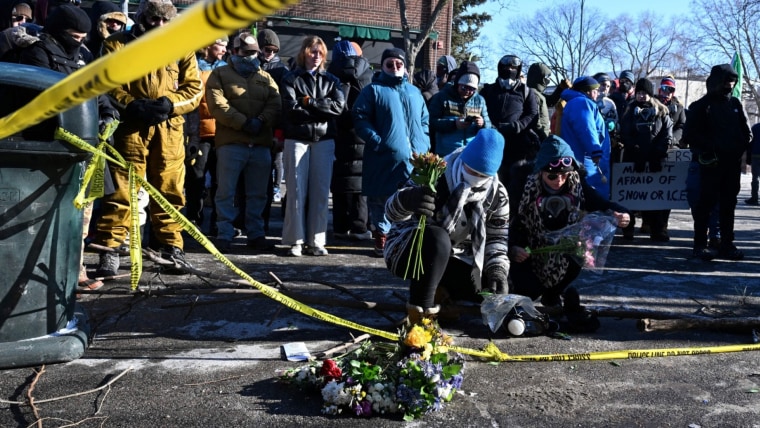
Community response has been immediate and sustained, with hundreds gathering for protests in downtown Minneapolis despite sub-zero temperatures. The family of Renee Good issued a statement calling for "a complete and immediate end to the ICE invasion of this beautiful American city," noting that "ICE agents can leave Minneapolis. The residents of Minnesota cannot." More than 60 Minnesota-based CEOs, including leaders from Target, UnitedHealth Group, and the Mayo Clinic, signed a letter calling for "an immediate deescalation of tensions."

Legal and Investigative Implications
The temporary restraining order represents a significant legal development in the ongoing conflict between state and federal authorities in Minnesota. The order specifically bars DHS from "destroying or altering evidence related to the fatal shooting involving federal officers," including evidence removed from the scene and evidence taken into federal custody. A court hearing scheduled for Monday will determine if the order should remain in effect and provide DHS an opportunity to respond.
Separately, Attorney General Ellison will be in federal court Monday arguing for another temporary restraining order in the state's lawsuit seeking to end Operation Metro Surge, which has sent approximately 3,000 federal agents to Minnesota in what's described as the largest immigration enforcement operation ever. The City of Minneapolis is also filing a declaration in hopes that a judge will issue an order to pause the operation.
Broader Context and National Implications
The shooting occurs amid an unprecedented federal immigration enforcement operation in Minnesota that began in early January. Operation Metro Surge has resulted in numerous arrests and detentions, including some cases of mistaken identity, such as the arrest of ChongLy Thao in St. Paul, who was mistaken for a sex offender already incarcerated. The operation has drawn national attention and criticism, with former President Barack Obama and former First Lady Michelle Obama issuing a statement saying the tactics "have now resulted in the fatal shootings of two U.S citizens."
The incident has also sparked responses from national political figures, with President Trump blaming "Democrat ensued chaos" for the deaths and making demands for increased cooperation with federal immigration enforcement. Meanwhile, Senate Democrats have announced they will not provide votes to advance a Department of Homeland Security funding bill, with Minority Leader Chuck Schumer calling the DHS bill "woefully inadequate to rein in the abuses of ICE."
The case raises fundamental questions about federalism, law enforcement accountability, and the limits of federal power in local jurisdictions. As the legal proceedings continue and investigations unfold, the preservation of evidence ordered by Judge Tostrud will be crucial for determining what actually occurred during the fatal encounter and ensuring accountability for all parties involved.