Israel Announces Conditional Reopening of Gaza's Rafah Crossing
The Israeli Prime Minister's office has announced a limited reopening of the Rafah border crossing between Gaza and Egypt, contingent on the completion of the search for the remains of the last Israeli captive, police officer Ran Gvili. The move, described as for 'pedestrian passage only' under full Israeli inspection, comes amid ongoing Israeli attacks in Gaza and criticism that the measure fails to address the urgent humanitarian aid blockade or the potential for forced displacement of Palestinians.
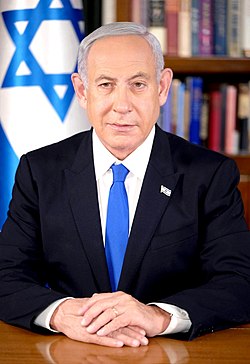
In a significant development concerning humanitarian access to the Gaza Strip, the office of Israeli Prime Minister Benjamin Netanyahu announced late on Sunday that it will allow a "limited reopening" of the Rafah border crossing with Egypt. This decision is explicitly conditioned on the conclusion of the Israeli military's operation to locate and recover the body of the last remaining Israeli captive in the territory, police officer Ran Gvili. The announcement, as reported by Al Jazeera, underscores the intricate and often contentious linkage between security operations and civilian movement in the protracted conflict.

The Condition: Locating Ran Gvili's Remains
The reopening is not unconditional. Netanyahu's office stated the move is "conditioned on the return of all living [captives] and the execution of 100 percent effort on the part of Hamas to locate and return all deceased [captives]." According to Israeli officials, all other captives have been returned, leaving only the body of Ran Gvili. The Israeli military confirmed on Sunday that it was actively searching a cemetery in northern Gaza near the "yellow line," which demarcates Israeli-controlled areas, citing "several intelligence leads" regarding Gvili's location.
This stance follows a statement from Hamas earlier the same day, in which the group claimed it had handed over the location of the soldier's remains with "absolute transparency" and had "fulfilled all our obligations in accordance with the ceasefire agreement." A spokesperson for Hamas's armed wing, the Qassam Brigades, asserted the group was "fully committed to closing this file permanently" and called on international mediators to pressure Israel to implement agreed-upon terms.
Scope and Limitations of the Reopening
The proposed reopening comes with severe restrictions that have drawn immediate criticism. The Prime Minister's office specified that access would be "limited" and for "pedestrian passage only, subject to a full Israeli inspection mechanism." This is a significant departure from the terms outlined in the initial phase of the U.S.-brokered ceasefire in October, which called for the crossing to reopen in "both directions." The Gaza side of the Rafah crossing has been under direct Israeli military control since 2024, making it the sole point of entry and exit for nearly all of Gaza's 2 million residents.
Analysts and observers have raised profound concerns about the implications of this pedestrian-only policy. Anthony Lowenstein, author of *The Palestine Laboratory*, warned that such a move aligns with a long-held Israeli goal of expelling Palestinians from Gaza. "There are huge amounts of Palestinians in Egypt who've been stuck there in limbo... Many of them want to come back... But what Israel wants is for huge amounts of Palestinians to leave and not come back," Lowenstein stated. He expressed fear that an Israeli-monitored crossing could facilitate this outcome.
Humanitarian and Political Context
The announcement occurs against a backdrop of continued violence and a dire humanitarian crisis. On the same day as the statement, Israeli attacks in Gaza killed at least three Palestinians and wounded four others in separate incidents, according to local health officials. The cumulative toll since the ceasefire began in October stands at over 480 Palestinians killed, adding to the staggering figures from two years of conflict.
Critics argue that the pedestrian-only measure does nothing to alleviate the critical blockade on humanitarian aid. Vast quantities of essential supplies remain stranded in Egyptian warehouses, unable to enter Gaza. Lowenstein emphasized, "Ultimately, [aid can move] only if the international community presses Israel to allow aid in." Rami Khouri, a distinguished fellow at the University of Beirut, echoed this, contending that Israel's announcement reflects a strategy of total control over Palestinian life, manipulating access to people, aid, water, and food despite agreed-upon ceasefire obligations.
The conditional and limited nature of the Rafah crossing's reopening highlights the fragile and complex dynamics of the Gaza conflict. It ties vital civilian mobility to a specific military objective, raises alarms about potential displacement, and fails to address the urgent need for unfettered humanitarian access. The international community faces renewed pressure to ensure any reopening serves the needs of Gaza's civilian population without enabling further suffering or demographic engineering.